
Photo by zhenzhong liu on Unsplash
Learning Japanese is exciting, but it can also feel overwhelming at first. The language uses three writing systems (hiragana, katakana, and kanji), has sentence structures that differ greatly from English, and contains thousands of characters that learners eventually need to recognize.
Fortunately, modern mobile apps have dramatically changed how people study Japanese. Instead of relying only on textbooks or classroom courses, learners today can combine AI conversation tools, kanji training systems, grammar guides, and reading platforms directly from their phone or computer.
The challenge is choosing the right tools.
Some apps focus on speaking and conversation practice, others specialize in kanji memorization, while some are designed for grammar explanations or reading comprehension. The most effective learners usually combine several tools together rather than relying on a single app.
To help you navigate the options, we reviewed popular apps available on the Apple App Store , Google Play Store and websites , focusing on learning methodology, popularity among learners, and overall usefulness.
Below are ten Japanese learning apps worth exploring in 2026.
Japanese Learning Apps Worth Trying in 2026
These apps were selected based on several criteria:
- popularity among Japanese learners
- teaching methodology (SRS, immersion, conversation, etc.)
- usefulness for specific skills such as kanji, grammar, or speaking
- availability on iOS ,Android or website platform
1. Avatalks – Best for AI Conversation Practice
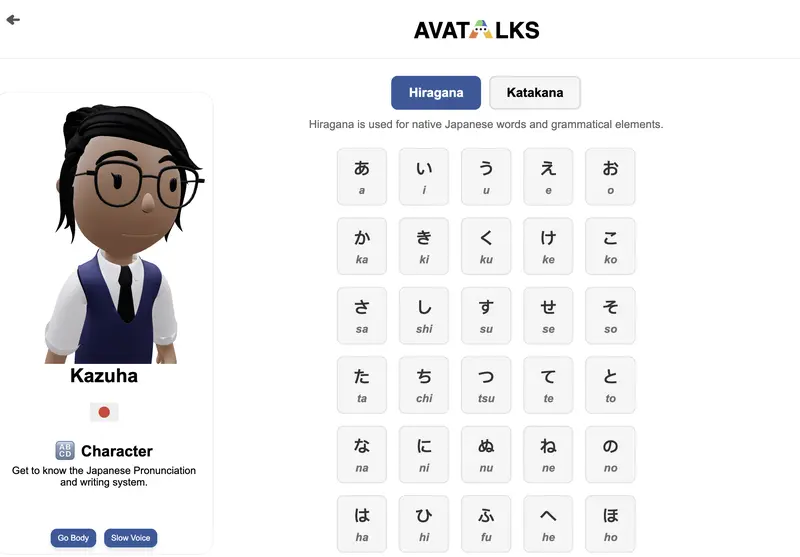
Disclosure: Avatalks is developed by our team. We include it here because it focuses on AI-driven conversation practice, which is a growing approach in modern language learning. Currently Avatalks is available as a web platform. Dedicated iOS and Android apps will be coming soon — stay tuned.

Avatalks
AI-powered Japanese conversation practice with 3D avatars, plus vocabulary, grammar, listening, and reading training in one learning platform.
Visit Avatalks →Avatalks combines conversation simulations with structured learning categories to help learners practice speaking while reinforcing vocabulary and grammar.Try our free 3D interactive Japanese Pronunciation and writing system learning tool
Best for: conversation practice and immersive learning.
Strengths
- AI conversation simulations
- vocabulary and grammar lessons
- listening and interactive pronunciation training
- adaptive learning paths
2. LingoDeer – Best for Structured Courses

LingoDeer
A structured Japanese course app with guided lessons, grammar explanations, and native-speaker audio.
Visit LingoDeer →LingoDeer provides a curriculum-style learning experience that walks beginners through Japanese grammar and sentence patterns.
3. WaniKani – Best for Kanji Mastery

WaniKani
A kanji learning system using spaced repetition and mnemonics to help learners remember characters effectively.
Visit WaniKani →WaniKani gradually introduces radicals, kanji, and vocabulary in a structured order designed to maximize retention.
4. Bunpo – Best for Grammar Study

Bunpo
A Japanese grammar learning app organized by JLPT level with quick drills and lesson explanations.
Visit Bunpo →Bunpo works well as a companion app for reviewing grammar concepts and preparing for JLPT exams.
5. HelloTalk – Best for Language Exchange

HelloTalk
A language exchange platform that connects learners with native speakers through messaging and voice chat.
Visit HelloTalk →HelloTalk is ideal for learners who want to practice real conversations with native Japanese speakers.
6. Human Japanese – Best for In-Depth Explanations

Human Japanese
A detailed Japanese learning app that explains grammar concepts through engaging lessons and cultural insights.
Visit Human Japanese →Human Japanese focuses on helping learners understand how the language works rather than just memorizing patterns.
7. Anki – Best for Custom Flashcards

Anki
A powerful spaced-repetition flashcard system used by many serious Japanese learners.
Visit Anki →Anki allows learners to create custom decks or download shared vocabulary lists.
8. Satori Reader – Best for Reading Practice

Satori Reader
A reading platform with learner-friendly Japanese stories, translations, and native audio narration.
Visit Satori Reader →Satori Reader helps learners transition from textbook Japanese to real reading materials.
9. Takoboto – Best Japanese Dictionary App

Takoboto
A lightweight Japanese-English dictionary app with example sentences and kanji details.
Visit Takoboto →Takoboto works well as a quick reference tool when reading Japanese texts.
10. Clozemaster – Best for Vocabulary in Context

Clozemaster
A sentence-based learning app that teaches Japanese vocabulary through contextual exercises.
Visit Clozemaster →Clozemaster helps learners expand vocabulary naturally through sentence exposure.
Why Use Japanese Learning Apps?
Japanese is often considered one of the more challenging languages for English speakers. Besides learning new grammar patterns, students must also become familiar with kanji characters and natural Japanese sentence flow.
If you’re curious about how Japanese compares with other languages in terms of difficulty, you can explore our full breakdown here:
Top 10 Hardest Language to Learn: A Comprehensive Overview
Japanese learning apps help simplify the process by providing:
- on-demand lessons anywhere
- interactive quizzes and exercises
- spaced repetition systems for memory
- native audio for pronunciation practice
- structured learning paths
Research in language acquisition also shows that spaced repetition significantly improves vocabulary retention, allowing learners to review words at optimal intervals rather than relying on random memorization.
Prefer 1-on-1 Lessons Instead of Apps?
Not every learner prefers self-study. Some people make faster progress with live one-on-one lessons, especially when they want real-time feedback, structured guidance, and direct conversation practice.
Two well-known platforms that offer private Japanese lessons online include:

Preply
A tutoring marketplace where learners can book private Japanese lessons with teachers from around the world.
Visit Preply →
italki
A popular platform connecting language learners with professional teachers and community tutors for one-on-one lessons.
Visit italki →These platforms may be a good option if you prefer:
- live conversation practice
- personalized learning plans
- direct corrections from a teacher
- a more traditional tutoring experience
Many learners combine apps for daily practice with occasional tutoring sessions to accelerate speaking confidence and maintain motivation.
Can You Become Fluent Using Apps Alone?
Apps are powerful tools, but they work best when combined with real exposure to the language.
Apps are excellent for:
- vocabulary practice
- grammar review
- kanji memorization
- reading exercises
However, fluency also requires listening to real conversations and interacting with native speakers.
Many successful learners combine apps with:
- Japanese podcasts
- YouTube channels
- language exchange partners
- travel or immersion experiences
Apps provide the foundation, but real communication turns knowledge into fluency.
Final Thoughts
There is no single “perfect” Japanese learning app that works for everyone. Each tool focuses on different parts of the learning process — conversation, grammar, kanji, reading, or vocabulary.
The goal of this guide is not to suggest that one platform can solve everything, but to help learners understand which tools are good at specific tasks.
For example, some learners may prefer AI conversation practice to build speaking confidence, while others may focus on kanji systems like WaniKani, or reading platforms such as Satori Reader. Many people also combine apps with language exchange or private tutoring to develop real communication skills.
The most important factor is not the specific app you choose, but how consistently you use it. Even short daily sessions — around 15 to 20 minutes per day — can lead to steady improvement over time.
If you are just starting, try a few tools, see which ones fit your learning style, and build a routine that you can realistically maintain. Learning Japanese is a long journey, but with the right mix of tools and steady practice, it becomes much more manageable.