
TL;DR
- Ă in Romanian is pronounced as /ə/ — a relaxed central vowel (like “a” in sofa).
- It is not the same as a, e, or i.
- Your mouth stays neutral, relaxed, and unstressed.
- Many learners over-pronounce it — softer is better.
- Mastering ă is essential for natural Romanian pronunciation.
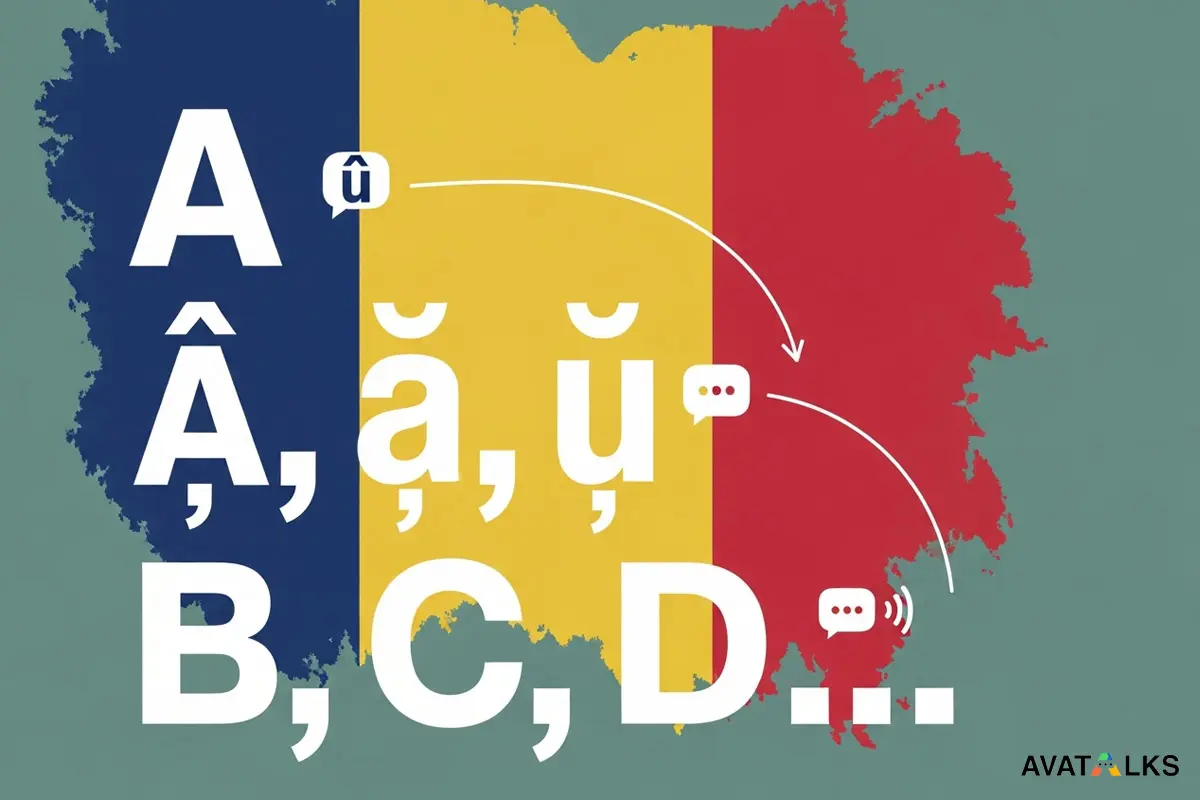
Romanian alphabet pronunciation hub
If you want the full system behind these sounds, see the Romanian alphabet pronunciation hub
Explore the practice hub →How to pronounce Ă in Romanian (quick answer)
Ă is pronounced as the mid-central vowel /ə/, also called a schwa.
Your mouth stays relaxed, lips neutral, and the sound is short and unstressed.
If you can say the “a” in “sofa”, you are very close.
What sound is Ă in Romanian?
Q: What sound does Ă represent in Romanian?
A: It represents the mid-central unrounded vowel /ə/.
This sound exists in English, but English never writes it clearly.
Romanian does — and it’s phonemic, meaning it can change word meaning.
Examples:
- măr → /mər/ → “apple”
- văd → /vəd/ → “I see”
How is Ă different from A, E, and Î?
Many learners confuse ă with other Romanian vowels.
| Letter | IPA | Key difference |
|---|---|---|
| A | /a/ /vəd/ | Open, strong, stressed |
| Ă | /ə/ /vəd/ | Neutral, relaxed, often unstressed |
| E | /e/ /vəd/ | Front vowel, lips slightly spread |
| Î / Â | /ɨ/ /vəd/ | Tight, central, no English equivalent |
If your mouth moves too much, it’s probably not ă.
For the full vowel system, see our guide to Romanian vowel sounds and pronunciation.
Mouth position: how to form the /ə/ sound
Q: How should my mouth move when pronouncing Ă?
A: It should barely move at all.
Correct mouth setup
- Jaw: relaxed
- Lips: neutral (not rounded, not spread)
- Tongue: resting in the center
- Airflow: gentle, short
Think lazy vowel, not effort.
A good trick: say “uh” quietly, without emphasis.
Common Romanian words with Ă
Here are high-frequency words you’ll hear every day:
| Word | Meaning | IPA |
|---|---|---|
| măr | apple | /mər/ |
| văd | I see | /vəd/ |
| casă | house | /ˈkasə/ /vəd/ |
| masă | table | /ˈmasə/ /vəd/ |
| băiat | boy | /bəˈjat/ /vəd/ |
Practice these slowly before speeding up.
Common mistakes learners make
Q: Why do people struggle with Ă?
A: Because they pronounce it too strongly.
Typical errors
- Saying a instead of ă
- Turning it into e or i
- Over-rounding lips
- Stressing it accidentally
If native speakers say “softer”, they mean less effort.
Quick pronunciation drills (2 minutes)
Drill 1: Contrast
Say slowly:
- a → ă → a
- masă → masa
Drill 2: Whisper test
If you whisper ă and it still sounds right — you’re doing it correctly.
Drill 3: Sentence flow
Văd o masă mare.
Listen, repeat, then read aloud.
Where Ă fits in the Romanian alphabet
Ă is one of five special Romanian letters with diacritics.
To see how it fits into the full system, return to the main guide:
👉 Romanian alphabet chart and pronunciation
That page shows how ă, â/î, ș, and ț work together in real words.
Final tips for mastering Ă
- Don’t “try hard” — relax
- Short and neutral beats loud and clear
- Train with words, not isolated sounds
- Listen first, then repeat
Once ă clicks, Romanian pronunciation becomes dramatically easier.