TL;DR
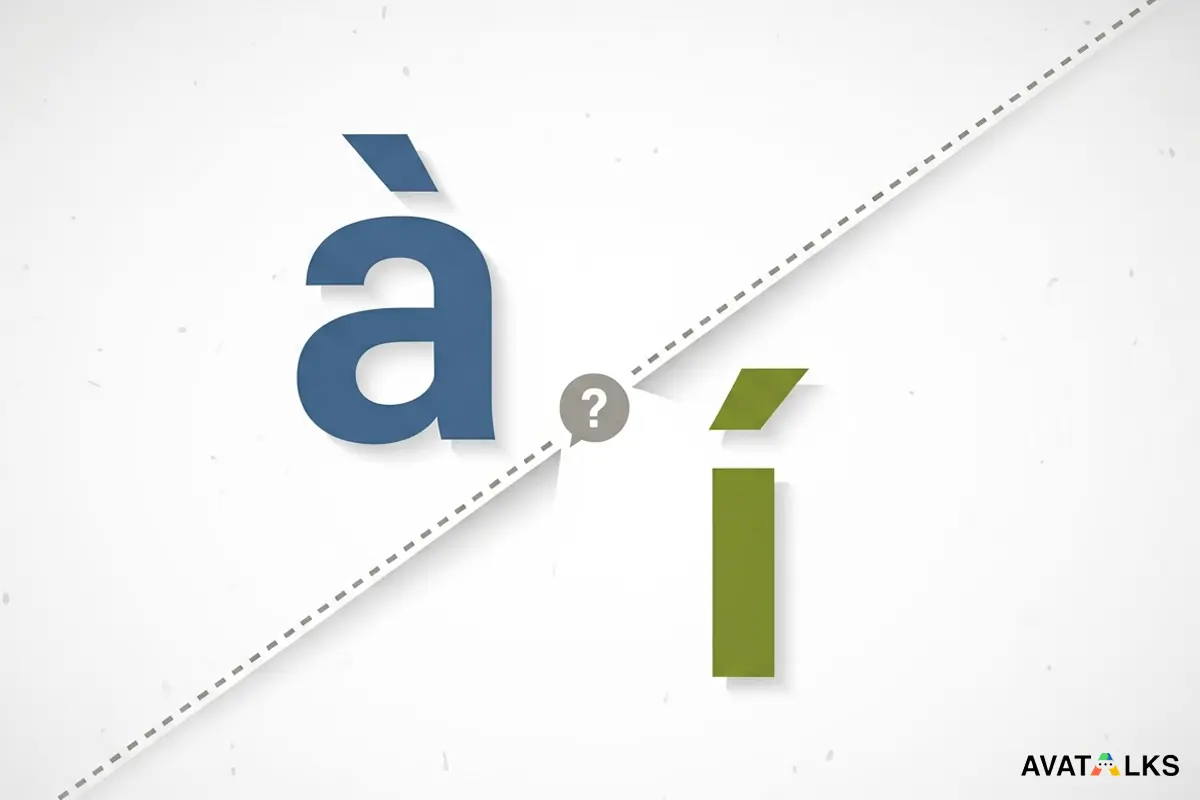
- Â and Î sound exactly the same in Romanian: the vowel /ɨ/.
- The difference is spelling, not pronunciation.
- Î is used at the beginning and end of words.
- Â is used inside words, with a few clear exceptions.
- Once you know the rule, mistakes become easy to avoid.
Romanian alphabet pronunciation hub
If you want the full system behind these sounds, see the Romanian alphabet pronunciation hub
Explore the practice hub →Romanian  vs Î — quick answer
In Romanian, â and î represent the same vowel sound (/ɨ/).
The only difference is where they appear in a word: î at the beginning or end, â in the middle.
This spelling rule is one of the most confusing points for learners—but also one of the easiest to master once explained clearly.
What sound do  and Πmake in Romanian?
Both letters are pronounced /ɨ/, a central vowel that does not exist in English.
- It is not /i/ (as in see)
- It is not /ə/ (as in sofa)
- The tongue is raised slightly, but lips stay relaxed
If you can pronounce î, you can pronounce â—they are identical in sound.
This vowel is also explained in our main guide to Romanian alphabet pronunciation, where all letters are practiced with audio.
Core rule: when to use  vs Πin Romanian
When do you use Î?
Use î:
- At the beginning of a word
- At the end of a word
Examples:
- înțeleg (I understand)
- înger (angel)
- a urî (to hate)
When do you use Â?
Use â:
- Inside a word, never at the beginning
Examples:
- România
- cântec (song)
- pâine (bread)
This rule alone covers the vast majority of cases.
Why do Romanian  and Πexist if they sound the same?
This is a historical spelling decision, not a pronunciation one.
Romanian orthography preserves:
- î at word boundaries (beginning/end)
- â in the middle to visually mark word structure
From a learner’s perspective, this means:
- Listen once
- Spell correctly forever
Common spelling patterns you’ll see often
Words that always use î
- Words starting with î-
- Verb infinitives ending in -î
Examples:
- învăța (to learn)
- încercare (attempt)
- a hotărî (to decide)
Words that usually use â
- Country names
- Common nouns with the /ɨ/ sound in the middle
Examples:
- România
- câmp (field)
- vânt (wind)
Important exception: compounds and prefixes
What happens in compound words?
If a word starts with î, it keeps î even when it moves to the middle.
Example:
- înțelegere → neînțelegere (misunderstanding)
What happens with suffixes?
When adding a suffix, î may change to â.
Example:
- a urî → urât (ugly)
This is one of the few cases where spelling changes—but it follows a consistent pattern.
Does pronunciation ever change between  and Î?
No. Never.
No matter where the letter appears:
- înger
- România
- urât
The vowel sound remains /ɨ/.
If you hear a difference, it comes from stress or neighboring sounds, not the letter itself.
Common learner mistakes (and how to avoid them)
❌ Mistake 1: Pronouncing â differently from î
✔️ Fix: Treat them as the same sound every time.
❌ Mistake 2: Guessing spelling based on “how it feels”
✔️ Fix: Use position rules, not intuition.
❌ Mistake 3: Confusing â/î with ă
✔️ Fix: Remember:
- ă = /ə/
- â / î = /ɨ/
If you’re unsure, revisit the Romanian special letters overview in the alphabet guide.
Quick practice quiz (mental check)
Choose the correct spelling:
- Rom__nia → România
- __nger → înger
- c__ntec → cântec
- a ur__ → a urî
If you got all four right, you already understand the rule.
Extra practice: a fast decision checklist (what to think in 2 seconds)
When you’re writing Romanian and you hear the /ɨ/ sound, don’t try to “feel” whether it should be â or î.
Use this quick checklist instead.
Step 1 — Is /ɨ/ at the start of the word?
If yes → î
Examples:
- în (in)
- învăț (I learn)
- înțeleg (I understand)
Step 2 — Is /ɨ/ at the end of the word?
If yes → î
Common pattern:
- Verb infinitives ending in -î
Examples:
- a urî (to hate)
- a hotărî (to decide)
- a părî (rare, but the rule still applies)
Step 3 — Is /ɨ/ inside the word?
If yes → â
Examples:
- România
- cântec (song)
- pâine (bread)
- vânt (wind)
This three-step logic covers almost every spelling situation you’ll encounter as a learner.
Why does î sometimes stay in the middle? (Prefix rule explained)
Sometimes you’ll see î inside a word, which looks like it breaks the rule.
In most cases, this happens because Romanian preserves prefixes, especially în-.
The prefix rule
If a word contains the prefix în-, it often keeps î, even when something is added before it.
Examples:
- înțelegere (understanding)
- ne + înțelegere → neînțelegere (misunderstanding)
- încredere (trust)
- ne + încredere → neîncredere (distrust)
Think of în- as a block Romanian wants to keep visible.
Why this matters
Add one extra mental check:
If you can clearly recognize în- as a prefix, keep î — even if it’s no longer at the start.
This makes spelling more logical and helps with vocabulary recognition.
Common spelling transformations you’ll actually see
Spelling can change when you move from a verb to a related noun or adjective.
This usually happens when the /ɨ/ sound moves from the end to the middle of a word.
Example: a urî (to hate)
- a urî (infinitive → ends in î)
- urât (ugly / hated → /ɨ/ now inside the word)
Example: a hotărî (to decide)
- a hotărî
- hotărâre (decision)
You don’t need to memorize word families. Just remember:
- End position → î
- Inside position after adding a suffix → often â
This consistency is one reason Romanian spelling becomes predictable with practice.
Quick pronunciation self-check (avoid confusing sounds)
Learners often confuse /ɨ/ with /i/ or /ə/.
Use this self-check:
- Smiling lips → drifting toward /i/
- Very relaxed, weak sound → drifting toward /ə/
- Neutral lips + slightly raised tongue → /ɨ/ (correct)
If you want to hear the difference clearly, compare Ă, Â/Î, and I in the Romanian alphabet pronunciation hub.
Mini practice (write without thinking)
Apply the rules quickly — no guessing.
î at boundaries
- înger
- început
- a urî
â inside words
- România
- cântec
- pâine
Prefix cases
- neînțelegere
- neîncredere
Repeat this once a day for a few days and the rule sticks naturally.
How  vs Πfits into the Romanian alphabet system
Romanian spelling is highly phonetic, but â vs î is the main exception where spelling depends on position, not sound.
That’s why this topic is usually taught together with:
- Romanian vowels
- Special letters (Ă, Â, Î, Ș, Ț)
- Alphabet-wide pronunciation rules
You can review all of these in the Romanian alphabet pronunciation hub, which links every sound to focused practice pages.
Final takeaway
The â vs î Romanian rule is simple:
- Same sound
- Different position
- Zero pronunciation difference
Once you stop listening for a difference and start applying the spelling rule, this issue disappears completely.
Master this, and Romanian spelling becomes far more predictable than English.
Next up:
Continue with Romanian consonants pronunciation or return to the Romanian alphabet to build full pronunciation confidence step by step.