TL;DR
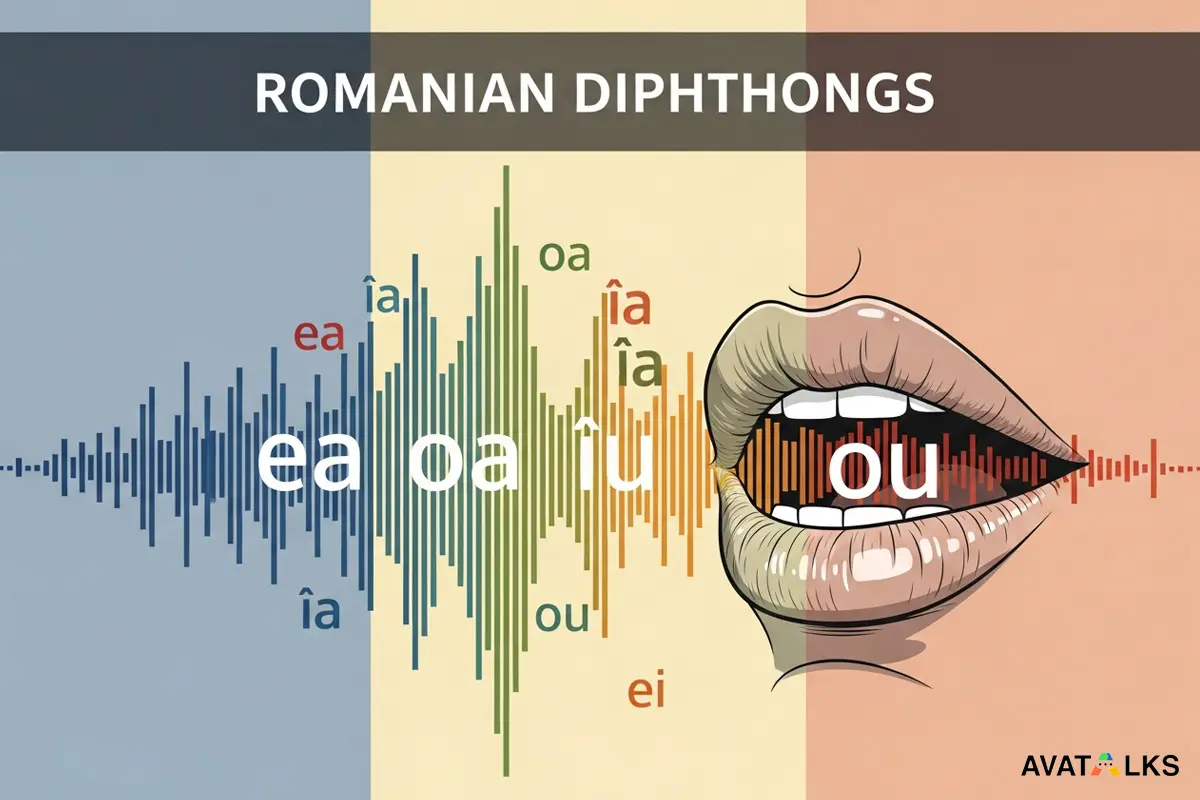
- Romanian diphthongs are vowel combinations pronounced within one syllable.
- The most important Romanian diphthongs are ea and oa, which appear in stressed syllables.
- Many vowel combinations look similar but do not behave the same.
- Romanian pronunciation is stable once you learn the patterns.
- Training your ear with real words is more effective than memorizing rules.
Romanian alphabet pronunciation hub
If you want the full system behind these sounds, see the Romanian alphabet pronunciation hub
Explore the practice hub →What are Romanian diphthongs?
Romanian diphthongs are combinations of a vowel and a glide (usually i or u) pronounced together in a single syllable.
In practical terms:
you hear one smooth sound, not two separate vowels.
Romanian is more consistent than English, but diphthongs are where learners hesitate most — especially with oa, ea, and ia.
How many diphthongs does Romanian have?
From a learner’s perspective, Romanian has two core diphthongs that matter most:
- ea
- oa
Linguistically, Romanian also allows many vowel + glide combinations, but not all of them behave the same way.
If you’re learning pronunciation (not phonology theory), focus on:
- how they sound
- where they appear
- when they change meaning
Common Romanian letter combinations you’ll see
ea
Pronunciation: /e̯a/
Appears in stressed syllables
Examples:
- cafea (coffee)
- mea (my – feminine)
- fier (iron)
👉 The sound starts near e and glides toward a.
oa
Pronunciation: /o̯a/
Strongly tied to word stress
Examples:
- noapte (night)
- foarte (very)
- broască (frog)
👉 This is one of the most distinctive sounds in Romanian.
ia
Pronunciation: usually /ja/
Examples:
- iar (again)
- iarnă (winter)
- viață (life)
👉 Often feels like a y + vowel sound to English speakers.
ai / ei / au
These appear frequently but are less confusing:
- ai → rai (heaven)
- ei → lei (lions)
- au → sau (or)
They behave more like clear vowel + glide sequences.
Are all vowel combinations diphthongs?
No.
This is where many learners get confused.
Some combinations:
- look like diphthongs
- are spelled with two vowels
- but are pronounced across two syllables
Example:
- poezie → po-e-zi-e (not a diphthong)
The key difference is syllable structure, not spelling.
Why “oa” and “ea” matter so much
Why does Romanian focus on oa and ea?
Because these diphthongs:
- only appear in stressed syllables
- often alternate with o / e in related words
- affect meaning and natural rhythm
Example:
- noapte → nopți
- foarte → foarte bine
This stress-based behavior is unique compared to many Romance languages.
Common pronunciation mistakes
Mistake 1: Splitting the diphthong
❌ no-ap-te
✅ noapte (one smooth syllable)
Mistake 2: Replacing oa / ea with plain vowels
❌ pronouncing foarte as forte
✅ keeping the glide
Mistake 3: Guessing based on spelling alone
Romanian spelling is phonetic — but stress still matters.
If you’re unsure:
- slow down
- listen
- repeat full words, not isolated sounds
How to practice Romanian diphthongs effectively
1. Practice inside real words
Diphthongs behave differently in isolation.
2. Say the stressed syllable louder
This helps your brain lock the sound.
3. Compare minimal contrasts
- o vs oa
- e vs ea
4. Repeat short phrases, not lists
This improves rhythm and fluency.
How this fits into the Romanian alphabet
Romanian diphthongs make sense only after you understand:
- vowel sounds
- stress
- letter–sound consistency
For spelling structure and letter reference, the Romanian alphabet chart helps connect sound.
Final takeaway
Romanian diphthongs look intimidating, but they’re predictable once you hear them enough.
Focus on:
- ea and oa
- stressed syllables
- whole words, not isolated letters
That’s how native speakers actually learn them — and how you should too.