TL;DR
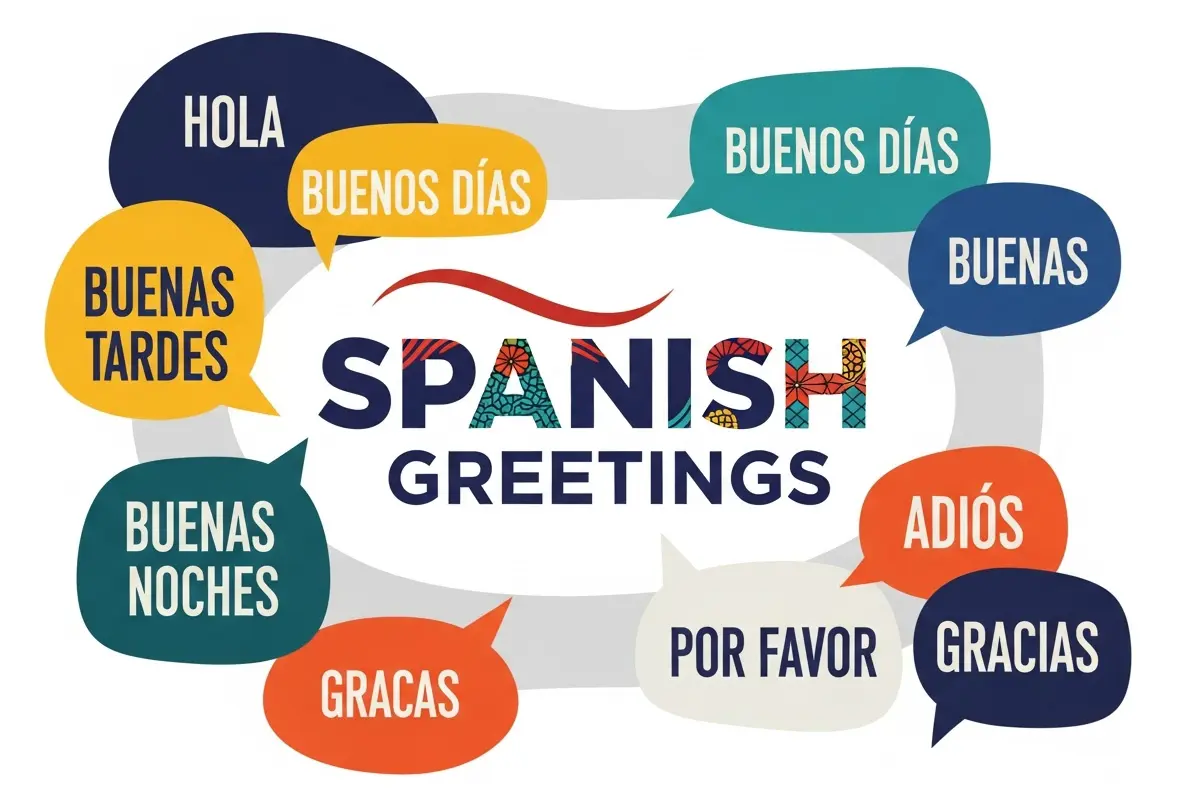
- The most common Spanish greeting is Hola.
- Greetings change depending on the time of day, relationship, and formality level.
- In many Spanish-speaking countries, greetings include physical gestures like a cheek kiss or handshake.
- Saying hello correctly helps you sound polite, confident, and culturally aware.
- Learning greetings is the first step toward building real conversation skills.
Table of Contents
Open Table of Contents
- What Are the Most Common Spanish Greetings?
- Basic Spanish Greetings Everyone Should Know
- Formal vs. Informal Spanish Greetings
- Time-Based Greetings in Spanish
- Cultural Notes: How Spanish Speakers Greet in Real Life
- Beyond “Hello”: Friendly and Casual Greetings
- Greetings for Introductions
- How to Respond to Spanish Greetings
- Polite Goodbye Phrases
- Q&A: Common Questions About Spanish Greetings
- Build Confidence With Practice
- Final Takeaway
What Are the Most Common Spanish Greetings?
If you’re wondering how people greet each other in Spanish, the short answer is: the most common greeting is hola, meaning “hello.”
But greetings in Spanish go beyond a single word. They reflect culture, politeness, and social connection. In many Spanish-speaking regions, greetings are seen as a sign of respect, and starting a conversation without one can feel abrupt or even rude.
Basic Spanish Greetings Everyone Should Know
| Spanish Phrase | Pronunciation | Meaning |
|---|---|---|
| Hola | | Hello |
| Buenos días | | Good morning |
| Buenas tardes | | Good afternoon |
| Buenas noches | | Good evening / Good night |
| ¿Cómo estás? | | How are you? (informal) |
| ¿Cómo está? | | How are you? (formal) |
Try listening to the rhythm while speaking:
Spanish greetings are usually spoken smoothly, with a warm tone rather than sharp or clipped wording.
Formal vs. Informal Spanish Greetings
Spanish has two main registers: formal (usted) and informal (tú). Which one you use depends on relationship, age, and setting.
| Situation | Informal Greeting | Formal Greeting |
|---|---|---|
| With friends | Hola, ¿cómo estás? | — |
| At work | — | Hola, ¿cómo está? |
| Meeting elders | — | Mucho gusto. |
| With family | Hola | — |
| In professional emails | — | Estimado/Estimada… |
Using the wrong register isn’t a serious mistake — but choosing correctly helps you communicate respectfully.Read this article you can know much about different Ways to Say Hi in Spanish.
Time-Based Greetings in Spanish
Spanish greetings also change based on the time of day, similar to English.
| Time | Greeting | Used Until |
|---|---|---|
| Morning | Buenos días | ~12:00 pm |
| Afternoon | Buenas tardes | Sunset |
| Evening/Night | Buenas noches | Bedtime |
A fun detail: Buenas noches can mean both “good evening” and “good night,” depending on context.
Cultural Notes: How Spanish Speakers Greet in Real Life
Greetings in Spanish-speaking cultures tend to feel more personal compared to English-speaking countries.
Depending on the country, greetings may include:
- One cheek kiss (Spain, Chile, Peru)
- Two cheek kisses (Argentina, Uruguay)
- Handshake (formal or professional)
- Hug (close friends)
If you’re unsure what to do, let the native speaker guide the gesture — or simply offer a polite handshake and smile.Check Hi in Spanish in Mexico vs Spain
Beyond “Hello”: Friendly and Casual Greetings
Once you’re comfortable, you can try more natural greetings like:
| Spanish Phrase | Meaning |
|---|---|
| ¿Qué tal? | What’s up? / How’s it going? |
| ¿Cómo va todo? | How’s everything going? |
| ¿Qué onda? (Mexico) | What’s up? |
| ¿Qué haces? | What are you up to? |
| ¿Todo bien? | Everything good? |
These are great for casual conversations with friends or people your age. Check article Casual vs Formal Hi in Spanish (Mexico & Spain) to know more about Casual Greetings VS Formal Greetings in Spanish.
Greetings for Introductions
These phrases help when meeting someone for the first time:
| Spanish Phrase | Meaning |
|---|---|
| Mucho gusto. | Nice to meet you. |
| Encantado/a. | Pleased to meet you. |
| Un placer. | A pleasure. |
Small detail:
If you’re female, use encantada.
If you’re male, use encantado.
Read How to Say Hi and Introduce Yourself in Spanish to know more detail how to greetings for introductions.
How to Respond to Spanish Greetings
A greeting often leads to a short, polite exchange.
Example:
| Spanish | Meaning |
|---|---|
| — Hola, ¿cómo estás? | — Hi, how are you? |
| — Bien, gracias. ¿Y tú? | — Good, thanks. And you? |
For formal settings, change tú → usted:
| Bien, gracias. ¿Y usted? | Good, thanks. And you? |
Polite Goodbye Phrases
Greetings and farewells are connected — knowing both helps conversations feel complete.
| Spanish Phrase | Meaning |
|---|---|
| Adiós | Goodbye |
| Hasta luego | See you later |
| Chao | Bye (casual) |
| Hasta mañana | See you tomorrow |
| Nos vemos | See you |
Q&A: Common Questions About Spanish Greetings
Do Spanish greetings change by country?
Yes. For example, ¿Qué onda? is common in Mexico, while ¿Che, todo bien? is popular in Argentina.
Is “hola” always acceptable?
Yes — it’s universal, friendly, and appropriate in almost every context.
Do I need to speak formally?
Only in professional, respectful, or first-time interactions. Younger people usually switch to tú quickly.
Do greetings always come before conversation?
Yes — starting a conversation without greeting is culturally seen as abrupt.
Build Confidence With Practice
Learning greetings is one of the easiest and most rewarding parts of learning Spanish. It lets you:
- Start conversations
- Sound more natural
- Connect respectfully
- Avoid social mistakes
Final Takeaway
Spanish greetings are simple — but they carry meaning, politeness, and culture. Mastering the basics helps you sound friendly and confident when talking to native speakers.
Whether you’re traveling, taking lessons, or speaking with Spanish-speaking friends, these greetings will help you start every interaction with the right tone.