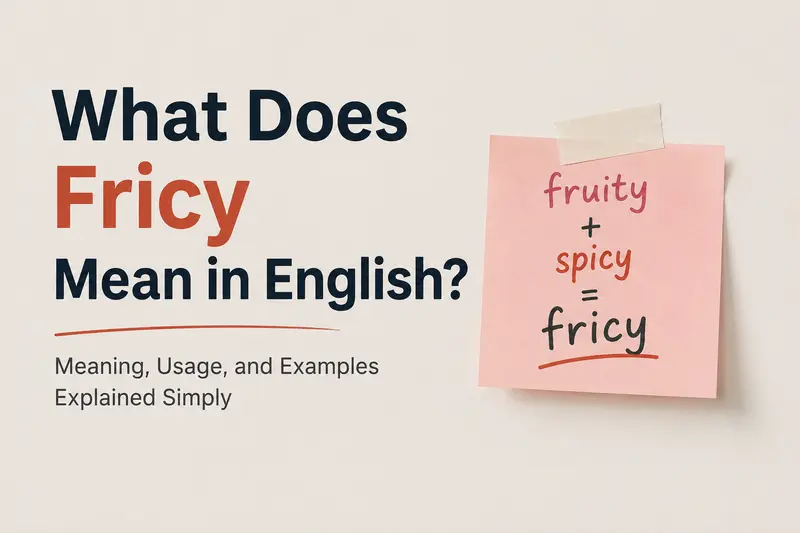
If you have seen fricy online and wondered whether it is a real English word, the short answer is:
It is a new, trendy English blend word that people use to describe something that tastes both fruity and spicy.
That makes it useful for English learners for two reasons.
First, it helps you understand a modern food and lifestyle word that is showing up more often online.
Second, it shows how English creates catchy new vocabulary by blending familiar words together.
So this is not only a food trend. It is also a good vocabulary lesson.
TL;DR
Fricy means fruity + spicy.
People use it to describe:
- foods with fruit and chili together
- drinks that mix sweetness and heat
- sauces, snacks, or recipes with a bright fruity taste and spicy kick
For learners, the most important points are:
- fricy is a casual modern English word
- it comes from fruity + spicy
- it sounds natural in trend, food, and social media contexts
- it is not a formal word for academic or professional writing
- native speakers can usually guess the meaning quickly because the word is built so clearly
What does fricy mean?
The simplest definition is:
fricy = fruity and spicy at the same time
People use it for flavors that combine:
- sweetness or fruitiness
- with chili heat or spicy sharpness
This usually describes things like:
- mango with chili
- pineapple with hot sauce
- spicy fruit snacks
- cocktails with fruit and pepper
- sauces that feel both bright and hot
Example sentences
- This salsa is really fricy.
- I tried a fricy mango drink yesterday.
- Fricy flavors are everywhere this summer.
So if you see the word in a sentence, it usually has nothing to do with grammar or personality. It is almost always about taste.
How is the word formed?
This is the most interesting part for language learners.
Fricy is a blend word made from:
- fru- or fri- from fruity
- and -cy or the sound pattern from spicy
In other words, English takes two ideas and compresses them into one short trendy word.
That is a very common pattern in modern English.
Other English blend words
- brunch = breakfast + lunch
- smog = smoke + fog
- mocktail = mock + cocktail
- proffee = protein + coffee
So once you understand fricy, you are also learning something bigger about English: it loves making short, memorable words from familiar parts.
Is fricy a formal English word?
No. It is better understood as:
- casual
- trendy
- internet-friendly
- and strongly connected to food and lifestyle language
You are more likely to see fricy in:
- social media posts
- food articles
- recipe videos
- trend discussions
- casual conversation
You are less likely to see it in:
- academic writing
- formal business English
- school grammar books
- official reports
So yes, it is a real usable word in modern English. But it belongs to informal current vocabulary, not formal standard writing.
Why do words like fricy become popular?
Because they are easy to remember.
A word like fricy works well because it is:
- short
- playful
- easy to say
- easy to hashtag
- and easy to understand from context
Modern English often rewards words that feel:
- quick
- visual
- social
- and easy to repeat
That is why trend language spreads so fast online.
A catchy word can move from:
- a niche food trend
- to social media
- to blog posts
- to everyday conversation
very quickly.
When does fricy sound natural?
It sounds most natural when people are talking about:
- food trends
- recipes
- restaurant menus
- snacks
- drinks
- summer flavors
- social media food culture
Natural examples
- This sauce is sweet, hot, and a little fricy.
- I keep seeing fricy recipes online lately.
- She loves fricy snacks like mango with chili powder.
- That cocktail has a fricy flavor profile.
Less natural examples
- The company released a fricy quarterly report.
- His presentation style was fricy.
Those sound strange because fricy is still strongly tied to taste and flavor.
Should English learners use the word?
Yes, but with the right expectations.
You can use fricy if:
- you are talking casually
- the topic is food or drinks
- you want to sound current
- the listener is comfortable with modern trend vocabulary
You may want to avoid it if:
- you are writing formally
- the listener is not familiar with internet-style language
- you want the clearest possible wording
A safe strategy is:
First say the clear version
- It is fruity and spicy.
Then use the trend word
- It is really fricy.
That makes your meaning clear even if the other person has never heard the word before.
How to use fricy in a sentence
Here are some useful patterns.
Describing food
- This dip is surprisingly fricy.
- The tacos have a fricy mango topping.
Talking about a trend
- Fricy flavors seem really popular right now.
- A lot of restaurants are adding fricy items to summer menus.
Giving an opinion
- I like fricy food more than very sweet desserts.
- Fricy drinks sound interesting, but I still prefer plain coffee.
Comparing flavors
- It is not just spicy. It is more fricy than spicy.
- The fruit makes it fresher, so it feels fricy instead of heavy.
A pronunciation note
Most people would say fricy in a way that sounds close to:
FRY-see
The first part sounds like fry. The second part sounds like see.
That gives the word a quick, catchy rhythm, which is probably one reason it feels trend-friendly.
What fricy teaches you about modern English
This word is useful even if you never say it often.
Why?
Because it teaches you how modern English works.
It shows that new vocabulary often spreads through:
- social media
- food culture
- short-form video
- and playful word formation
That means English learners should not expect every common modern word to come from older textbooks.
Some words grow because they are:
- catchy
- clear enough
- easy to repeat
- and emotionally or culturally interesting
Once you notice that, modern English starts to feel more understandable.
Common learner mistakes
1. Thinking it is a standard textbook word
It is not. It is modern, casual, and trend-based.
2. Using it in very formal writing
That usually sounds unnatural.
3. Not recognizing it as a blend word
If you see fruity + spicy, the meaning becomes much easier to remember.
4. Treating it like essential beginner vocabulary
It is interesting and current, but it is not a core survival word like:
- spicy
- sweet
- fruit
- coffee
- water
So learn it as a culture word, not as one of your first 50 English words.
Related blend words learners should notice
If you enjoy this kind of vocabulary, these are also useful:
- brunch = breakfast + lunch
- proffee = protein + coffee
- mocktail = mock + cocktail
- hangry = hungry + angry
- smog = smoke + fog
Words like these help you see a real pattern in English instead of memorizing each one separately.
FAQ
What does fricy mean in English?
It means fruity and spicy, especially when describing food or drinks.
Is fricy a real word?
It is a real modern usage word in casual English, especially in trend and food contexts.
Is fricy formal or informal?
It is informal. It sounds best in casual conversation, food writing, and social media language.
Can I say fruity and spicy instead of fricy?
Yes. Fruity and spicy is clearer and more neutral. Fricy sounds trendier and more playful.
Why is fricy useful for English learners?
Because it teaches both a current word and a common English word-building pattern: the blend word.
Final thoughts
If you were wondering what fricy means in English, the short answer is simple:
It means fruity and spicy.
But the more useful lesson is bigger than that.
Fricy shows how English keeps creating new words by:
- blending familiar ideas
- shortening phrases
- and letting culture shape vocabulary quickly
That is why words like this are worth noticing.
Even if you do not use fricy every day, understanding it helps you follow how modern English changes in real time.