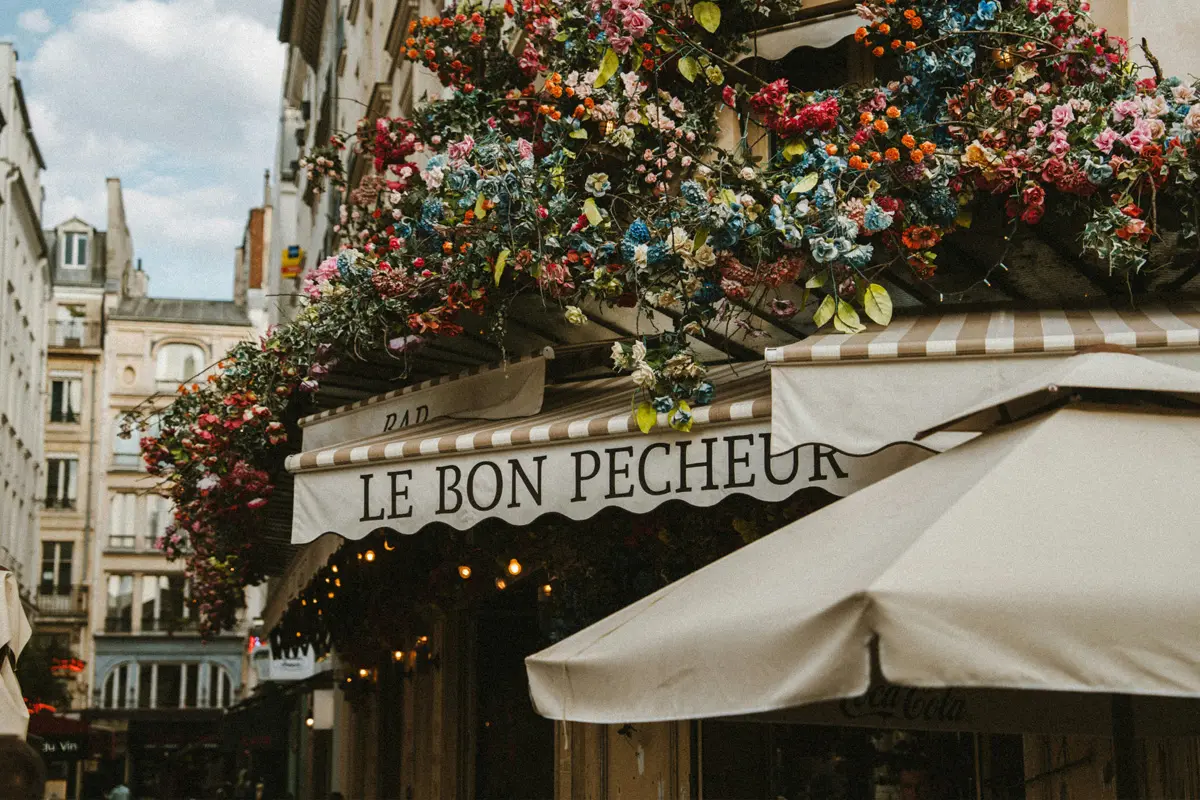
Photo by Dushawn Jovic on Unsplash
If you are looking for common French phrases, you probably do not want a giant phrasebook full of lines you will never use.
You want the phrases that actually come up:
- when you say hello
- when you ask for something politely
- when you order food
- when you get lost
- when you need help
- or when you just want to keep a simple conversation going
That is what this guide focuses on.
These are not advanced expressions. They are the kind of French phrases that help beginners and travelers sound more prepared right away.
TL;DR
A small group of common French phrases goes a long way.
The most useful ones for beginners usually include:
- Bonjour = Hello / good morning
- Bonsoir = Good evening
- Salut = Hi
- Merci = Thank you
- S’il vous plaît = Please
- Excusez-moi = Excuse me
- Je ne comprends pas = I do not understand
- Parlez-vous anglais ? = Do you speak English?
- Combien ça coûte ? = How much does it cost?
- Où sont les toilettes ? = Where is the bathroom?
If you only remember a few phrases first, start with:
- greetings
- polite expressions
- asking for help
- ordering food
- simple travel questions
Why start with common French phrases?
A lot of beginners start by memorizing single words.
That is not useless, but phrases are usually more helpful at the beginning.
Why?
Because phrases let you do something immediately.
They help you:
- greet someone politely
- ask a basic question
- buy something
- order in a café
- explain that you do not understand
- get through a small real-life situation without freezing
They also help you sound more natural, because real conversation is full of repeated chunks, not isolated dictionary words.
Basic French greetings and polite words
These are the phrases you will use constantly.
| French | English | Notes |
|---|---|---|
| Bonjour | Hello / Good morning | safest everyday greeting |
| Bonsoir | Good evening | used later in the day |
| Salut | Hi / Bye | informal |
| Merci | Thank you | essential |
| Merci beaucoup | Thank you very much | stronger thanks |
| De rien | You’re welcome | common reply |
| S’il vous plaît | Please | polite request |
| Excusez-moi | Excuse me | polite, formal or neutral |
| Pardon | Sorry / excuse me | quick and common |
| Ça va ? | How are you? | casual |
Simple examples
- Bonjour ! = Hello!
- Bonsoir, madame. = Good evening, ma’am.
- Merci beaucoup. = Thank you very much.
- Excusez-moi. = Excuse me.
- Ça va ? = How are you?
A simple note that helps: bonjour is usually the safest first greeting in French, especially with strangers, staff, or anyone you do not know well.
Common French phrases for introducing yourself
These help you handle the first minute of a conversation.
| French | English |
|---|---|
| Je m’appelle [name]. | My name is [name]. |
| Enchanté(e). | Nice to meet you. |
| Je viens de… | I come from… |
| Je suis américain(e). | I am American. |
| Je parle un peu français. | I speak a little French. |
| Je suis débutant(e). | I am a beginner. |
| Parlez-vous anglais ? | Do you speak English? |
| Pouvez-vous répéter ? | Can you repeat? |
Simple examples
- Je m’appelle Anna. = My name is Anna.
- Enchanté. = Nice to meet you.
- Je parle un peu français. = I speak a little French.
- Pouvez-vous répéter ? = Can you repeat that?
If this is the part you want to practice most, How to Introduce Yourself in French Naturally is a good next step.
Common French phrases for travel and getting around
These are the phrases that help you move through stations, streets, hotels, and public transport.
| French | English |
|---|---|
| Où est la station de métro ? | Where is the metro station? |
| Où est la gare ? | Where is the train station? |
| Je voudrais un billet, s’il vous plaît. | I would like a ticket, please. |
| À quelle heure part le train ? | What time does the train leave? |
| Où sont les toilettes ? | Where is the bathroom? |
| Je suis perdu(e). | I am lost. |
| Pouvez-vous m’aider ? | Can you help me? |
| Arrêtez ici, s’il vous plaît. | Stop here, please. |
Simple examples
- Où est la gare ? = Where is the train station?
- Je voudrais un billet, s’il vous plaît. = I’d like a ticket, please.
- Je suis perdu. = I am lost.
Useful French shopping phrases
These are the phrases that come up in stores, markets, and casual shopping situations.
| French | English |
|---|---|
| Combien ça coûte ? | How much does it cost? |
| C’est combien ? | How much is it? |
| Je regarde seulement. | I’m just looking. |
| Avez-vous ceci en taille M ? | Do you have this in size M? |
| C’est trop cher. | It’s too expensive. |
| Je prends ça. | I’ll take this. |
| Je peux payer par carte ? | Can I pay by card? |
Simple examples
- Combien ça coûte ? = How much does it cost?
- Je regarde seulement. = I’m just looking.
- Je prends ça. = I’ll take this.
If numbers are slowing you down when you hear prices, Numbers in French 1–100 is worth reviewing.
French phrases for cafés and restaurants
This is one of the most useful categories because these situations come up quickly and often.
| French | English |
|---|---|
| La carte, s’il vous plaît. | The menu, please. |
| Je voudrais un café. | I would like a coffee. |
| Je voudrais… | I would like… |
| L’addition, s’il vous plaît. | The bill, please. |
| C’était délicieux. | It was delicious. |
| Je suis allergique à… | I am allergic to… |
| Sans sucre, s’il vous plaît. | Without sugar, please. |
| Je voudrais de l’eau. | I would like some water. |
Simple examples
- La carte, s’il vous plaît. = The menu, please.
- Je voudrais un café. = I’d like a coffee.
- L’addition, s’il vous plaît. = The bill, please.
If food and café French are what you need most, How to Order Coffee in French and Food Words in French fit well with this guide.
Common French phrases for asking for help
These are especially useful when something goes wrong or when you are stressed and need clear language fast.
| French | English |
|---|---|
| Aidez-moi, s’il vous plaît. | Help me, please. |
| J’ai besoin d’un médecin. | I need a doctor. |
| Appelez une ambulance ! | Call an ambulance! |
| J’ai perdu mon passeport. | I lost my passport. |
| Je ne comprends pas. | I do not understand. |
| Pouvez-vous parler plus lentement ? | Can you speak more slowly? |
Simple examples
- Je ne comprends pas. = I do not understand.
- Pouvez-vous parler plus lentement ? = Can you speak more slowly?
- J’ai besoin d’un médecin. = I need a doctor.
Common French phrases for everyday conversation
These are small phrases that help you keep a conversation alive even if your French is still basic.
| French | English |
|---|---|
| Oui | Yes |
| Non | No |
| Peut-être | Maybe |
| D’accord | Okay |
| Bien sûr | Of course |
| Je pense que oui. | I think so. |
| Je ne sais pas. | I don’t know. |
| Pas de problème. | No problem. |
| Ce n’est pas grave. | It’s okay / it’s not serious. |
Simple examples
- D’accord. = Okay.
- Je ne sais pas. = I don’t know.
- Pas de problème. = No problem.
These may look simple, but they are some of the most useful phrases in real conversation.
Talking about time, dates, and basic daily life
A lot of beginner conversations depend on simple time words.
| French | English |
|---|---|
| Quelle heure est-il ? | What time is it? |
| Aujourd’hui | Today |
| Demain | Tomorrow |
| Maintenant | Now |
| Ce soir | Tonight |
| Ce matin | This morning |
Simple examples
- Quelle heure est-il ? = What time is it?
- À demain ! = See you tomorrow!
- Ce soir, je suis occupé(e). = Tonight, I’m busy.
If you want more than the basics here, How to Tell Time in French and Months in French are useful follow-ups.
Short real-life mini-dialogues
Greeting someone
- Bonjour ! Ça va ?
- Oui, ça va bien, merci. Et vous ?
English:
- Hello! How are you?
- Yes, I’m fine, thank you. And you?
In a café
- Bonjour. Je voudrais un café, s’il vous plaît.
- Oui, bien sûr.
- Merci.
English:
- Hello. I’d like a coffee, please.
- Yes, of course.
- Thank you.
Asking for help
- Excusez-moi, où est la gare ?
- La gare est là-bas.
English:
- Excuse me, where is the station?
- The station is over there.
Tips for learning common French phrases faster
A few habits help a lot here.
1. Learn phrases, not only single words
That helps you speak sooner and sound more natural.
2. Say them out loud
French can look familiar on the page but sound very different when spoken.
3. Practice by situation
Group phrases by use:
- greeting
- ordering
- asking directions
- shopping
- getting help
That makes them easier to remember.
4. Reuse the same phrases often
A small set used many times is better than fifty phrases you never say again.
Common mistakes beginners make
1. Using phrases without learning when they are formal or informal
For example, salut is friendly and informal, but bonjour is much safer with strangers.
2. Memorizing too many phrases at once
It is better to master 10 useful phrases than skim 100.
3. Ignoring pronunciation completely
French pronunciation matters a lot for being understood, especially with short phrases.
4. Learning phrases with no context
It is much easier to remember a phrase when you know where you would actually use it.
FAQ
What are the most useful common French phrases for beginners?
A strong beginner set includes bonjour, merci, s’il vous plaît, excusez-moi, je ne comprends pas, and où sont les toilettes ?
Can I learn French by memorizing phrases first?
Yes, phrases are a very good starting point, especially for beginners and travelers. They become even more useful when you combine them with pronunciation and simple grammar later.
Are these phrases only for France?
No. Most of these phrases are widely understood across the French-speaking world, though pronunciation and some vocabulary can vary by region.
What is the safest French greeting?
Bonjour is the safest and most useful one in everyday situations.
Final Thoughts
The best common French phrases are the ones that help you do something immediately.
That usually means:
- greeting people politely
- asking simple questions
- ordering food
- getting around
- asking for help
- keeping a short conversation moving
So do not worry about memorizing everything at once.
Start with a small group of phrases you can actually imagine using. Once those feel natural, French becomes much easier to build on.