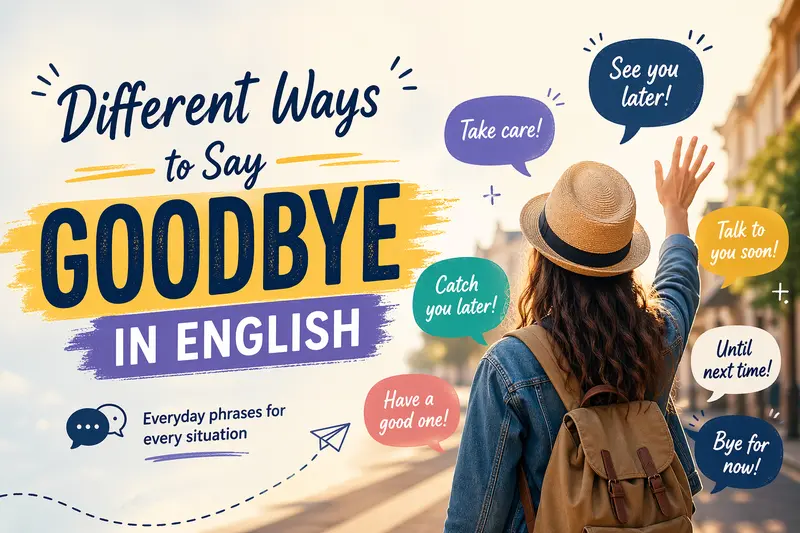
There are many different ways to say goodbye in English.
Sometimes people say bye. Sometimes they say see you later, take care, or have a good day. The phrase changes with the situation, your relationship, and the tone you want.
That is why this topic matters. If you only use goodbye every time, your English is correct, but it may not sound very natural.
In this guide, you will learn different ways to say goodbye in English, what each one feels like, and when to use it.
Quick list: different ways to say goodbye in English
Here are some of the most common options:
- Goodbye
- Bye
- Bye-bye
- See you
- See you later
- See you soon
- See you tomorrow
- Take care
- Have a good day
- Have a nice day
- Have a good one
- Talk to you later
- Talk soon
- Catch you later
- Catch you soon
- So long
- I have to go
- I’m off
- I’ve got to run
- Until next time
- Farewell
The most common everyday goodbyes
These are the phrases English learners will hear most often.
Goodbye
A standard and clear way to end a conversation.
Tone: neutral, a little formal
Example: Goodbye, everyone. See you tomorrow.
Bye
The most common everyday choice.
Tone: casual, natural
Example: Bye, see you later.
Bye-bye
A softer and more playful version of bye.
Tone: warm, playful, often used with children
Example: Bye-bye, Lily.
See you
A very common friendly goodbye.
Tone: casual, light
Example: See you on Monday.
See you later
One of the most useful goodbye phrases in English.
Tone: casual, friendly
Example: Okay, I need to go now. See you later.
See you soon
This sounds a little warmer than see you later.
Tone: friendly, positive
Example: Thanks for coming. See you soon.
Friendly and warm ways to say goodbye
These sound a little more personal.
Take care
A kind and very natural phrase.
Tone: warm, thoughtful
Example: It was nice talking to you. Take care.
Talk to you later
Common when you expect another conversation later.
Tone: friendly, casual
Example: I’m heading out now. Talk to you later.
Talk soon
Short and common in messages.
Tone: warm, modern
Example: Thanks again. Talk soon.
Catch you later
A casual phrase often used between friends.
Tone: informal, relaxed
Example: I’ve got to run. Catch you later.
Catch you soon
Similar to catch you later, but slightly more future-focused.
Tone: casual, friendly
Example: Catch you soon!
Until next time
This sounds warm and a little polished.
Tone: friendly, slightly formal
Example: Thanks for reading. Until next time.
Polite ways to say goodbye in English
These are useful in public, service, or polite daily situations.
Have a good day
Very common and polite.
Tone: polite, friendly
Example: Thank you for your help. Have a good day.
Have a nice day
Very similar to have a good day.
Tone: polite, friendly
Example: Bye, have a nice day.
Have a good evening
Useful later in the day.
Tone: polite
Example: Good night, everyone. Have a good evening.
Have a great weekend
Common on Fridays or before time off.
Tone: friendly, polite
Example: See you Monday. Have a great weekend.
It was nice seeing you
A natural phrase after meeting someone in person.
Tone: polite, warm
Example: It was nice seeing you. Take care.
It was nice talking to you
Useful after a conversation, especially by phone or online.
Tone: polite, warm
Example: It was nice talking to you. Goodbye.
Professional ways to say goodbye
These work well in work or business settings.
Goodbye
Still useful in professional conversation.
Tone: clear, professional
Example: Goodbye, and thank you for your time.
Have a good day
Very safe and common at work.
Tone: polite, professional
Example: Thanks again. Have a good day.
Take care
Friendly, but still acceptable in many work settings.
Tone: warm, professional-casual
Example: Take care, and let me know if you need anything else.
Speak to you soon
Common when you expect another meeting or call.
Tone: professional, friendly
Example: Thanks for the update. Speak to you soon.
See you tomorrow
Very useful with coworkers or classmates.
Tone: natural, professional-casual
Example: See you tomorrow at the meeting.
Casual ways to say goodbye with friends
These sound relaxed and natural.
I have to go
Not a goodbye by itself, but often used right before one.
Tone: casual
Example: I have to go. Bye!
I’m off
Common in British English and also understood elsewhere.
Tone: casual
Example: I’m off now. See you later.
I’ve got to run
A natural phrase when you need to leave quickly.
Tone: casual, informal
Example: Sorry, I’ve got to run. Catch you later.
So long
Older-fashioned, but still understandable.
Tone: casual, slightly old-fashioned
Example: So long, everyone.
More formal or stronger endings
These are less common in everyday speech, but still useful to know.
Farewell
This sounds more formal, emotional, or literary than goodbye.
Tone: formal, serious, emotional
Example: Farewell, my friend.
Until we meet again
A dramatic or emotional phrase.
Tone: formal, emotional
Example: Until we meet again.
These are not your first everyday choices, but they appear in books, speeches, and emotional moments.
Best goodbye phrases by situation
With friends
- Bye
- See you
- See you later
- Catch you later
- Talk to you later
With coworkers
- Bye
- See you tomorrow
- Have a good evening
- Take care
With customers or strangers
- Goodbye
- Have a good day
- Have a nice day
In texts and messages
- Bye
- Talk soon
- Talk to you later
- Take care
- See you soon
In formal situations
- Goodbye
- It was nice speaking with you
- Have a good day
What each phrase feels like
Here is the simplest tone guide:
| Phrase | Tone |
|---|---|
| Goodbye | neutral, a little formal |
| Bye | everyday, natural |
| Bye-bye | playful, soft |
| See you | friendly |
| See you later | casual, common |
| See you soon | warm |
| Take care | kind, thoughtful |
| Have a good day | polite |
| Talk to you later | casual, future contact |
| Catch you later | informal |
| Farewell | formal, emotional |
Learning goodbye phrases across languages
Goodbye phrases are often one of the first things learners notice in a new language because they show tone very clearly.
For example, some languages have a stronger difference between formal and casual farewells, while others rely more on context. If you want to compare how this works in other languages, see Goodbye in Czech Language: Formal and Casual Farewells, How to Say Goodbye in Dutch: Common Farewells, and How to Say Bye Bye in Chinese (With Tone Tips & Examples).
FAQ
What is the most common way to say goodbye in English?
Usually bye. It is short, natural, and works in many everyday situations.
Is goodbye formal?
Not extremely formal, but it often sounds a little more formal or final than bye.
What is a friendly way to say goodbye?
Good friendly choices include see you, see you later, see you soon, and take care.
What is a professional way to say goodbye?
In professional settings, goodbye, have a good day, take care, and speak to you soon all work well.
Final thoughts
The best way to say goodbye in English depends on the moment.
If you want to sound natural, do not rely on only one phrase. Learn a few common options, notice their tone, and use them in real conversations.
That is what makes your English feel more flexible and more alive.