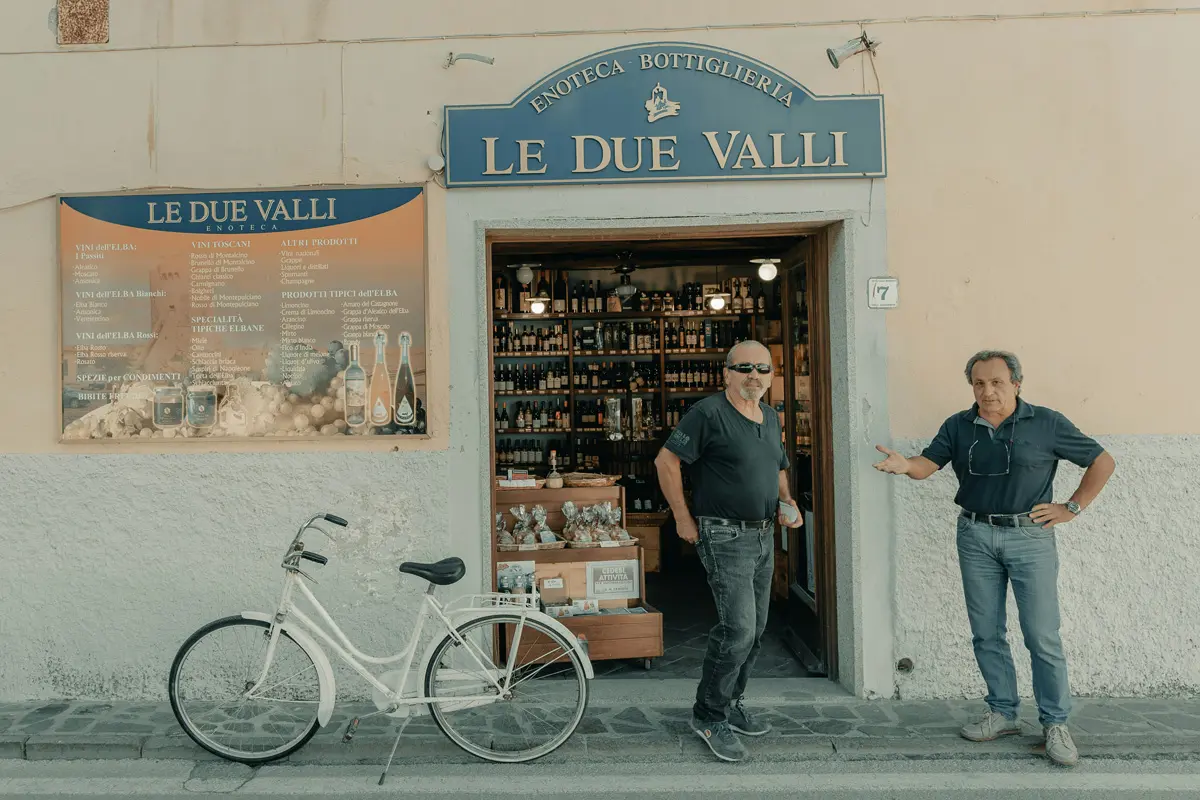
Photo by Clay Banks on Unsplash
You can know hundreds of Italian words and still freeze when someone starts talking to you.
That’s where phrases help.
Instead of building every sentence from scratch, learn a few expressions as complete units: Non capisco when you don’t understand, Quanto costa when you’re shopping, or Ho una prenotazione when you arrive at a hotel.
This guide gives you 100+ useful Italian phrases for conversations, travel, restaurants, shopping, getting around, and those moments when you simply need help.
You don’t need to memorize them all. Start with the situations you’re most likely to encounter, listen to the Italian, and practice saying the phrases aloud.
20 Essential Italian Phrases to Learn First
If you only have time to learn a small set, start with these.
| Italian | English |
|---|---|
| Ciao | Hi / Bye |
| Buongiorno | Good morning / Good day |
| Grazie | Thank you |
| Per favore | Please |
| Mi scusi | Excuse me |
| Come stai? | How are you? |
| Tutto bene? | Everything okay? |
| Non capisco | I don’t understand |
| Può ripetere? | Can you repeat? |
| Più lentamente per favore | More slowly please |
| Parla inglese? | Do you speak English? |
| Dove si trova il bagno? | Where is the bathroom? |
| Quanto costa? | How much does it cost? |
| Vorrei questo | I’d like this |
| Posso pagare con la carta? | Can I pay by card? |
| Ho una prenotazione | I have a reservation |
| Ho bisogno di aiuto | I need help |
| Va bene | Okay / That’s fine |
| Non lo so | I don’t know |
| Arrivederci | Goodbye |
Listen to a few phrases you’ll use again and again:
These phrases won’t make you fluent, but they give you something immediately useful: a way to keep a conversation going even when your Italian is limited.
Italian Greetings and Goodbyes
You only need a few greetings to begin interacting in Italian.
| Italian | English | Use |
|---|---|---|
| Ciao | Hi / Bye | Informal |
| Buongiorno | Good morning / Good day | Polite |
| Buonasera | Good evening | Polite |
| Salve | Hello | Neutral |
| Come stai? | How are you? | Informal |
| Come sta? | How are you? | Formal / polite |
| Come va? | How’s it going? | Conversational |
| Tutto bene? | Everything okay? | Conversational |
| Arrivederci | Goodbye | Polite |
| A presto | See you soon | Farewell |
| A dopo | See you later | Farewell |
| Ci vediamo | See you | Informal |
The important distinction is context. Ciao is informal, so it isn’t automatically the best greeting for every stranger, shopkeeper, receptionist, or older person.
We cover those differences in detail in our Italian greetings guide, including when to use ciao, buongiorno, buonasera, salve, and buonanotte.
Polite Italian Phrases
Courtesy phrases are useful everywhere—from a café counter to a hotel reception desk.
| Italian | English |
|---|---|
| Grazie | Thank you |
| Grazie mille | Thank you very much |
| Prego | You’re welcome |
| Per favore | Please |
| Per piacere | Please |
| Mi scusi | Excuse me / Sorry |
| Scusa | Excuse me / Sorry |
| Mi dispiace | I’m sorry |
| Nessun problema | No problem |
| Va bene | Okay / That’s fine |
| Certamente | Certainly |
| Molto gentile | Very kind |
Notice scusa versus mi scusi. Scusa is informal, while mi scusi is the safer polite form when addressing someone you don’t know.
For a closer look at different ways to make polite requests, see how to say please in Italian.
Italian Phrases for Introducing Yourself
You don’t need a long speech to introduce yourself.
| Italian | English |
|---|---|
| Mi chiamo Marco | My name is Marco |
| Sono Anna | I’m Anna |
| Come ti chiami? | What’s your name? |
| Come si chiama? | What’s your name? — formal |
| Piacere | Nice to meet you |
| Piacere di conoscerti | Nice to meet you — informal |
| Piacere di conoscerla | Nice to meet you — formal |
| Sono di Londra | I’m from London |
| Vengo dalla Cina | I come from China |
| Di dove sei? | Where are you from? |
| Di dov’è? | Where are you from? — formal |
| Vivo a Milano | I live in Milan |
A simple introduction might be:
Ciao sono Anna piacere
Hi, I’m Anna. Nice to meet you.
That’s enough to start a real conversation.
Italian Phrases When You Don’t Understand
These may be the most valuable phrases on this entire page for a beginner.
You don’t need to understand everything. You need to know how to recover when you don’t.
| Italian | English |
|---|---|
| Non capisco | I don’t understand |
| Non ho capito | I didn’t understand |
| Può ripetere? | Can you repeat? |
| Puoi ripetere? | Can you repeat? — informal |
| Più lentamente per favore | More slowly please |
| Come si dice? | How do you say it? |
| Cosa significa? | What does it mean? |
| Parla inglese? | Do you speak English? |
| Parlo un po’ di italiano | I speak a little Italian |
| Sto imparando l’italiano | I’m learning Italian |
| Non lo so | I don’t know |
| Può scriverlo? | Can you write it down? |
One particularly useful strategy is to combine two phrases:
Mi scusi non capisco può ripetere più lentamente per favore
Excuse me, I don’t understand. Could you repeat more slowly, please?
You don’t need perfect grammar or pronunciation to make your meaning clear.
Italian Phrases for Getting Around
Whether you’re looking for a station, bus stop, museum, or your hotel, these expressions give you a starting point.
| Italian | English |
|---|---|
| Dov’è la stazione? | Where is the station? |
| Dov’è il bagno? | Where is the bathroom? |
| Dov’è il centro? | Where is the city center? |
| Come arrivo alla stazione? | How do I get to the station? |
| È lontano? | Is it far? |
| È vicino? | Is it nearby? |
| A destra | To the right |
| A sinistra | To the left |
| Sempre dritto | Straight ahead |
| Quale autobus devo prendere? | Which bus should I take? |
| Questo treno va a Roma? | Does this train go to Rome? |
| A che ora parte? | What time does it leave? |
| A che ora arriva? | What time does it arrive? |
| Un biglietto per Roma per favore | One ticket to Rome please |
| Dove posso comprare un biglietto? | Where can I buy a ticket? |
Pay attention to dov’è, meaning “where is.” Once you recognize it, you can use the same pattern with many places.
Italian Phrases at the Train Station
Italian train travel is much easier when you can ask a few basic questions.
| Italian | English |
|---|---|
| Vorrei un biglietto per Firenze | I’d like a ticket to Florence |
| Solo andata | One way |
| Andata e ritorno | Round trip |
| Da quale binario parte? | Which platform does it leave from? |
| Il treno è in ritardo? | Is the train delayed? |
| Devo cambiare treno? | Do I need to change trains? |
| È questo il treno per Venezia? | Is this the train to Venice? |
| Quando arriva? | When does it arrive? |
Words such as binario (platform/track), biglietto (ticket), and ritardo (delay) are worth recognizing even if you don’t remember the entire sentence.
Italian Phrases at a Hotel
Checking in usually involves predictable questions, which makes hotel Italian especially practical to learn.
| Italian | English |
|---|---|
| Ho una prenotazione | I have a reservation |
| Ho una prenotazione a nome Rossi | I have a reservation under the name Rossi |
| Vorrei fare il check-in | I’d like to check in |
| A che ora è il check-in? | What time is check-in? |
| A che ora è il check-out? | What time is check-out? |
| La colazione è inclusa? | Is breakfast included? |
| Dove si fa colazione? | Where is breakfast served? |
| Qual è la password del Wi-Fi? | What’s the Wi-Fi password? |
| Potrei avere un altro asciugamano? | Could I have another towel? |
| La chiave per favore | The key please |
| La camera non è pronta | The room isn’t ready |
| C’è un problema con la camera | There’s a problem with the room |
A very simple check-in can begin with just:
Buongiorno ho una prenotazione a nome Rossi
Good morning, I have a reservation under the name Rossi.
Italian Phrases at Restaurants
You don’t need to translate an entire menu to handle a simple restaurant interaction.
| Italian | English |
|---|---|
| Un tavolo per due per favore | A table for two please |
| Possiamo vedere il menù? | Can we see the menu? |
| Vorrei ordinare | I’d like to order |
| Per me questo | This for me |
| Cosa consiglia? | What do you recommend? |
| Senza carne per favore | Without meat please |
| Sono vegetariano | I’m vegetarian — male |
| Sono vegetariana | I’m vegetarian — female |
| Sono allergico alle noci | I’m allergic to nuts — male |
| Sono allergica alle noci | I’m allergic to nuts — female |
| Acqua naturale per favore | Still water please |
| Acqua frizzante per favore | Sparkling water please |
| È delizioso | It’s delicious |
| Il conto per favore | The bill please |
| Posso pagare con la carta? | Can I pay by card? |
Vorrei is extremely useful. It means “I would like” and gives you a polite way to request something.
If coffee is what you’re after, our guide to ordering coffee in Italy covers Italian café vocabulary and ordering in much more detail.
Italian Phrases for Shopping
Shopping conversations tend to revolve around price, size, availability, and payment.
| Italian | English |
|---|---|
| Quanto costa? | How much does it cost? |
| Quanto costa questo? | How much does this cost? |
| Quanto costa quello? | How much does that cost? |
| Posso provarlo? | Can I try it on? |
| Avete una taglia più grande? | Do you have a larger size? |
| Avete una taglia più piccola? | Do you have a smaller size? |
| Avete questo in nero? | Do you have this in black? |
| Sto solo guardando | I’m just looking |
| È troppo caro | It’s too expensive |
| Lo prendo | I’ll take it |
| Non lo prendo | I won’t take it |
| Posso pagare con la carta? | Can I pay by card? |
| Accettate contanti? | Do you accept cash? |
| Posso avere lo scontrino? | Can I have the receipt? |
For a quick purchase, Quanto costa? and Lo prendo can get you surprisingly far.
Everyday Italian Phrases
Not every conversation happens at a station or restaurant. These expressions are useful in ordinary social situations.
| Italian | English |
|---|---|
| Come va? | How’s it going? |
| Tutto bene | Everything’s fine |
| Molto bene | Very well |
| Così così | So-so |
| Che bello | How nice / That’s great |
| Davvero? | Really? |
| Certo | Of course |
| Forse | Maybe |
| Non lo so | I don’t know |
| Hai ragione | You’re right |
| Non importa | It doesn’t matter |
| Aspetta un momento | Wait a moment |
| Andiamo | Let’s go |
| Sono pronto | I’m ready — male |
| Sono pronta | I’m ready — female |
| Ho fame | I’m hungry |
| Ho sete | I’m thirsty |
| Sono stanco | I’m tired — male |
| Sono stanca | I’m tired — female |
| A domani | See you tomorrow |
These are good phrases to practice until they come out automatically rather than translating them word by word.
Casual Italian Phrases You’ll Hear
Spoken Italian contains short expressions whose meanings aren’t always obvious from a dictionary.
| Italian | Approximate meaning |
|---|---|
| Dai | Come on / Go on |
| Va bene | Okay / All right |
| Va bene così | It’s fine like this |
| Ecco | Here it is / There you go |
| Allora | So / Well then |
| Magari | Maybe / If only / I wish |
| Boh | I don’t know / Who knows |
| Figurati | Don’t mention it / No problem |
| Meno male | Thank goodness |
| Che peccato | What a shame |
| Non fa niente | It doesn’t matter |
| Ci penso io | I’ll take care of it |
Some of these are highly context-dependent. Magari, for example, doesn’t map neatly to one English word in every conversation.
That’s exactly why learning phrases in situations is more useful than memorizing translations alone.
Italian Phrases for Making Plans
Once a conversation moves beyond introductions, these expressions help you make simple plans.
| Italian | English |
|---|---|
| Che fai oggi? | What are you doing today? |
| Che fai domani? | What are you doing tomorrow? |
| Sei libero stasera? | Are you free tonight? — male |
| Sei libera stasera? | Are you free tonight? — female |
| Andiamo? | Shall we go? |
| Andiamo a mangiare | Let’s go eat |
| Vuoi venire? | Do you want to come? |
| A che ora? | At what time? |
| Dove ci vediamo? | Where shall we meet? |
| Ci vediamo alle otto | See you at eight |
| Va bene per me | That works for me |
| A dopo | See you later |
Italian Phrases for Problems and Emergencies
Hopefully you won’t need these, but they’re worth recognizing.
| Italian | English |
|---|---|
| Aiuto | Help |
| Ho bisogno di aiuto | I need help |
| Mi sono perso | I’m lost — male |
| Mi sono persa | I’m lost — female |
| Ho perso il telefono | I’ve lost my phone |
| Ho perso il portafoglio | I’ve lost my wallet |
| Mi sento male | I feel sick |
| Ho bisogno di un medico | I need a doctor |
| Dov’è la farmacia? | Where is the pharmacy? |
| Dov’è l’ospedale? | Where is the hospital? |
| Chiamate un’ambulanza | Call an ambulance |
| Chiamate la polizia | Call the police |
| È un’emergenza | It’s an emergency |
| Sono allergico a questo | I’m allergic to this — male |
| Sono allergica a questo | I’m allergic to this — female |
For the audio examples below, we’ve chosen phrases that don’t require apostrophes so the target strings remain clean.
In a genuine emergency, getting help matters more than perfect Italian. Use whatever language, gestures, translation tools, or assistance is available.
Three Short Italian Conversations
Individual phrases become easier to remember when you see how they fit together.
At a hotel
Receptionist: Buongiorno come posso aiutarla
Good morning, how can I help you?
Guest: Buongiorno ho una prenotazione a nome Rossi
Good morning, I have a reservation under the name Rossi.
Receptionist: Certamente
Certainly.
At a restaurant
Server: Buonasera
Good evening.
You: Buonasera un tavolo per due per favore
Good evening, a table for two please.
Later:
You: Il conto per favore
The bill please.
When you don’t understand
Italian speaker: Parla italiano
Do you speak Italian?
You: Un po ma non capisco bene
A little, but I don’t understand well.
You: Può ripetere più lentamente per favore
Can you repeat more slowly, please?
That kind of interaction is completely realistic for a beginner. You don’t need a sophisticated sentence—you need a few reliable phrases.
How to Make Italian Phrases Sound More Polite
A phrase can be grammatically correct and still sound abrupt if you strip away all the social language around it.
Three useful tools are:
Per favore — please
Mi scusi — excuse me
Grazie — thank you
Compare:
Un biglietto per Roma
with:
Buongiorno un biglietto per Roma per favore
The second version gives the interaction a more courteous frame.
You don’t need to attach per favore mechanically to every sentence. Think of greetings, tone, requests, and thanks as parts of the interaction rather than magic words inserted into every line.
Formal vs Informal Italian Phrases
Italian distinguishes between informal tu and formal or polite Lei.
That affects phrases you’ll use frequently.
| Informal | Formal / polite | English |
|---|---|---|
| Come stai? | Come sta? | How are you? |
| Come ti chiami? | Come si chiama? | What’s your name? |
| Scusa | Mi scusi | Excuse me / Sorry |
| Puoi aiutarmi? | Può aiutarmi? | Can you help me? |
| Puoi ripetere? | Può ripetere? | Can you repeat? |
| Di dove sei? | Di dov’è? | Where are you from? |
As a beginner, you don’t need to panic about choosing perfectly every time. But recognizing the distinction helps explain why you may hear different versions of what looks like the same question.
How to Learn Italian Phrases Without Memorizing a Phrasebook
Reading this entire page once won’t put 100 phrases into your long-term memory.
A better method is to choose phrases by situation.
If you’re traveling tomorrow, learn:
- one greeting
- one polite request
- one phrase for not understanding
- two transport phrases
- two restaurant phrases
- one hotel phrase
- one emergency phrase
That’s already enough to handle several real interactions.
Say each phrase aloud rather than only reading it. Then change one element.
For example:
Dov’è la stazione?
Once that feels familiar, replace stazione with another place you know.
Or begin with:
Vorrei un biglietto per Firenze
and later replace Firenze with your actual destination.
This turns memorized phrases into reusable patterns.
If individual vocabulary is still the bigger challenge, work through our basic Italian words for beginners first.
How to Practice Italian Phrases Naturally
Try practicing a complete situation rather than an isolated sentence.
Imagine walking into a hotel:
- Greet the receptionist.
- Say you have a reservation.
- Give the name.
- Ask about breakfast.
- Thank the receptionist.
Then repeat the same scene without looking at the phrases.
You can do the same for a restaurant, train station, shop, or café.
The goal isn’t to recite a list. It’s to reach the point where Ho una prenotazione appears in your mind when you actually need it.
Pronunciation matters too. If you’re unsure how Italian letters and sounds work, review our Italian pronunciation guide.
Italian Phrases vs Italian Words: What Should You Learn First?
Both matter, but they solve different problems.
A word such as biglietto tells you that you’re dealing with a ticket.
A phrase such as Vorrei un biglietto per Roma lets you actually ask for one.
Vocabulary gives you building blocks. Phrases show you how those blocks work together.
That’s why we’ve separated the two resources:
- Basic Italian words focuses on vocabulary and meanings.
- This guide focuses on complete expressions you can use in conversations.
Learning from both is much more useful than trying to memorize a huge phrasebook without understanding any of its parts.
FAQ About Italian Phrases
What are the most useful Italian phrases for beginners?
Start with expressions that help you interact and recover when communication becomes difficult:
Buongiorno, grazie, per favore, mi scusi, non capisco, può ripetere, parla inglese, quanto costa, and ho bisogno di aiuto.
The best phrases depend on what you plan to do in Italian.
How do you say hello in Italian?
Ciao means hi and is informal.
For a more polite greeting, buongiorno or buonasera may be appropriate depending on the situation. Salve is another greeting you’ll encounter.
Read our Italian greetings guide for the differences.
How do you say please in Italian?
Per favore is one of the most common ways to say please.
You’ll also hear expressions such as per piacere. Their use can depend on context and tone.
See our guide to saying please in Italian for more examples.
How do you say I don’t understand in Italian?
Say Non capisco.
You can follow it with Può ripetere? to ask someone politely to repeat what they said.
How do you ask if someone speaks English in Italian?
Say Parla inglese?
Using mi scusi first makes the interaction more polite:
Mi scusi parla inglese
How do you ask how much something costs in Italian?
Say Quanto costa?
For a specific item, you can say Quanto costa questo? — “How much does this cost?”
How many Italian phrases should I learn?
There’s no useful magic number.
For a first trip or your first conversations, 20 well-practiced phrases are more valuable than 200 phrases you’ve only read once.
Start with high-value expressions, then add phrases for situations you actually expect to encounter.
Should I memorize complete Italian sentences?
Memorizing some complete phrases is useful, especially expressions such as non capisco, ho una prenotazione, and quanto costa.
But don’t stop there. Notice reusable patterns such as dov’è…, vorrei…, posso…, and ho bisogno di…. Once you understand the pattern, one memorized phrase can become many new sentences.
Can I travel in Italy with only basic Italian?
In many travel situations, even limited Italian can be useful. You don’t need fluency to greet someone, order something, ask a simple question, or explain that you don’t understand.
Treat these phrases as tools rather than a test. Use the Italian you know and adapt when necessary.
Start With the Phrases You’ll Actually Use
Don’t try to memorize all 100+ expressions at once.
Choose ten that match your life or your next trip. Listen to them, say them aloud, and imagine the exact situation where you’d use each one.
Once those feel automatic, add another ten.
The goal isn’t to know the longest list of Italian phrases. It’s to have the right phrase ready when a real conversation begins.