Hiragana Practice
If you want to practice hiragana online, this page gives you a clear, repeatable method—not just random quizzes.
You will practice hiragana using a simple loop:
listen → watch mouth shape → repeat → write
This approach helps you:
- Pronounce hiragana correctly from day one
- Avoid fossilized pronunciation mistakes
- Remember characters through sound + movement, not memorization
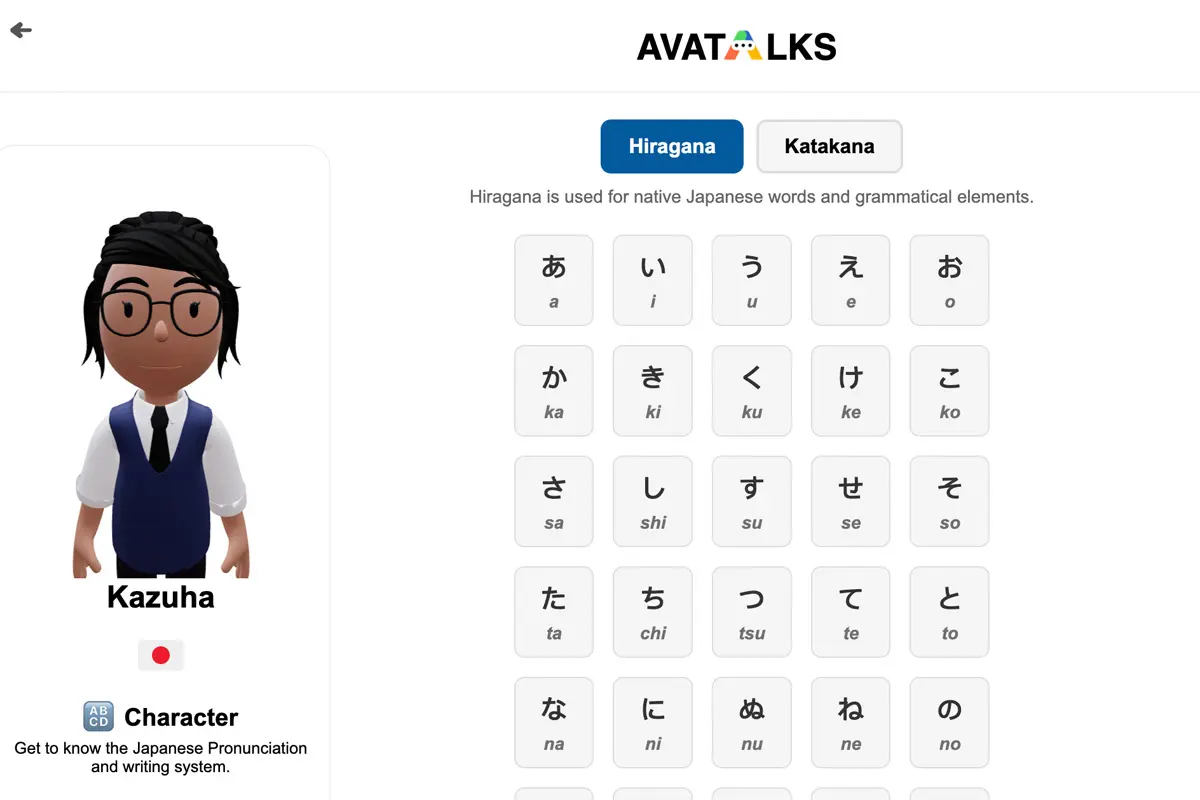
Start Here — How to Practice Hiragana Using the Tool

Hiragana Practice Tool (Audio + Mouth Shape)
Start instantly: listen to each sound, watch mouth shape guidance, repeat out loud, then switch to writing practice.
Open the tool →Most learners fail at hiragana because they only read romaji or only write characters.
Instead, use this 3-step loop every time:
Step 1: Listen carefully
Play the native audio for one hiragana character. Do not read romaji yet—focus on the sound.
Step 2: Watch mouth shape
Pay attention to:
- Lip rounding
- Jaw opening
- Tongue position (especially for し / ち / つ)
This prevents long-term pronunciation errors.
Step 3: Repeat out loud
Say the sound at least 3 times. Then move on to the next character.
After pronunciation, switch to writing practice.
1.Pronunciation Drills (Listen → Mouth Shape → Repeat)
Hiragana Pronunciation Practice
Fix tricky sounds like し/ち/つ, ふ, and ら行 with mouth-shape drills, repetition sets, and a focused practice list.
Practice →Some hiragana sounds cause trouble for almost everyone.
Focus on these first.
Commonly confused sounds
し / ち / つ
- し ≠ “shi” exactly
- ち ≠ “chi” exactly
- つ ≠ “tsu” in English
ふ
- Not “fu”
- Softer, with air through relaxed lips
ら / り / る / れ / ろ
- Not English R or L
- Single light tongue tap
Today’s pronunciation drill list
Practice these characters together:
- し・ち・つ
- ふ
- ら・り・る・れ・ろ
👉 Practice these sounds here: Hiragana Pronunciation Tool
2.Hiragana writing practice Drills (Stroke Order + 10-Minute Method)
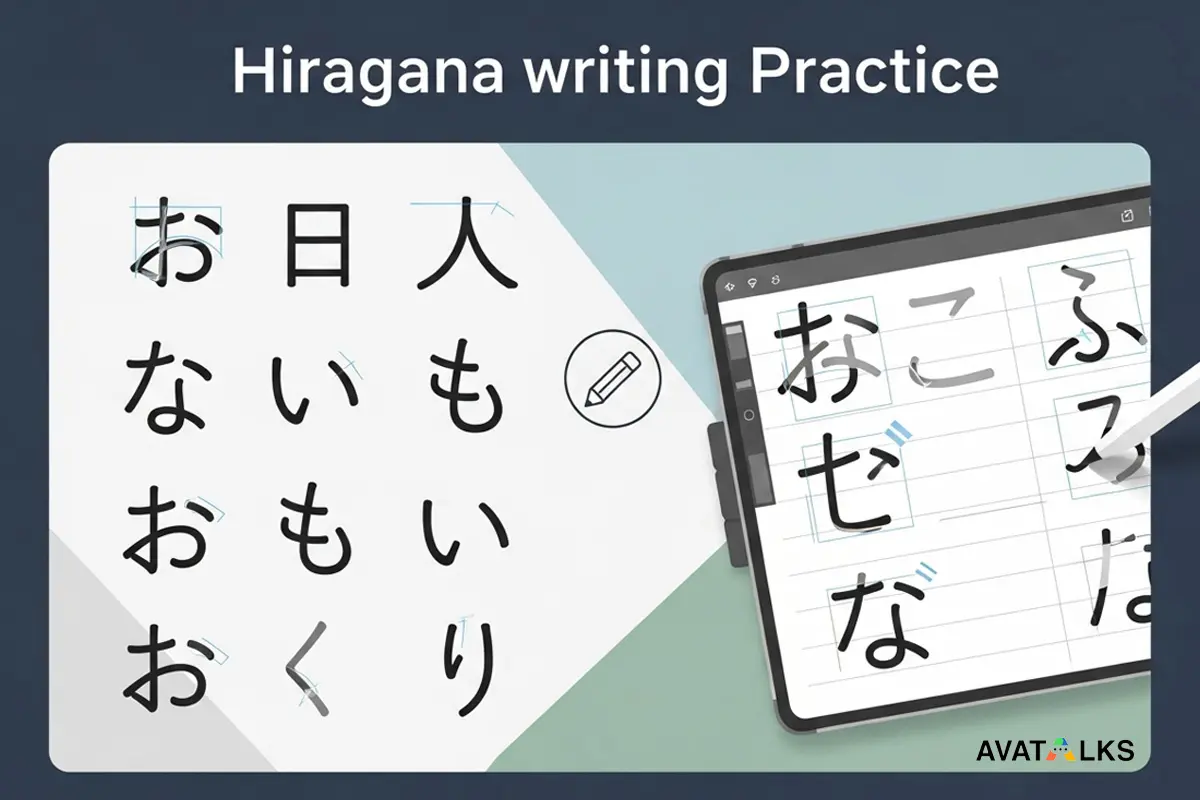
Hiragana Writing Practice
Learn stroke-order mindset, the most commonly mistaken characters, and a 10-minute “trace → copy → recall” routine.
Practice →Writing helps lock hiragana into memory—but only if done correctly.
Stroke order mindset
You don’t need calligraphy. You need consistent motion.
Remember:
- One stroke = one movement
- Smooth > pretty
- Same direction every time
Hiragana most often written wrong
Pay extra attention to:
- あ
- き
- さ
- ぬ
- め
- れ
The 10-minute writing routine
- Trace the character twice
- Copy it once while looking
- Write it once from memory
- Say the sound while writing
Do this for 5–6 characters per session.
👉 Use the writing mode here: Practice Writing Hiragana
3. Hiragana Stroke Order (Write It the Right Way)
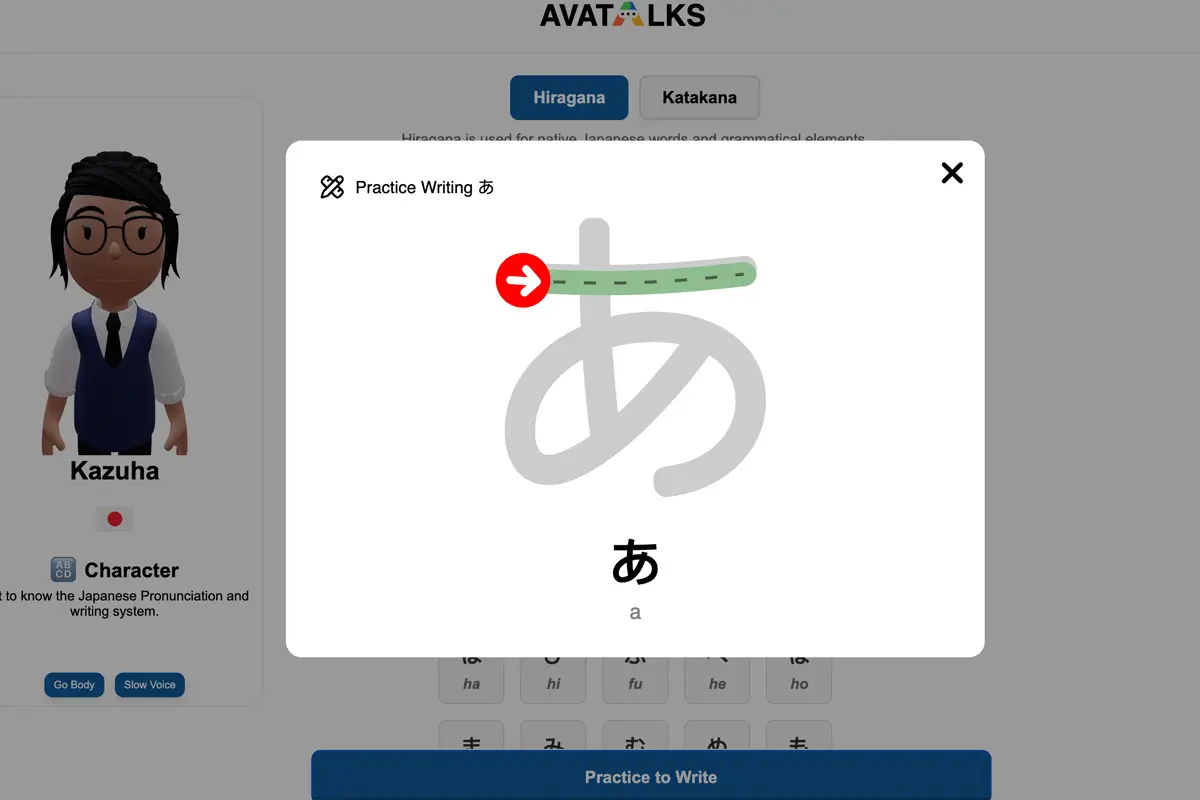
Hiragana Stroke Order
Learn the correct stroke order for every hiragana, avoid common writing mistakes, and make your characters look natural fast.
Practice →Knowing stroke order is not about beauty — it’s about:
- Writing faster
- Remembering characters more easily
- Avoiding shapes that look “almost right” but wrong
The 5 stroke-order rules that matter most
- Top → bottom
- Left → right
- Horizontal before vertical
- One stroke = one motion
- Finish inside shapes last
Characters most learners write incorrectly
Pay extra attention to:
- き
- さ
- ぬ
- め
- れ
How to practice stroke order with the tool
For each character:
- Watch the animation once
- Write it 5 times slowly
- Say the sound while writing
👉 Practice stroke order here: Open Hiragana Writing Tool
4. How to Practice Hiragana (The Right Way)
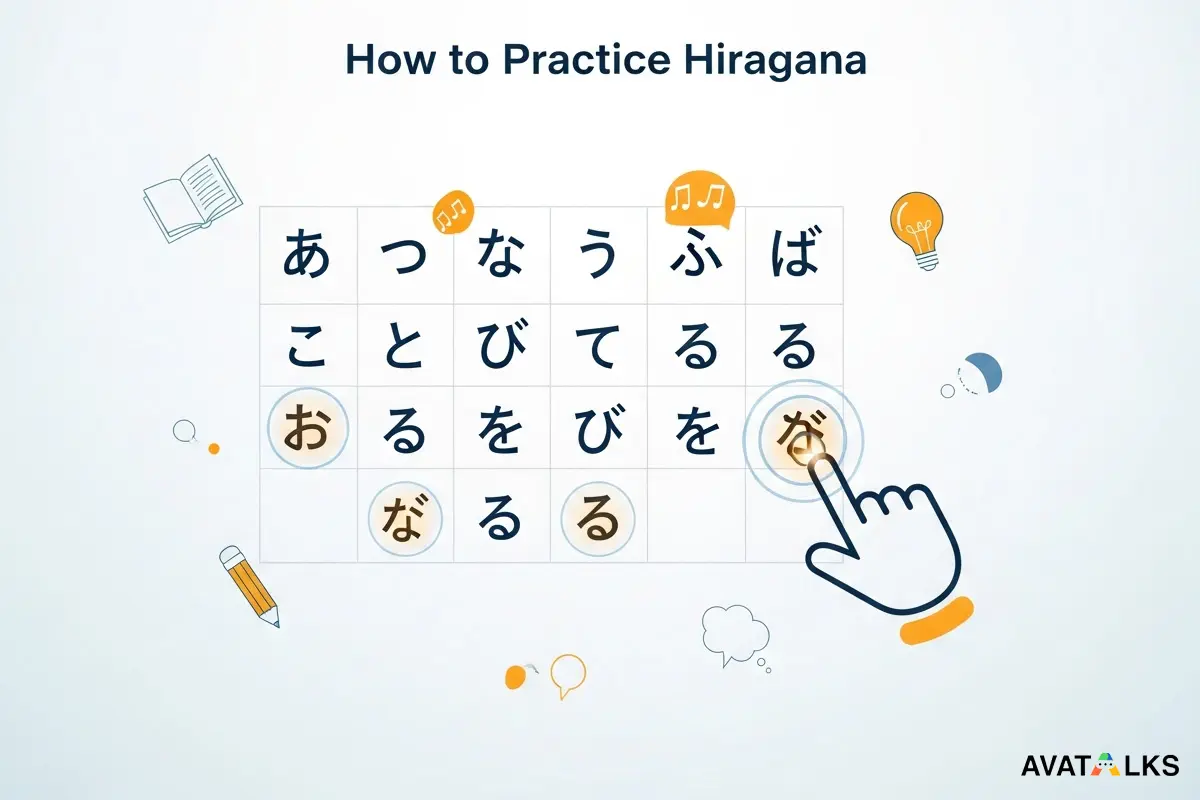
How to Practice Hiragana
A clear daily routine: how long to practice, what order to follow, and how to review so hiragana actually sticks.
Practice →Many learners ask:
“I know what hiragana are — but how do I actually practice them?”
Here’s the shortest effective answer.
The 15-minute daily hiragana routine
- 5 minutes — pronunciation (listen + mouth shape)
- 5 minutes — writing (stroke order + recall)
- 5 minutes — repetition (read aloud without romaji)
Short, focused sessions beat long memorization every time.
What order should you practice in?
Use row-based order, not random lists:
- あ → か → さ → た → な …
- Then focus on difficult sounds (し / つ / ふ)
How to review without burning out
- Review yesterday’s characters once
- Revisit weak characters every 2–3 days
- Skip characters you already recognize instantly
👉 Use this routine with the practice tool:Open Hiragana Practice Tool
5.learn hiragana fast

7-Day Hiragana Practice Plan
A simple daily roadmap: what to practice each day, how long to spend, and how to review without burning out.
Practice →Follow this plan and you’ll cover all basics in one week.
Day 1
あ・い・う・え・お
Day 2
か・き・く・け・こ
Day 3
さ・し・す・せ・そ
Day 4
た・ち・つ・て・と
Day 5
な・に・ぬ・ね・の
Day 6
は → ま rows + confusing pairs
Day 7
Full review + weak sounds
Daily structure (15 minutes)
- 5 min pronunciation
- 5 min writing
- 5 min repetition
Consistency beats speed.
6.Common Hiragana Mistakes (Fix These First)
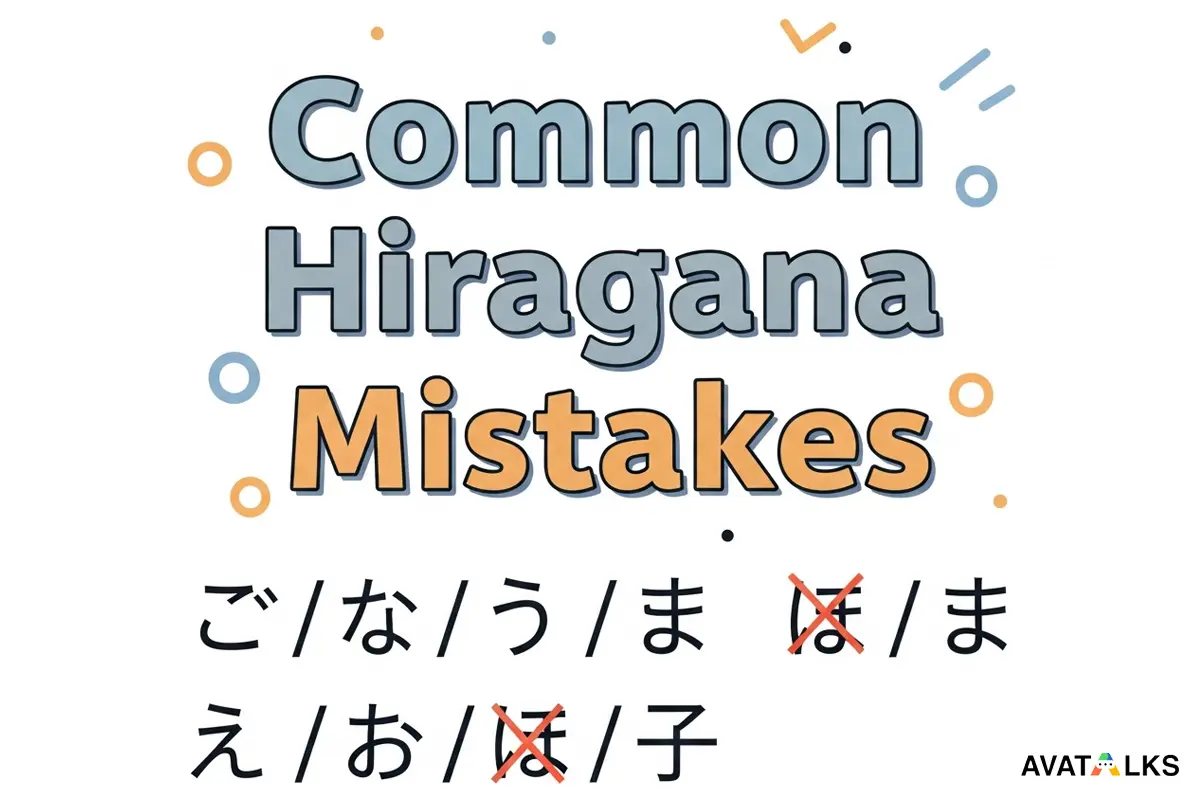
Common Hiragana Mistakes
Stop confusing similar characters like ぬ/め/れ and fix pronunciation traps with a fast “listen → write → repeat” correction method.
Practice →Learners often:
- Rely on romaji too long
- Ignore mouth shape
- Write characters without sound
- Mix similar shapes (ぬ / め / れ)
Fix method:
- Listen again
- Watch mouth shape
- Write once
- Say it again
This loop fixes errors fast.
What to Learn After Basic Hiragana
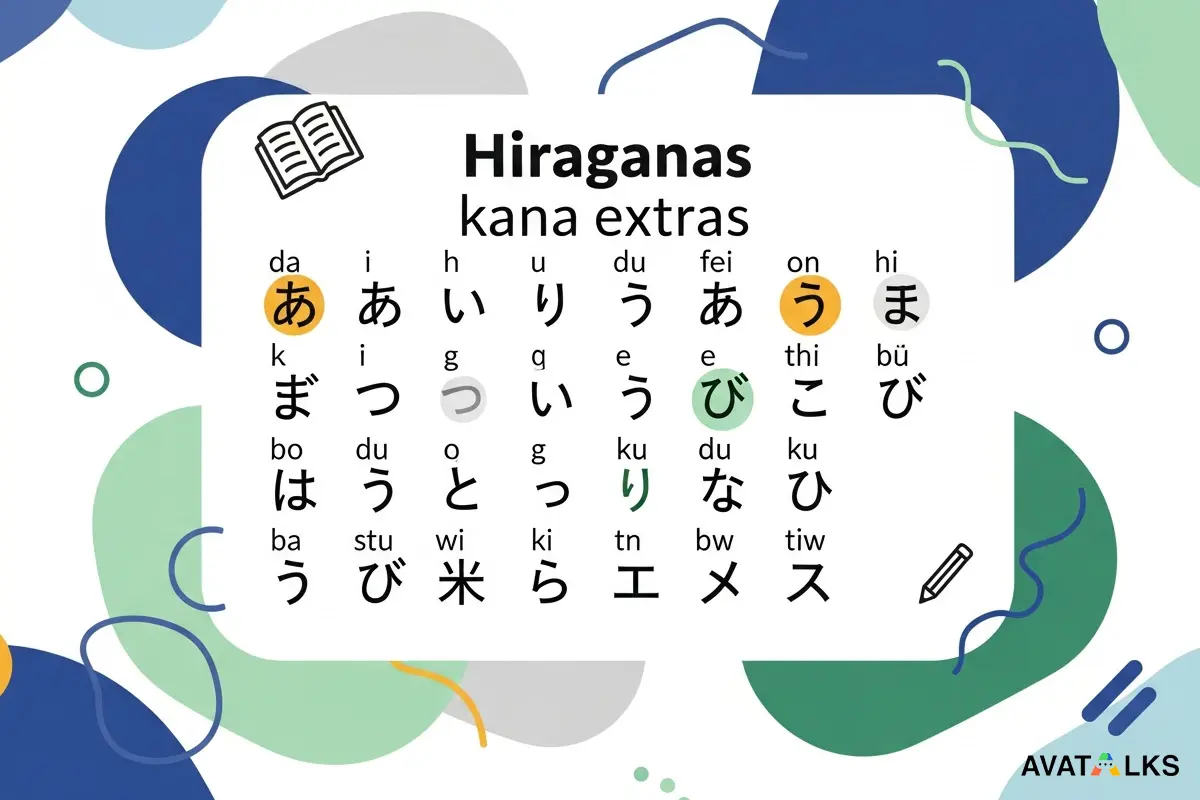
Kana Extras You’ll Need Next
After the basic 46, you’ll need dakuten (が/ざ/だ/ば/ぱ), yoon (きゃ/しゃ), and small っ for real reading.
Practice →Once the basic 46 feel comfortable, move on to:
- Dakuten (が・ざ・だ・ば・ぱ)
- Small や・ゆ・よ (きゃ / しゃ)
- Small っ (double consonants)
These will be covered in the next kana practice hub.
FAQ
How long does hiragana take to learn?
With daily practice, most learners read basic hiragana in 5–7 days and feel confident in 2 weeks.
Should I use romaji?
Use it briefly at the start, then turn it off. Romaji delays real reading.
How often should I practice?
Short daily sessions work better than long, rare ones.
Why do some sounds feel “wrong”?
English mouth habits interfere. Watching mouth shape fixes this quickly.
What comes after hiragana?
Katakana, then real words and sentences.
Final Tip
Hiragana is not about talent. It’s about repetition with feedback.
If you:
- listen
- watch
- repeat
- write
every day, hiragana becomes automatic.