TL;DR
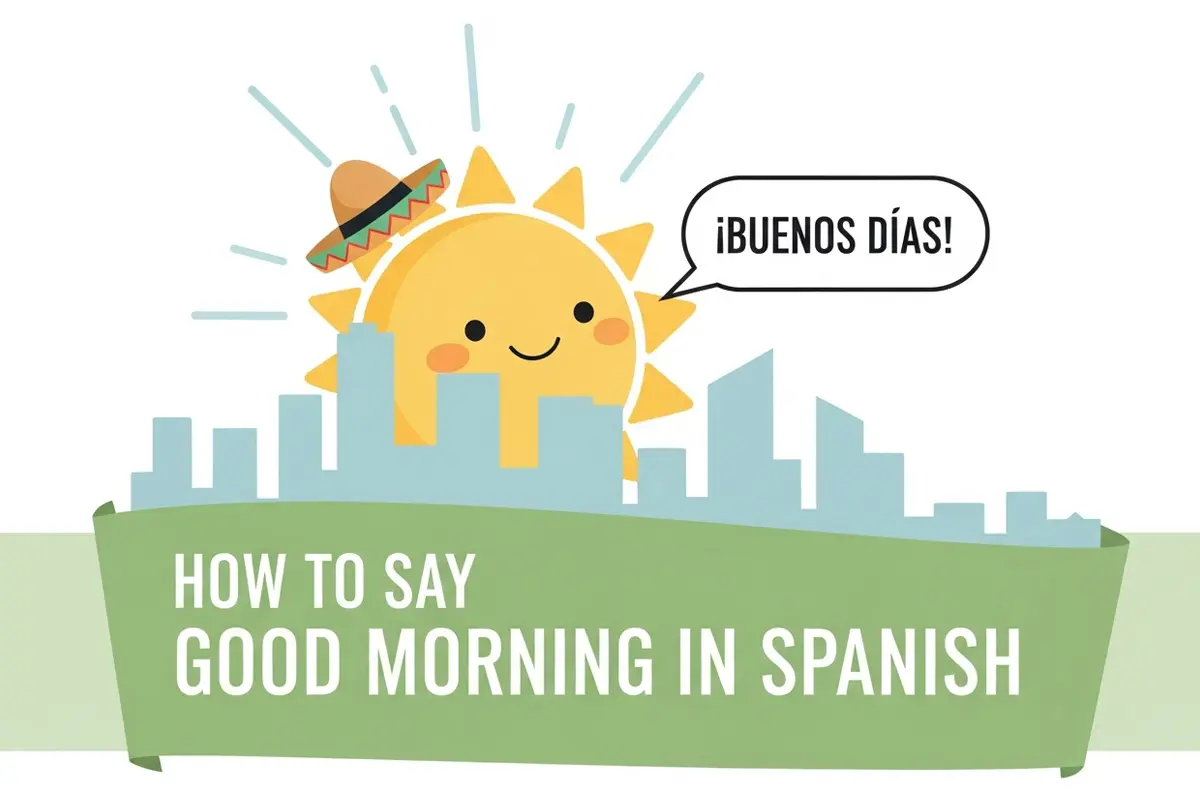
- The most common way to say good morning in Spanish is ¡Buenos días!
- It’s used across all Spanish-speaking countries from early morning until midday.
- Some regions also say Buen día or Muy buenos días, depending on tone and familiarity.
- A warm morning greeting is an important part of everyday politeness and conversation in Spanish-speaking cultures.
Table of Contents
Open Table of Contents
- Quick Answer: How do you say good morning in Spanish?
- Why is it plural?
- When is “Buenos días” Used?
- How to Respond to “Buenos días”
- Adding Warm Expressions After “Buenos días”
- Formal vs Informal “Good Morning” in Spanish
- Variations Used Across the Spanish-Speaking World
- Q&A Style Answers
- Real Conversation Examples
- Cultural Insight: Why Greetings Matter
- Practice: Say and Repeat
- What to Learn Next
- Final Takeaway
Quick Answer: How do you say good morning in Spanish?
The universal and standard phrase is:
👉 ¡Buenos días!
Pronounced: BWEH-nos DEE-as
According to the Real Academia Española (RAE) — the official authority that regulates Spanish — the plural form has historical roots meaning “good wishes for the day.”
Why is it plural?
Spanish uses plural expressions in greetings like:
- Buenos días
— good morning - Buenas tardes
— good afternoon - Buenas noches
— good evening / good night
The RAE grammar notes confirm that plural greetings remain the standard form in modern Spanish across regions.
When is “Buenos días” Used?
Most Spanish-speaking countries follow a similar time pattern:
| Time Range | Greeting |
|---|---|
| ☀️ Morning → before noon | Buenos días |
| 🌤 Afternoon | Buenas tardes |
| 🌙 Evening / night | Buenas noches |
According to language guidance from the Real Academia Española (RAE), buenos días is the standard form used to greet someone during the morning hours, while buen día is considered regional and less universal.
How to Respond to “Buenos días”
Knowing how to reply is just as important as knowing how to greet someone.
| Spanish Response | English Meaning | Context |
|---|---|---|
| ¡Buenos días! | Good morning! | Neutral reply |
| Muy buenos días. | A very good morning. | Warmer tone |
| Buenos días, ¿cómo estás? | Good morning, how are you? | Friendly |
| Buenos días, un gusto verte. | Good morning, nice to see you. | Polite or formal |
| Buenos días, ¿cómo amaneciste? | Good morning, how did you wake up? | Close relationships |
Try choosing one or two of these and using them every morning in your practice sessions.
Adding Warm Expressions After “Buenos días”
Spanish speakers often add short phrases after Buenos días to sound more natural and friendly. For example:
- Buenos días, ¿dormiste bien? — Good morning, did you sleep well?
- Buenos días, ¿listo para el día? — Good morning, ready for the day?
- Buenos días, espero que tengas un buen día. — Good morning, I hope you have a good day.
- Buenos días, que lo pases muy bien hoy. — Good morning, have a really good day today.
These extra phrases make your greeting feel less robotic and more like real conversation.
Formal vs Informal “Good Morning” in Spanish
Different situations call for slightly different versions of good morning in Spanish:
| Situation | Natural Greeting Example |
|---|---|
| Talking to a teacher or professor | Buenos días, profesora. |
| Addressing an older person politely | Buenos días, señor / señora. |
| Greeting a coworker | Buenos días, ¿cómo va todo? |
| Speaking with a close friend or sibling | ¡Buen día! ¿Qué tal? |
| Customer service / at a shop | Buenos días, disculpe… |
If you’re unsure, Buenos días by itself is always safe and polite.
Variations Used Across the Spanish-Speaking World
Different regions use small variations depending on formality or tone:
| Phrase | Meaning | Where It’s Common | Tone |
|---|---|---|---|
| ¡Buenos días! | Good morning | Universal | Standard |
| Buen día | Shortened “good day” | Argentina, Chile, parts of Mexico & Spain | Slightly casual |
| Muy buenos días | Very good morning | Spain + formal situations | Polite |
| Buenos días, señor/señora | Greeting + title | Schools, offices, customer service | Respectful |
All are correct — your choice depends on mood, relationship, and setting.
Q&A Style Answers
❓ Is “Buen día” the same as “Buenos días”?
Almost.
Both mean “good morning,” but Buenos días is the standard preferred phrase.
Buen día may feel shorter, softer, or more regional.
❓ Can I use it anytime in the morning?
Yes.
Once the day reaches midday, switch to Buenas tardes.
❓ Is pronunciation the same everywhere?
Mostly — though accents vary slightly by country.
However, the phrase spelling and meaning remain the same globally.
Real Conversation Examples
🧑 At a store
A: ¡Buenos días! B: Buenos días, ¿en qué le puedo ayudar?
👩 With a friend
¡Buen día! ¿Dormiste bien?
👨🏫 In school
Buenos días, clase. Buenos días, profesora.
Cultural Insight: Why Greetings Matter
In many Spanish-speaking cultures, using a greeting before beginning a conversation — even brief interactions — is considered polite and socially expected.
The Real Academia Española also notes that greetings such as buenos días, buenas tardes, and buenas noches serve as formal social openers rather than just time-based expressions.
Even fast exchanges — asking for directions, entering a store, or ordering coffee — commonly start with:
Buenos días, before anything else.
Practice: Say and Repeat
Try these aloud:
- Buenos días, ¿cómo estás?
- Buenos días, ¿ya desayunaste?
- Muy buenos días, ¿qué planes tienes hoy?
Repeating full expressions builds rhythm and confidence — especially if you’re already learning basic patterns from posts like Spanish Greetings or Common Spanish phrases.
What to Learn Next
To build natural conversations beyond greetings, explore:
- Spanish question words (to ask follow-up questions)
- Spanish pronunciation basics (so your greetings sound natural)
- Useful Spanish Essential Greetings for travelers
These complement your greeting and help create smooth conversation flow.
Final Takeaway
To say good morning in Spanish, use:
👉 ¡Buenos días!
It’s universal, polite, and fits any situation — whether you’re speaking with friends, coworkers, a teacher, or someone you just met.
As you continue learning Spanish, this simple greeting becomes the doorway to real, friendly conversations.