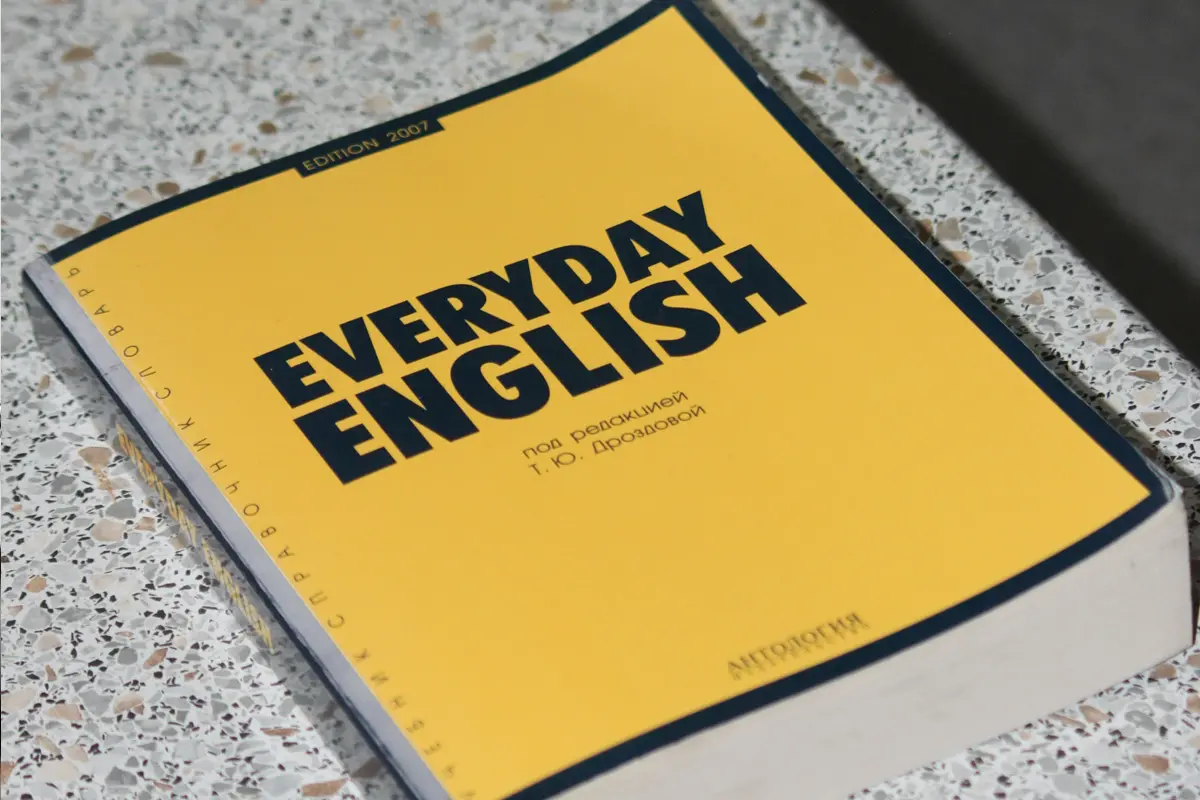
Photo by Ivan Shilov on Unsplash
A lot of learners say the same thing after a few months of studying English:
“Why is this language so weird?”
The spelling does not match the sound.
Small words like the, in, and at cause problems.
Phrasal verbs seem endless.
And just when something feels clear, you find an exception.
So it is natural to ask:
Is English the hardest language to learn?
The short answer is no.
English can definitely be frustrating, but calling it the hardest language is too simple. For some learners, English feels difficult very early. For others, it is much easier than languages with heavy grammar, complex case systems, tones, or entirely new writing systems.
The real question is not whether English is the hardest for everyone.
It is:
What exactly makes English hard, and for whom?
TL;DR
English is not usually considered the hardest language to learn.
It feels hard for many learners because of:
- irregular spelling and pronunciation
- phrasal verbs
- idioms
- articles and prepositions
- inconsistent patterns
But English is also easier than many languages in some important ways:
- relatively light verb conjugation
- very little grammatical gender
- no noun case system like Russian, Finnish, or German
- huge amounts of learning content and exposure
So the better answer is:
English is difficult in a very specific way, but it is not the hardest language overall.
Why this question is harder than it sounds
No language is automatically the hardest for everyone.
Difficulty depends on things like:
- your native language
- the writing system you are used to
- how similar the new language feels to yours
- how much exposure and practice you get
- what “learning” means to you
For example:
- a German speaker may find English quite manageable
- a Japanese or Arabic speaker may find the jump much bigger
- a learner who only wants daily conversation has a different goal from someone aiming for academic fluency
So before asking whether English is the hardest, it helps to ask:
Hard compared to what? And for which learner?
What makes a language difficult to learn?
Most language difficulty comes from a few major areas.
Grammar
Some languages require a lot of memorization through:
- many verb forms
- noun cases
- gender agreement
- flexible sentence structures
Pronunciation
A language can feel hard if:
- it has sounds you do not have in your native language
- stress changes meaning
- spelling does not match pronunciation well
Writing system
A new alphabet is one challenge.
A character-based writing system is another.
Vocabulary distance
The farther a language is from your own, the harder it often feels at first.
Real-life usage
Idioms, humor, tone, and cultural assumptions can make even “simple” grammar feel difficult in real conversation.
English has real problems in some of these areas. But it is also lighter in others.
Why English feels difficult to many learners
English does not usually overwhelm learners with grammar tables at the beginning.
Instead, it often frustrates them in everyday use.
That is one reason it can feel sneaky: it looks easy at first, then becomes strange in practice.
1. English spelling and pronunciation do not match well
This is one of the biggest reasons learners struggle.
Words that look similar may sound very different:
- though
- through
- tough
- thought
That is hard because learners expect spelling to help them predict pronunciation.
In English, it often does not.
This is especially frustrating for speakers of more phonetic languages, where spelling and pronunciation usually line up more clearly.
If pronunciation is one of the reasons English feels difficult, English Vowels Pronunciation is a useful companion topic.
2. Phrasal verbs cause constant trouble
Phrasal verbs are everywhere in English.
Examples:
- give up
- look after
- run into
- find out
- pick up
The problem is that the meaning often cannot be guessed from the separate words.
For example:
- pick up can mean lift something
- pick up can mean learn something
- pick up can mean collect someone
- pick up can even mean improve
That makes English feel less predictable than learners expect.
3. Idioms make simple English feel less simple
English is full of idioms and fixed expressions.
Examples:
- break the ice
- hit the books
- spill the beans
- under the weather
These phrases are common, but their literal meanings do not help much.
That means learners must often understand:
- the words
- the context
- the cultural meaning
All at the same time.
4. Articles and prepositions are small but painful
Many learners do not struggle most with big grammar ideas.
They struggle with tiny words like:
- a
- an
- the
- in
- on
- at
For example:
- in the morning
- on Monday
- at night
These patterns are common, but they do not always feel logical.
If your native language does not use articles, English can feel especially unnatural here.
5. English has many exceptions
Learners can accept rules.
What frustrates them is when the rule works, then suddenly stops working.
English has lots of that:
- irregular verbs
- strange plurals
- silent letters
- spelling exceptions
- pronunciation changes with no obvious reason
That does not make English impossible. But it does make it tiring.
Why English is easier than many other languages
This part often gets ignored.
English has real problems, but it also avoids several kinds of difficulty that make other languages much heavier.
1. English verb conjugation is relatively light
Compared with many languages, English verbs do not change that much.
For example:
- I go
- you go
- we go
- they go
- he goes
That is much simpler than languages where the verb changes heavily by person, tense, mood, or number.
So while English tense usage can be confusing, its verb forms are often lighter than those in Spanish, Arabic, Russian, or French.
2. English has almost no grammatical gender for nouns
In many languages, learners must remember whether a table, door, chair, or book is masculine, feminine, or something else.
English mostly avoids that problem.
You do not need to memorize noun gender for ordinary objects, and adjectives do not change to agree with noun gender.
That removes a big layer of grammatical load.
3. English does not use a heavy noun case system
Some languages change nouns depending on their role in the sentence.
English mostly does not.
That means learners usually do not have to memorize long case tables just to say basic things.
This is one reason English may feel messy in spelling but lighter in grammar than languages like Russian, Finnish, or German.
If you want to compare that bigger picture, Top 10 Hardest Languages to Learn is a useful related read.
4. English has huge learning resources
This matters more than many people realize.
English is one of the easiest languages to find everywhere:
- movies
- podcasts
- YouTube
- games
- articles
- subtitles
- online tutors
- AI tools
- social media
- graded readers
That does not make English structurally easy, but it does make it easier to keep learning.
Access changes difficulty.
A language with fewer resources can feel harder simply because you have fewer chances to hear and use it.
Is English hard compared to other languages?
Usually, English sits somewhere in the middle.
It is harder than some learners expect, but it is not usually placed at the top of “hardest language” lists.
Here is a simple comparison:
| Language | Typical challenge | Why it feels hard |
|---|---|---|
| Mandarin Chinese | Very high | tones and characters |
| Arabic | Very high | script, sound system, grammar |
| Japanese | Very high | multiple writing systems |
| Finnish | High | many noun cases |
| Russian | High | cases and verb patterns |
| English | Moderate | spelling, idioms, irregular usage |
That does not mean English is easy.
It means its difficulty is different.
English often feels less hard in grammar than in usage, sound, and consistency.
Does your native language change the answer?
Yes — a lot.
This may be the biggest factor of all.
If your language is close to English
English may feel easier if you already speak a language like:
- Dutch
- German
- Swedish
- Norwegian
These languages share historical roots or familiar vocabulary patterns with English.
If your language is farther from English
English may feel harder if your native language is very different in:
- sound system
- sentence structure
- writing system
- vocabulary history
That is often true for learners coming from languages like:
- Chinese
- Japanese
- Korean
- Arabic
So when people ask whether English is the hardest language, the most honest answer is:
It depends a lot on where you are starting from.
Why English can feel easy at first and harder later
English often creates a strange learning experience.
At beginner level, it can look simple because:
- basic verbs are short
- sentence order is often clear
- many global learners already know some English words
But later, learners run into:
- natural pronunciation
- phrasal verbs
- idioms
- nuance
- tone
- collocations
- advanced listening problems
So English is not always “hard from the beginning.”
Often it becomes harder when learners try to sound natural, not just understandable.
How long does it take to learn English?
There is no one fixed answer.
It depends on:
- your native language
- how often you study
- how much real input you get
- whether you speak regularly
- whether you learn actively or only passively
A learner who studies a little every day, listens often, and speaks early will usually move much faster than someone who studies only grammar once in a while.
So the better question is not:
- “How many months does English take?”
It is:
- “How often do I meet and use English every week?”
What actually helps English feel easier
If English feels hard, the solution is usually not “study more rules.”
It is often better to make the language more visible and more usable.
1. Learn high-frequency English first
A smaller group of very common words and patterns helps more than random rare vocabulary.
2. Practice listening early
Many learners can read English much better than they can understand it when spoken.
3. Speak before you feel ready
If you wait for perfect English, you usually wait too long.
4. Learn chunks, not only single words
For example, learn:
- at the moment
- I’m not sure
- it depends on
- what do you mean?
These chunks make real conversation easier.
5. Expect irregularity
English becomes less frustrating when you stop expecting every pattern to behave perfectly.
So is English the hardest language to learn?
No.
English is not usually the hardest language to learn.
It has some very annoying features:
- inconsistent spelling
- irregular pronunciation
- phrasal verbs
- idioms
- small grammar words that cause big mistakes
But it also has several things that make it easier than many other languages:
- lighter grammar in important areas
- no heavy noun gender system
- no major case system for nouns
- endless learning resources
- global exposure
So the more accurate answer is this:
English is difficult, but not usually the hardest.
Final thoughts
English can feel chaotic for a while.
That feeling is real.
But “hard” does not always mean “hardest.”
English is strange in a very specific way:
- it often looks easier than it sounds
- it often feels easier in grammar than in real usage
- it often becomes clearer once learners get enough exposure
That is why millions of learners struggle with English at first and still succeed with it later.
So if English feels difficult to you, that does not mean it is impossible.
It usually means you are meeting the messy middle part of the language — the part where progress starts to become real.
FAQ
Is English the hardest language in the world?
No. English is difficult for many learners, but it is not usually considered the hardest overall.
Why does English feel so hard?
Mostly because of spelling, pronunciation, phrasal verbs, idioms, and lots of exceptions.
Is English grammar easier than other languages?
In some ways, yes. English usually has lighter verb conjugation and less grammatical complexity than many languages.
Why do some people learn English faster than others?
Native language background, study habits, exposure, and speaking practice all make a big difference.
Is English easier than Chinese or Arabic?
For most learners, yes. English usually has a lower overall learning barrier than languages with tones, character writing systems, or heavier grammar systems.