TL;DR
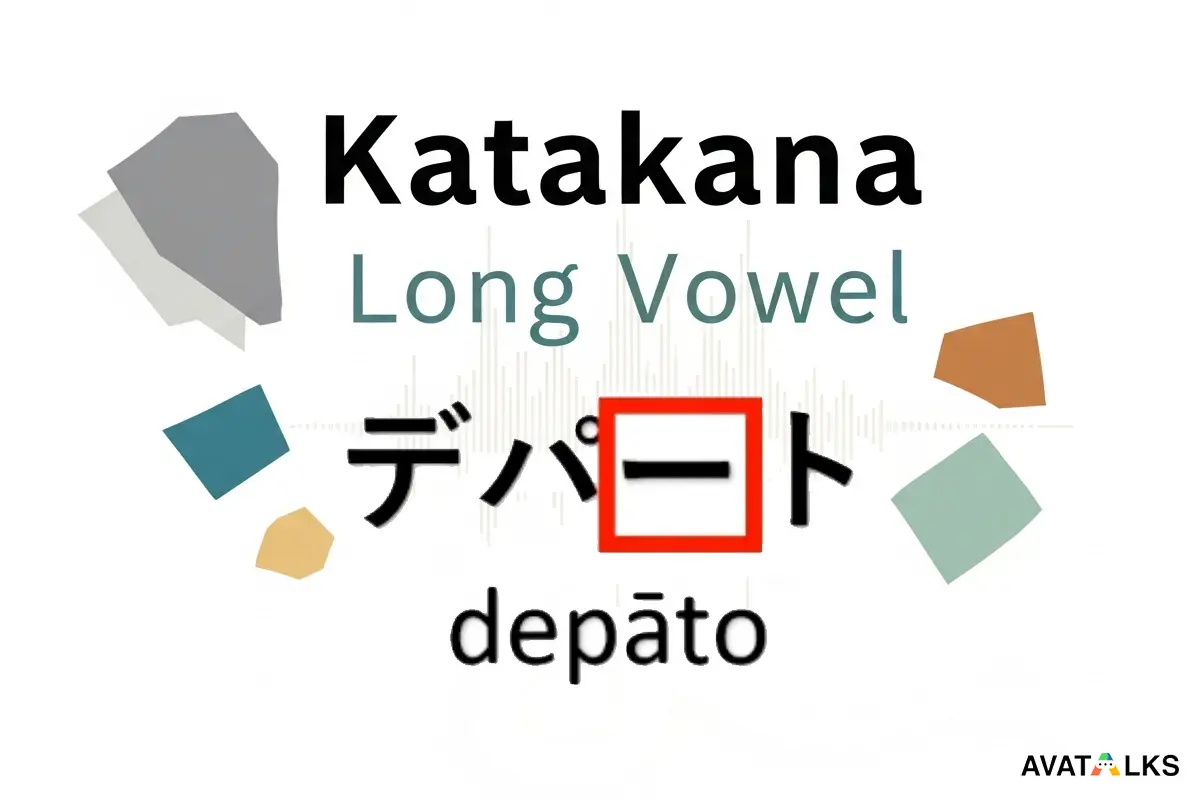
- ー = stretch the vowel before it
- Long vowels change meaning in Japanese
- Practice with loanwords and repeat aloud
Learn Katakana in 7 Days
Follow the structured daily plan with reading drills, pronunciation practice, and writing exercises.
Go to the main guide →The Katakana Long Vowel Mark ー Explained
If katakana feels confusing, the long vowel mark ー is usually the reason.
This symbol looks like a dash, but it controls vowel length, which is critical in Japanese.
Say コーラ wrong, and you may not just sound foreign—you might say a different word.
In this guide, you’ll learn:
- What the katakana long vowel mark means
- The 3 rules that prevent pronunciation mistakes
- A high-frequency practice word list
- How to drill pronunciation and writing with tools
1) What is the katakana long vowel mark ー?
People call the symbol “ー” 長音符 (ちょうおんぷ, chōonpu), meaning long sound mark.
People also know it as 音引き (onbiki) or 棒引き (bōbiki).
👉 Rule: It extends the vowel sound of the preceding kana.
Examples:
→ kōra (cola) → tēburu (table) → mōtā (motor) → kōhī (coffee)
Think of it as holding the vowel for one extra mora (beat).
Japanese does not stress vowels like English. They are short or long by time, not loudness.
2) The 3 rules that save you (plus common traps)
✅ Rule 1: Stretch the vowel, not the consonant
The long vowel mark does not add a new syllable.
- コ → ko
- コー → kō (same syllable, longer duration)
Common trap: reading コー as “ko-a” or “koa.”
➡️ It is still one mora extended to two morae.
✅ Rule 2: Long vowels change meaning
In Japanese, vowel length changes words.
- ビル (biru) = building
- ビール (bīru) = beer
One dash can completely change meaning.
✅ Rule 3: Katakana uses ー; hiragana usually does not
Katakana writes long vowels with ー.
Hiragana normally writes long vowels by repeating vowel kana:
- おかあさん (okaasan)
- おおきい (ōkii)
Trap: writing おーかあさん is incorrect in standard Japanese.
Exception: stylistic writing (e.g., らーめん on signs) uses ー for visual effect.
Horizontal vs Vertical Writing
- In horizontal text: ー
- In vertical text: rotated as |
It occupies the width of one kana character.
3) Practice list: high-frequency words with ー
Pick 10–15 words and drill them with audio + writing.
☕ Everyday loanwords
- コーヒー (coffee)
- テーブル (table)
- メーカー (manufacturer)
- ノート (notebook)
- スーパー (supermarket)
🍰 Food and lifestyle
- ケーキ (cake)
- チーズ (cheese)
- バーガー (burger)
- ラーメン (ramen)
🎯 Common beginner traps
- コーラ (cola)
- トースト (toast)
- メール (email)
- スポーツ (sports)
- ターゲット (target)
How to practice the long vowel mark (fast method)
Step 1: Split into mora beats
- コーラ → コ + ー + ラ
- コーヒー → コ + ー / ヒ + ー
Step 2: Listen → Shadow → Repeat
- Listen without reading
- Shadow with audio
- Repeat 10×
Step 3: Write while speaking
Write each word 5 times, saying it aloud.
This builds audio memory + muscle memory + visual recognition.
How to type the long vowel mark ー
- On English keyboards: press - (hyphen) while Japanese IME is active
- On Japanese keyboards: there is often a dedicated ー key
- In romaji input: typing
me-ru→ メール
⚠️ Use the main keyboard hyphen, not the numeric keypad minus.
CTA: Drill the words with the tool page
➡️ Open the tool and practice each word above
Katakana Long Vowel Practice Tool →
Want full katakana mastery?
➡️ Learn Katakana →
Quick FAQ
Is ー just a dash?
No. It is a kana orthographic symbol called the prolonged sound mark.
Do I pronounce it as “ah” or “oh”?
You repeat the previous vowel sound, not add a new vowel.
Why is らーめん sometimes written with ー?
Standard spelling is ラーメン. Hiragana らーめん is a stylistic signboard convention.
Is Japanese long vowel stress-based?
No. Japanese distinguishes duration (mora timing), not stress like English.
Conclusion: Master the ー and Your Japanese Will Instantly Sound Natural
The katakana long vowel mark ー (chōonpu) may look like a simple line, but it carries real meaning in the Japanese language.
It changes pronunciation, rhythm, and even word meaning—so learning to hear, say, and write long vowels correctly is one of the fastest ways to improve your Japanese clarity.
Remember:
- ー always stretches the vowel before it
- Japanese cares about timing (mora), not stress
- Long vowels can completely change what a word means
- Most katakana loanwords rely heavily on this symbol
The best way to master it is not memorization—it’s repeatable drills: split the word, listen, shadow, and write.
If you practice the word list in this guide for just a few minutes a day, the long vowel mark will stop feeling confusing and start feeling automatic.
👉 Next step:
- Practice each word with audio and writing using the tool page
- Or follow the full katakana roadmap in the main guide
Your Japanese will sound more natural faster than you think.