Katakana is one of the three main writing systems used in Japanese.
If you already know hiragana, you do not need another huge memorization project. You need a clear sequence, short daily practice, and enough real words to make the characters stick.
This guide gives you a practical 7-day katakana study plan.
Each day includes:
- a small set of characters
- real-word reading practice
- a simple review task
- clear next steps
When you need deeper practice with pronunciation, stroke order, confusing characters, long vowels, or loanwords, you will find dedicated lessons linked throughout the guide.
TL;DR
A simple way to learn katakana is:
- Learn the basic characters by row.
- Say each sound out loud.
- Write each character several times.
- Read it inside real words.
- Review difficult pairs separately.
- Stop relying on romaji as soon as possible.
A realistic timeline:
| Goal | Typical timeline |
|---|---|
| Recognize most basic katakana | About 7 days |
| Read simple words more smoothly | About 2 weeks |
| Read common katakana naturally | Several weeks of real-world practice |
The goal is not perfect handwriting in one week.
The goal is to recognize the basic script confidently enough to start reading real Japanese.
What Is Katakana?
Katakana is a Japanese phonetic script.
Each character represents a sound rather than a complete word meaning.
For example:
- ア = a
- カ = ka
- サ = sa
- ト = to
- ン = n
Japanese commonly uses three writing systems together:
| Script | Main use | Example |
|---|---|---|
| Hiragana | Grammar and many native Japanese words | こんにちは |
| Katakana | Loanwords, foreign names, emphasis, sound effects | コーヒー |
| Kanji | Meaning-based characters | 日本 |
Katakana appears constantly in modern Japanese.
You will see it in:
- menus
- product names
- apps
- signs
- foreign personal names
- country names
- technology vocabulary
- anime and manga
- sound effects
Common examples include:
| Katakana | Reading | Meaning |
|---|---|---|
| コーヒー | kōhī | coffee |
| テレビ | terebi | TV |
| ホテル | hoteru | hotel |
| カメラ | kamera | camera |
| コンビニ | konbini | convenience store |
These words may come from English or other languages, but they are adapted to the Japanese sound system.
Why Learn Katakana Early?
Some beginners spend a long time on hiragana and postpone katakana.
That often creates a problem later.
You may understand basic grammar but still struggle to read:
- restaurant menus
- product packaging
- city names
- technology terms
- foreign names
- modern everyday vocabulary
Katakana is not optional if you want to read normal Japanese.
You should usually learn it soon after hiragana.
If you still need an overall kana roadmap, see:
Learn Japanese Kana: Hiragana + Katakana Roadmap
The Basic Katakana Chart
Use this as a reference, not something you need to memorize in one sitting.
| A | I | U | E | O | |
|---|---|---|---|---|---|
| ア (a) | イ (i) | ウ (u) | エ (e) | オ (o) | |
| K | カ (ka) | キ (ki) | ク (ku) | ケ (ke) | コ (ko) |
| S | サ (sa) | シ (shi) | ス (su) | セ (se) | ソ (so) |
| T | タ (ta) | チ (chi) | ツ (tsu) | テ (te) | ト (to) |
| N | ナ (na) | ニ (ni) | ヌ (nu) | ネ (ne) | ノ (no) |
| H | ハ (ha) | ヒ (hi) | フ (fu) | ヘ (he) | ホ (ho) |
| M | マ (ma) | ミ (mi) | ム (mu) | メ (me) | モ (mo) |
| Y | ヤ (ya) | — | ユ (yu) | — | ヨ (yo) |
| R | ラ (ra) | リ (ri) | ル (ru) | レ (re) | ロ (ro) |
| W | ワ (wa) | — | — | — | ヲ (wo) |
| — | — | ン (n) | — | — |
If you want interactive pronunciation and writing practice, use:
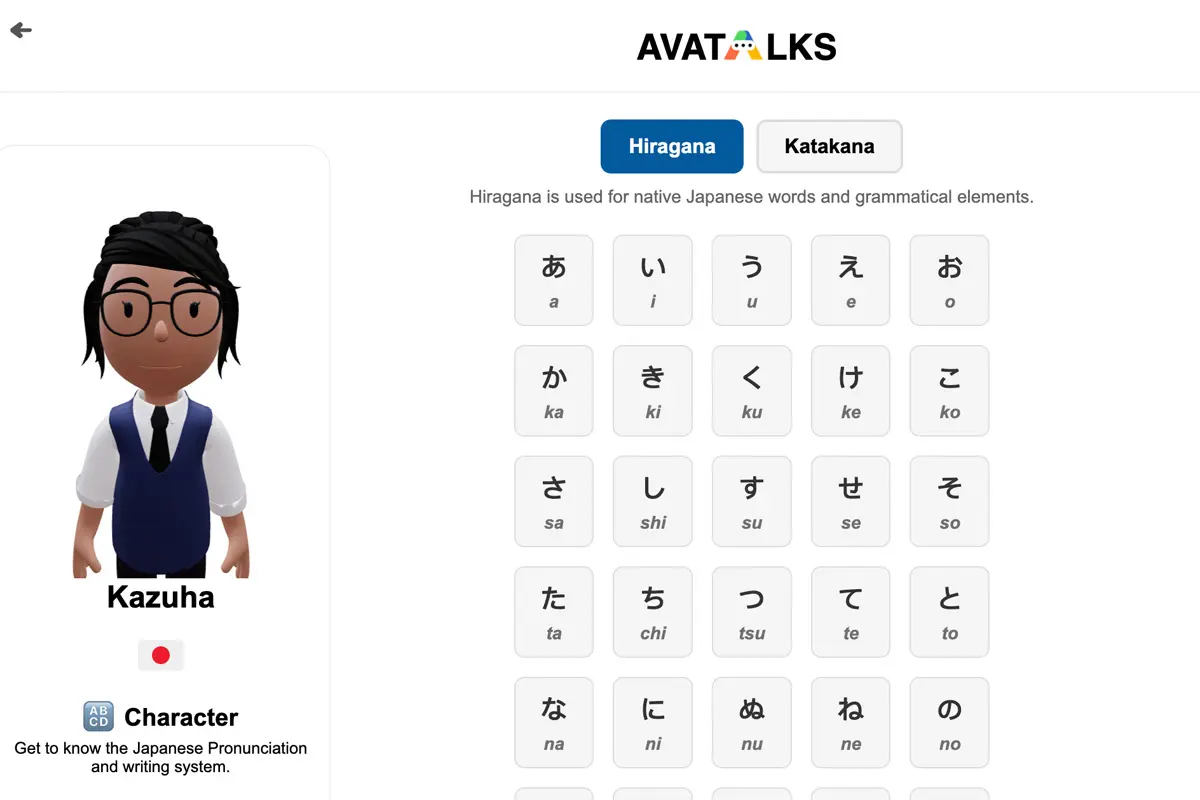
Katakana Practice Tool
Practice characters with pronunciation audio, repeat-after-me listening, and writing mode.
Open the tool →The Best Way to Learn Katakana
Do not learn katakana by staring at the chart.
Use this loop:
- Look at the character.
- Say the sound aloud.
- Write it several times.
- Read it inside a real word.
- Recall it later without looking.
This gives you several types of memory at once:
- visual recognition
- sound recognition
- hand movement
- reading context
The important part is retrieval.
If you only copy characters while looking at them, you may recognize them on paper but still freeze when reading a real word.
7-Day Katakana Study Plan
This plan works well if you can study for about 15–25 minutes per day.
Day 1: Vowels + K Row
Learn:
- ア イ ウ エ オ
- カ キ ク ケ コ
Practice words:
| Word | Reading | Meaning |
|---|---|---|
| カカオ | kakao | cacao |
| ココア | kokoa | cocoa |
| キウイ | kiui | kiwi |
| カー | kā | car |
Your task
- Say each sound aloud.
- Write each character 5 times.
- Read the practice words.
- Cover the chart.
- Try to recall all 10 characters.
Do not worry about speed yet.
Accuracy matters more.
Day 2: S Row + T Row
Learn:
- サ シ ス セ ソ
- タ チ ツ テ ト
Practice words:
| Word | Reading | Meaning |
|---|---|---|
| テスト | tesuto | test |
| ソース | sōsu | sauce |
| チーズ | chīzu | cheese |
| スーツ | sūtsu | suit |
The pair シ / ツ causes trouble for many beginners.
For now, simply notice:
- シ looks more sideways
- ツ looks more vertical
You will practice confusing pairs properly later.
Day 3: N Row + H Row
Learn:
- ナ ニ ヌ ネ ノ
- ハ ヒ フ ヘ ホ
Practice words:
| Word | Reading | Meaning |
|---|---|---|
| ナイフ | naifu | knife |
| ホテル | hoteru | hotel |
| ノート | nōto | notebook |
| フォン | fon | phone |
Your task
Read each word slowly.
Then:
- circle the characters you recognize instantly
- rewrite the ones that still feel unfamiliar
- test yourself again after a short break
Day 4: M Row + Y Row + W Row
Learn:
- マ ミ ム メ モ
- ヤ ユ ヨ
- ワ ヲ
- ン
Practice words:
| Word | Reading | Meaning |
|---|---|---|
| メモ | memo | memo |
| マヨ | mayo | mayonnaise |
| ワイン | wain | wine |
| モニター | monitā | monitor |
Pay special attention to ン.
It is easy to confuse with ソ when you are new.
Day 5: R Row + Full Chart Review
Learn:
- ラ リ ル レ ロ
Practice words:
| Word | Reading | Meaning |
|---|---|---|
| ラジオ | rajio | radio |
| レストラン | resutoran | restaurant |
| ルール | rūru | rule |
| ロボット | robotto | robot |
Then review the full basic chart.
Your task
- Read the rows from ア to ン.
- Read them in random order.
- Test yourself on 20 characters.
- Write down the 10 characters you forget most often.
Those 10 characters become your personal review list.
Day 6: Dakuten, Handakuten, and Small Characters
Basic katakana is only the first layer.
You also need to recognize sound changes.
Dakuten
| Base | Changed | Sound |
|---|---|---|
| カ | ガ | ga |
| サ | ザ | za |
| タ | ダ | da |
| ハ | バ | ba |
Handakuten
| Base | Changed | Sound |
|---|---|---|
| ハ | パ | pa |
| ヒ | ピ | pi |
| フ | プ | pu |
| ヘ | ペ | pe |
| ホ | ポ | po |
You will also see small characters in combinations such as:
- キャ
- シュ
- チョ
- ファ
- フォ
Do not try to memorize every combination today.
The goal is simply to understand how the system works.
For deeper practice, use:
Kana Extras After Hiragana: Dakuten, Yoon, Small っ
Day 7: Read Real Katakana Words
Now stop looking at isolated characters.
Read real words.
| Katakana | Reading | Meaning |
|---|---|---|
| コーヒー | kōhī | coffee |
| スーパー | sūpā | supermarket |
| タクシー | takushī | taxi |
| コンビニ | konbini | convenience store |
| アイス | aisu | ice cream |
| パソコン | pasokon | computer |
| スマホ | sumaho | smartphone |
| メニュー | menyū | menu |
| カード | kādo | card |
| エレベーター | erebētā | elevator |
Final Day 7 task
- Read every word aloud.
- Hide the romaji.
- Read the list again.
- Write 10 words from memory.
- Review the characters you missed.
At this point, do not expect perfect reading speed.
Your goal is recognition.
14-Day Review Plan
Seven days can help you recognize the script.
The second week helps turn recognition into usable reading.
| Day | Focus |
|---|---|
| Day 8 | Review ア through ト |
| Day 9 | Review ナ through ン |
| Day 10 | Practice シ/ツ and ソ/ン |
| Day 11 | Practice long vowels with ー |
| Day 12 | Read loanwords from menus and apps |
| Day 13 | Write 30 random characters from memory |
| Day 14 | Read 30 real katakana words without romaji |
By Day 14, the goal is simple:
Stop freezing when you see katakana in normal Japanese.
When Have You Actually Learned Katakana?
You do not need perfect handwriting or instant recognition of every rare combination before moving on.
You are ready to stop drilling the basic chart when you can:
- recognize most basic characters without romaji
- distinguish シ / ツ and ソ / ン most of the time
- read common words such as コーヒー and コンビニ
- understand what ー does
- slowly sound out an unfamiliar katakana word
- write many basic characters from memory
At that point, spend less time memorizing the chart.
Spend more time reading real Japanese.
This shift is important.
Many beginners keep “studying katakana” for too long instead of using it.
Skills to Practice After the 7-Day Plan
Once you know the basic characters, move into targeted practice.
These are separate skills, so you do not need to master all of them at once.
Improve your stroke order
Correct stroke order helps make similar characters easier to distinguish.
A useful practice sequence is:
- trace
- copy
- write from memory
- compare and correct
For detailed rules and writing drills, see:
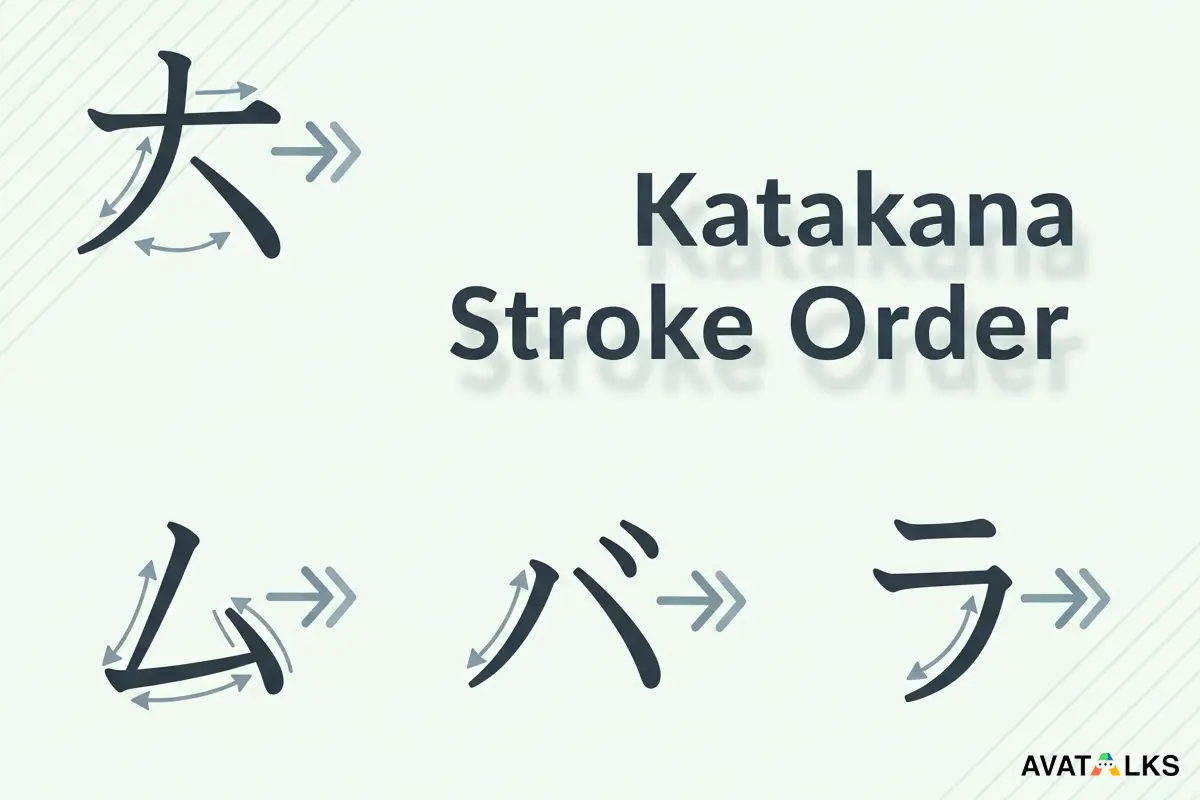
Katakana Stroke Order
Learn the main stroke-order rules and use a short daily writing drill.
Practice stroke order →Fix confusing character pairs
The most common pairs include:
- シ / ツ
- ソ / ン
- ク / ケ
- フ / ワ
- チ / テ
Do not keep rereading them separately.
Practice them as contrast pairs.
For focused drills, see:
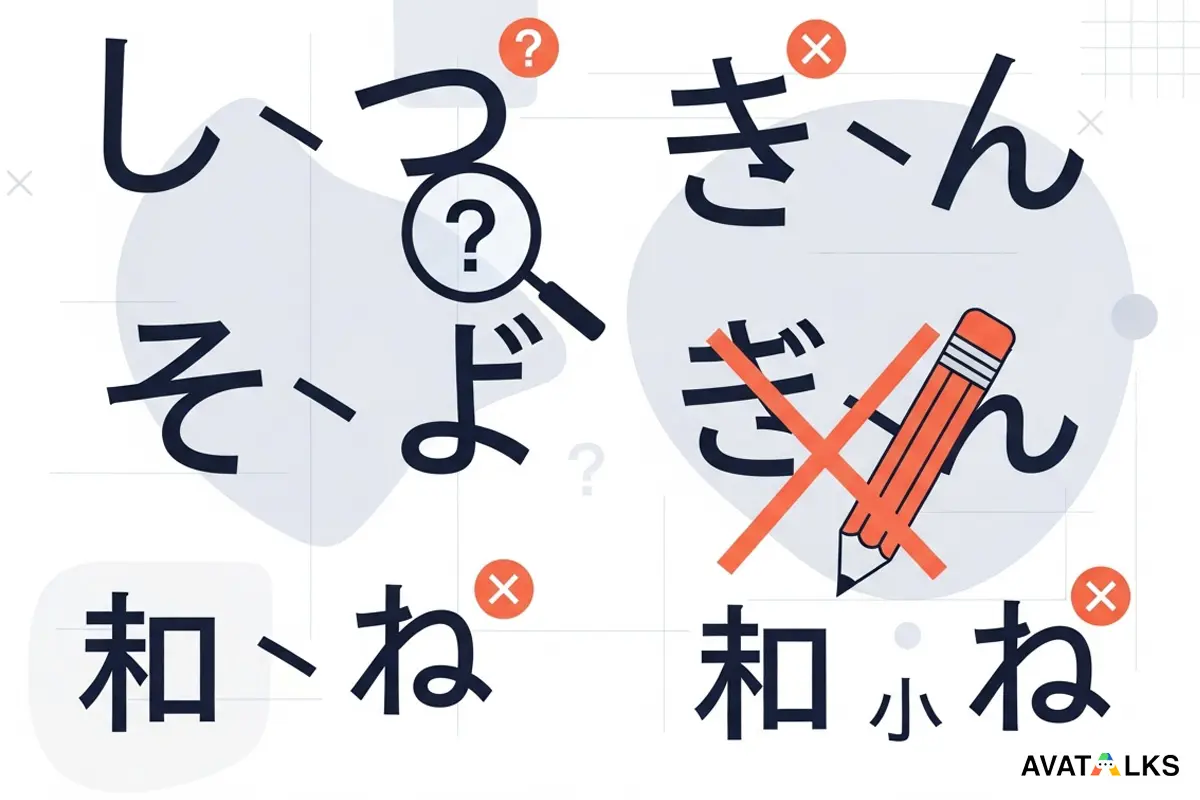
Common Katakana Mistakes
Fix confusing pairs like シ/ツ and ソ/ン with visual rules and short drills.
Fix common mistakes →Learn the long vowel mark ー
Katakana frequently uses ー to lengthen the vowel before it.
Examples:
- コーヒー
- スーパー
- ケーキ
- カード
The symbol has no independent sound.
It extends the previous vowel.
For the complete rule and pronunciation practice, see:
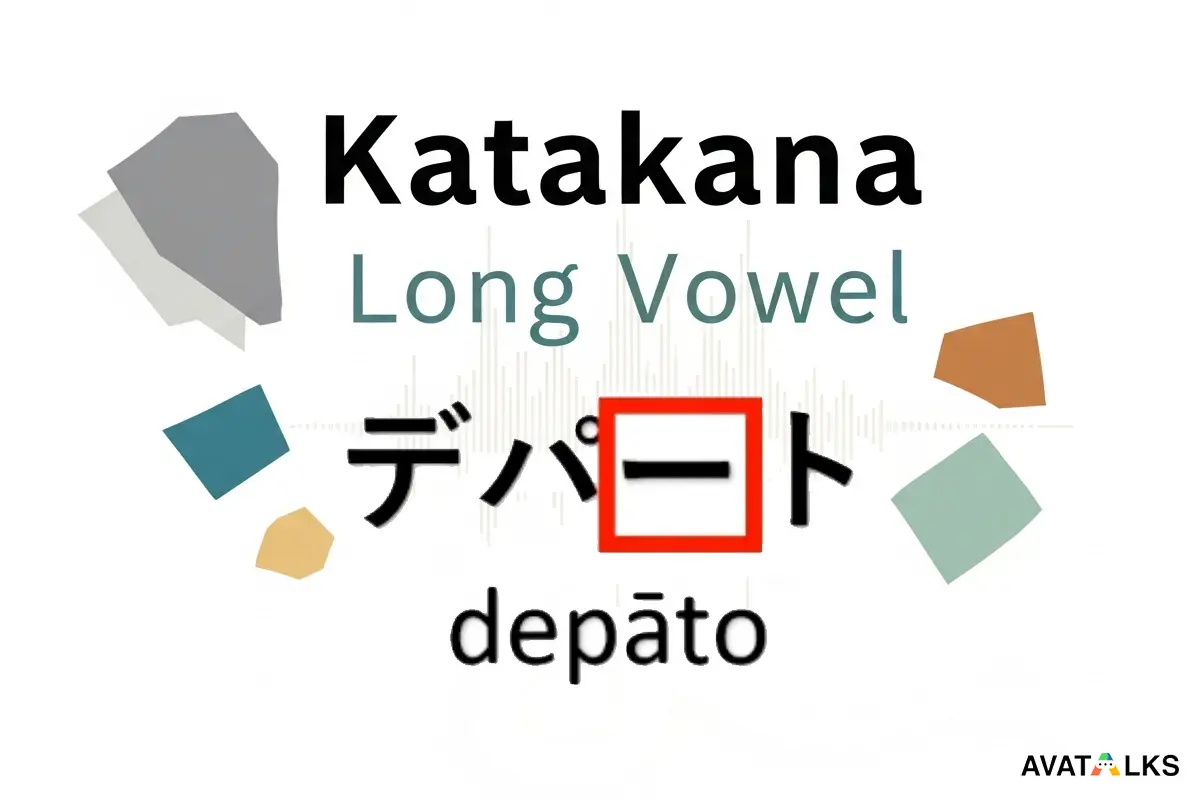
Katakana Long Vowel Mark ー
Learn what ー means, how to read it, and how to avoid common pronunciation mistakes.
Learn the long vowel mark →Learn how foreign words change in Japanese
Katakana is commonly used for loanwords.
Examples:
| English | Katakana | Reading |
|---|---|---|
| coffee | コーヒー | kōhī |
| hotel | ホテル | hoteru |
| camera | カメラ | kamera |
| taxi | タクシー | takushī |
Do not expect the katakana pronunciation to match English exactly.
Japanese adapts foreign words to its own sound system.
For a detailed guide, see:
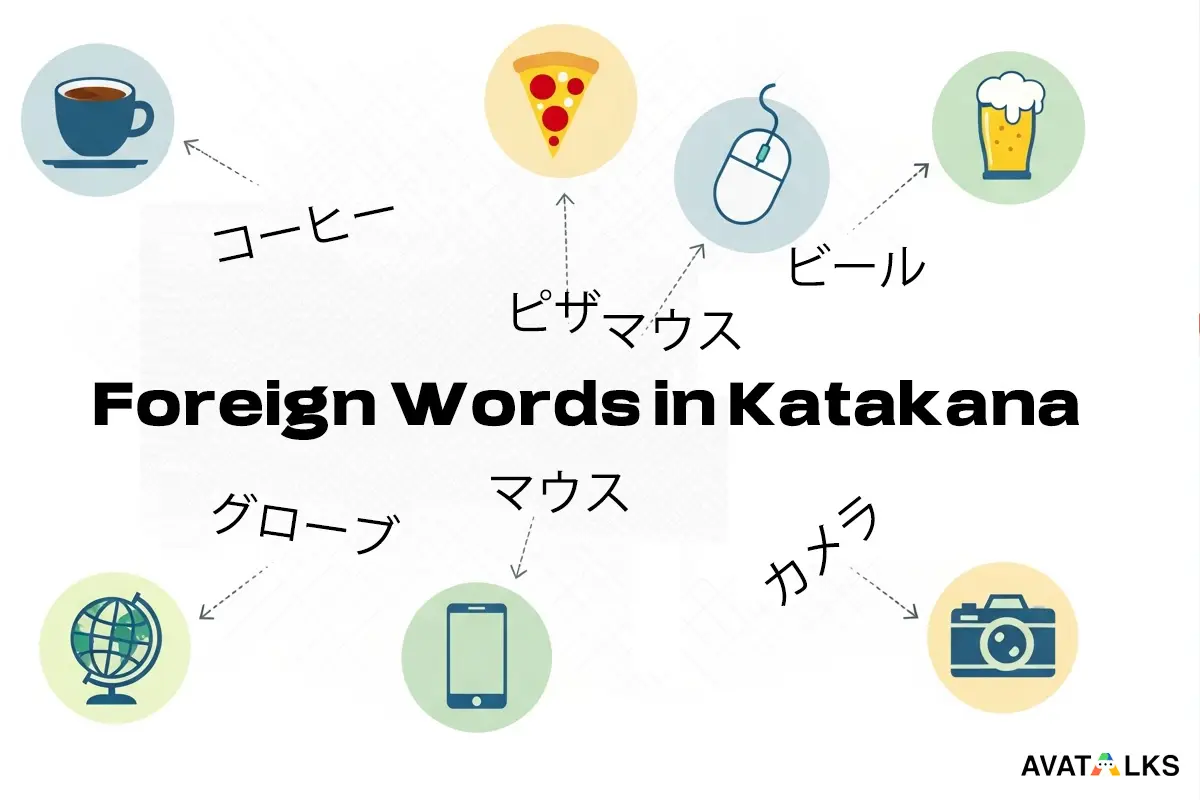
Katakana for Foreign Words
See how English and other loanwords change when they enter Japanese.
Practice foreign words →Improve pronunciation
Katakana pronunciation is not simply English spoken with Japanese letters.
For example:
- テレビ is not pronounced exactly like “TV”
- コーヒー is not pronounced exactly like “coffee”
- コンビニ does not sound exactly like “convenience store”
Focus on:
- Japanese rhythm
- long vowels
- clear mora timing
- adapted consonant sounds
For focused listening practice, use:
Katakana Pronunciation Practice
Practice loanwords, long vowels, small characters, and common pronunciation traps.
Practice pronunciation →Should You Use Romaji?
Romaji is useful at the very beginning.
But it should be temporary.
Use romaji when:
- learning the first few rows
- checking a sound
- confirming a difficult word
Start hiding it when:
- you recognize most basic characters
- you can read short words
- your eyes automatically jump to the romaji instead of the kana
A practical rule:
Use romaji during the first few days, then gradually remove it.
If romaji is always visible, your brain has no reason to read the katakana.
Quick Katakana Self-Test
Try reading these without looking at the English first.
| Katakana | Meaning |
|---|---|
| コーヒー | coffee |
| パン | bread |
| アイス | ice cream |
| ホテル | hotel |
| カメラ | camera |
| テスト | test |
| タクシー | taxi |
| メニュー | menu |
| コンビニ | convenience store |
| レストラン | restaurant |
Now try the harder list:
| Katakana | Meaning |
|---|---|
| エレベーター | elevator |
| スーパー | supermarket |
| パソコン | computer |
| スマホ | smartphone |
| チョコレート | chocolate |
| サンドイッチ | sandwich |
| オレンジ | orange |
| プレゼント | present / gift |
| インターネット | internet |
| クレジットカード | credit card |
If you can read most of these slowly without romaji, you are ready to spend more time on real Japanese reading.
What Should You Learn After Katakana?
Katakana is one part of the larger Japanese reading system.
Your next step depends on what you already know.
If you have not learned hiragana
Start with:
Learn Hiragana Fast: A 7-Day Plan That Actually Works
If you want an overall kana roadmap
Use:
Learn Japanese Kana: Hiragana + Katakana Roadmap
If you want to review kana order
See:
Kana Order Gojūon: Practice Sequence That Works
If you need daily katakana drills
Use:
Katakana Practice Online
Use a short daily routine with reading, writing, audio, and review.
Start practice →Frequently Asked Questions
How long does it take to learn katakana?
Many beginners can recognize most of the basic characters after about seven days of focused daily practice.
Reading smoothly usually takes longer.
Two weeks is a more realistic goal for becoming comfortable with common words.
Is katakana harder than hiragana?
Not necessarily.
Both represent the same basic Japanese sounds.
Some learners find katakana harder because several characters have similar shapes, such as:
- シ / ツ
- ソ / ン
Regular reading practice usually solves this.
Should I learn hiragana or katakana first?
Most beginners learn hiragana first because it appears heavily in basic grammar and beginner sentences.
Katakana should usually follow soon afterward.
Do not wait months before learning it.
Why are foreign words written in katakana?
Katakana is commonly used for:
- loanwords
- foreign names
- country names
- brand names
- technical terms
- emphasis
- sound effects
Modern Japanese contains many katakana words.
Do I need to write katakana by hand?
You do not need beautiful handwriting, but writing is useful during the learning stage.
It helps you:
- notice shape differences
- remember stroke structure
- distinguish similar characters
- strengthen recall
Once recognition is strong, reading becomes more important than handwriting drills.
What is the hardest katakana pair?
For many learners, the most difficult pairs are:
シ / ツ
and:
ソ / ン
Practice them next to each other instead of memorizing them separately.
What does the long vowel mark ー mean?
The mark ー lengthens the vowel immediately before it.
For example:
コーヒー
contains long vowel sounds.
The mark does not have its own pronunciation.
Can I learn katakana without romaji?
Yes.
Romaji is optional.
Beginners can use it briefly as a pronunciation aid, but direct kana reading should become the goal as quickly as possible.
Final Thoughts
The fastest way to learn katakana is not to memorize the entire chart perfectly before using it.
Learn a small group of characters, read real words, test yourself, and repeat.
A good progression is:
characters → words → real Japanese
After seven days, you should recognize much of the basic chart.
After two weeks, you should be reading common words with less hesitation.
Then stop treating katakana as a memorization exercise.
Use it.
Read menus, product names, apps, signs, and loanwords whenever you see them.
That is when katakana starts becoming part of your Japanese instead of just another chart to memorize.