
Photo by Mimi Di Cianni on Unsplash
The fastest Spanish learners don’t “study harder.” They practice more realistically—especially speaking and listening—then fix small mistakes as they go.
TL;DR
- Learning Spanish with AI works best when you practice like real life: short conversations, common topics, and repeated sentence patterns.
- Use AI for instant feedback loops: try → notice mistake → fix → repeat (same topic, same phrases).
- Don’t collect endless vocabulary. Save and review words you actually used (and forgot).
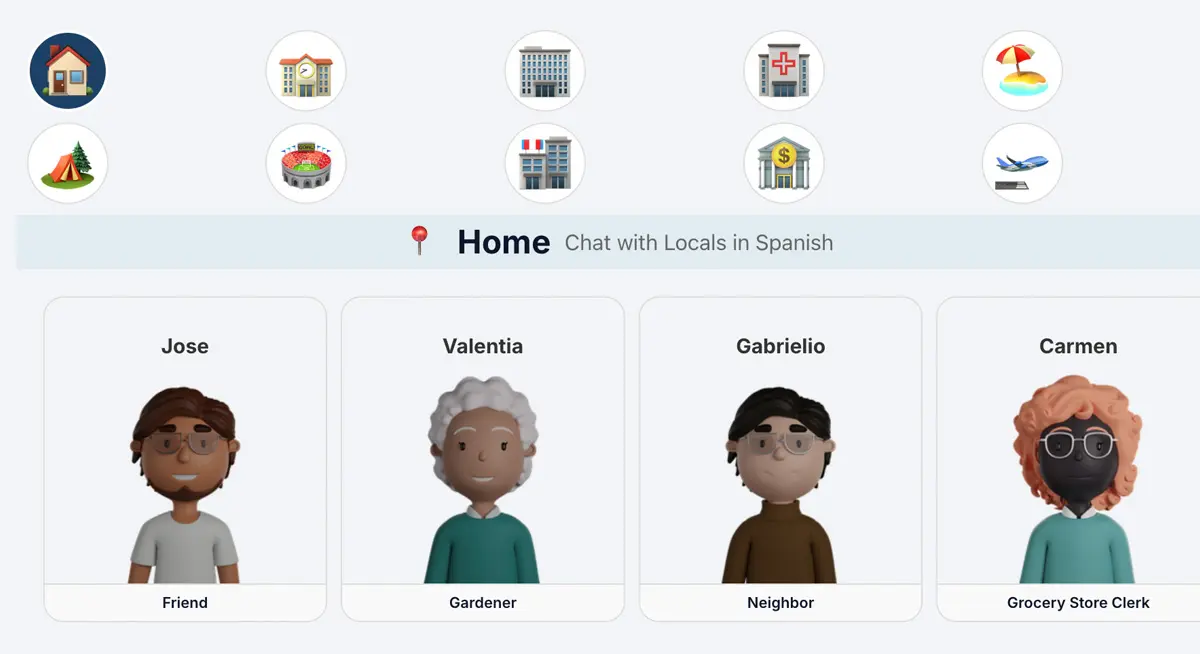
- Avatalks is built for interactive practice (AI avatars, audio, and scenario-based chat), so you can practice anytime without waiting for a tutor.
- For best results: 10–20 minutes daily beats “one big session” per week.
Why learn Spanish with AI?
If you want Spanish to become usable—not just recognizable—AI helps because it can give you three things most learners struggle to get consistently:
- More practice reps (daily, on your schedule)
- Feedback while the memory is fresh (not days later)
- Low-pressure repetition (you can retry the same scenario until it feels natural)
Spanish is also a great match for AI learning because progress comes quickly once you start using:
- high-frequency verbs (ser, estar, tener, ir)
- reusable sentence frames (Quiero…, Necesito…, ¿Puedes…?)
- realistic situations (ordering, introductions, travel, small talk)
If you want a broader look at how AI fits into language learning, start here: Learn more in our guide to AI language learning
What “AI Spanish learning” actually does well (and where people waste time)
AI is powerful, but only if you use it correctly.
AI works best for:
- Conversation-style practice (short back-and-forth exchanges)
- Pronunciation repetition (saying the same phrase again with clearer vowels)
- Topic practice (one topic per week: cafés, travel, work, hobbies)
- Personalized review (saving your frequent mistakes and weak words)
Where learners waste time:
- asking AI to explain grammar for 30 minutes, then never speaking
- collecting giant word lists without using them in sentences
- jumping between random topics every day (no repetition = weak memory)
A practical rule: every study session should end with speaking or writing a few sentences.
The Avatalks advantage: AI practice that feels like real use
Avatalks was built around a simple reality we see again and again: many learners understand Spanish “in their head,” but freeze when it’s time to respond.
Common patterns we notice:
- Learners recognize hola and buenos días, but hesitate on the next sentence.
- They know the vocabulary, but can’t assemble it quickly under time pressure.
- They avoid repeating the same topic because repetition feels “boring,” even though it’s the fastest path to fluency.
Avatalks helps by making repetition feel more like a conversation:
- AI avatars + audio to keep practice engaging
- Chat scenarios you can replay (same topic, better delivery each time)
- Favorite Cards to save words you actually needed in a conversation and review them later.
If your Spanish feels “stuck,” it’s usually not knowledge—it’s retrieval speed. Practice fixes that.
How to learn Spanish with AI (a simple 6-step system)
1) Pick a goal that matches real life
Instead of “be fluent,” choose something usable:
- “Order food confidently”
- “Hold a 3-minute conversation about my day”
- “Survive travel Spanish for a trip”
Clear goals stop you from studying random things.
If you’re building a full routine, this pairs well with: Spanish conversation practice
2) Choose one topic per week
Topic practice reduces overwhelm and increases repetition.
Good weekly topics:
- introductions and small talk
- cafés and food
- directions and transport
- shopping and prices
- hobbies and weekend plans
When you repeat one topic, your brain starts predicting the language. That’s when speaking speed improves.
3) Learn sentence frames, not isolated words
These are “plug-and-play” patterns:
- Quiero + [noun] → Quiero un café.
- Necesito + [noun/verb] → Necesito ayuda.
- ¿Puedes + [verb]…? → ¿Puedes repetir?
- Voy a + [verb] → Voy a salir.
This is the fastest way to start speaking without freezing.
If word order still feels confusing, use: Spanish sentence structure guide
4) Do one short AI chat, then repeat it
This is the “speed” method:
- Attempt 1: you struggle and pause
- Attempt 2: you reuse the same frames with fewer pauses
- Attempt 3: you sound natural
Most learners improve fastest when they repeat the same scenario and fix one small thing each time (pronunciation, a connector word, or a missing verb).
5) Save the words you actually needed (then review them)
This is where memory gets real.
Instead of “study 20 new words,” save:
- the word you kept forgetting
- the word you tried to say but didn’t know
- the word you used incorrectly
On Avatalks, Favorite Cards make this easy.
6) Use feedback like a checklist (not a judgment)
Feedback should be small and actionable.
After each session, pick ONE:
- one pronunciation fix (vowels, stress, clarity)
- one grammar fix (verb form, gender agreement)
- one better phrase (more natural phrasing)
Then repeat the corrected version out loud once or twice. That’s how “practice” becomes “progress.”
Real scenarios you should practice with AI (high ROI)
If you want Spanish that works in daily life, practice these:
- ordering food and drinks
- asking for directions
- checking into a hotel
- shopping and returning items
- introducing yourself and asking basic questions
- talking about your work/studies
- making plans and changing plans
- handling small problems (late delivery, wrong order, confusion)
You don’t need 200 scenarios. You need 10 scenarios repeated until automatic.
Common myths about learning Spanish with AI
“AI can’t make me fluent.”
AI won’t replace effort—but it can multiply practice reps and feedback. Fluency comes from using the language often enough that you stop translating.
“I need perfect grammar before I talk.”
No. Most learners get faster by speaking early and cleaning up mistakes later. Grammar improves faster when you’re using the language.
“AI is only for beginners.”
Beginners use AI for confidence. Intermediate learners use it for speed and accuracy. Advanced learners use it for nuance—tone, register, and natural phrasing.
Traditional learning vs AI practice
| What you need | Traditional class | AI-based practice |
|---|---|---|
| Daily speaking reps | Hard | Easy |
| Instant feedback | Limited | Often available |
| Repeat the same scenario | Rare | Simple |
| Personalized review | Depends | Easy to structure |
| Low-pressure practice | Sometimes | Always |
Best results usually come from mixing: a structured course + AI practice between lessons.
Tips that make AI Spanish practice actually work
- Keep sessions short. 10–20 minutes daily is ideal.
- Speak or type in full sentences. Avoid one-word replies.
- Repeat the same topic. Repetition is not boring—it’s how fluency forms.
- Use “connectors.” y, pero, porque, entonces unlock longer answers quickly.
- Track your “stuck points.” Save them, review them, try again tomorrow.
If pronunciation is your bottleneck, this also helps: How to pronounce Spanish vowels
FAQ — Learn Spanish with AI
Can AI really help me learn Spanish faster?
Yes—especially for consistent practice, repetition, and quick feedback. The speed boost usually comes from doing more realistic reps, not from “better explanations.”
What’s the best way to use AI if I’m a beginner?
Practice short scenarios (greetings, ordering, directions), reuse sentence frames, and repeat the same topic multiple times until it feels automatic.
Will AI fix my pronunciation?
It can help a lot with repetition and awareness, but pronunciation improves most when you repeat short phrases, compare your output, and fix one sound at a time.
How much should I practice daily?
Most learners get strong results with 10–30 minutes daily, as long as it includes output (speaking or writing), not only passive input.
Do I still need a teacher?
A teacher can be great for structure and deep corrections, but AI practice fills the biggest gap for most learners: daily reps and confidence.
Final thoughts
Learning Spanish with AI works when you treat it like training:
- pick a topic
- use sentence frames
- practice a real scenario
- save what you forgot
- repeat tomorrow (a little better)
If you want a place to start, use one simple weekly theme (food, travel, work) and practice it inside chat until your answers feel effortless. That’s when Spanish stops being “study” and becomes “something you can use.”