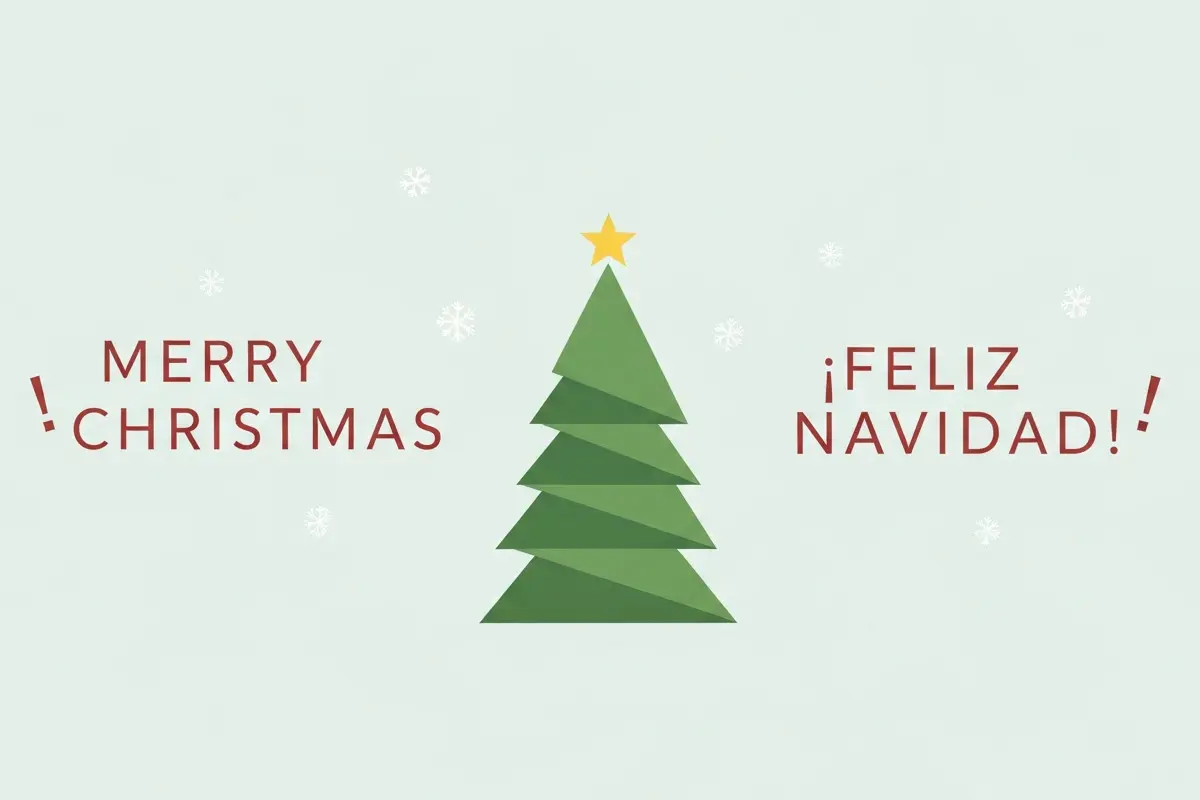
TL;DR — Merry Christmas in Spanish Language
- “Merry Christmas” in Spanish language is Feliz Navidad.
- It is used in all Spanish-speaking countries.
- Spanish uses ¡! at the beginning and end of exclamations.
- You can add warmth with longer phrases or include New Year wishes.
- Cultural tone matters more than formality.
Table of Contents
Open Table of Contents
- How do you say merry christmas in Spanish language?
- What does “Feliz Navidad” literally mean?
- How do you pronounce merry christmas in Spanish language?
- Do you need exclamation marks in Spanish?
- Can you say merry christmas in Spanish language in other ways?
- How do you say “Merry Christmas and Happy New Year” in Spanish language?
- Is “Felices fiestas” the same as merry christmas?
- How formal is merry christmas in Spanish language?
- How do Spanish-speaking countries celebrate Christmas?
- When should you say merry christmas in Spanish language?
- Common mistakes learners make
- Real-life examples
- Frequently Asked Questions About Merry Christmas in Spanish Language
- ❓ Is “Feliz Navidad” used in all Spanish-speaking countries?
- ❓ Can I use “Feliz Navidad” in text messages and social media?
- ❓ Is “Merry Xmas” used in Spanish language?
- ❓ What is the difference between “Feliz Navidad” and “Felices fiestas”?
- ❓ How do you reply to “Feliz Navidad” in Spanish?
- ❓ Is it okay to say “Feliz Navidad” after December 25?
- ❓ Is “Feliz Navidad” religious?
- ❓ What is the most polite way to say merry christmas in Spanish language?
- ❓ What is the biggest mistake learners make with Christmas greetings in Spanish?
- ❓ Is pronunciation important when saying “Feliz Navidad”?
- Final takeaway
How do you say merry christmas in Spanish language?
The most common and correct way to say merry christmas in Spanish language is Feliz Navidad.
This phrase is universally understood across Spain, Latin America, and Spanish-speaking communities worldwide. It works in formal, informal, written, and spoken situations.
Feliz Navidad
(Merry Christmas)
What does “Feliz Navidad” literally mean?
“Feliz” means “happy,” and “Navidad” means “Christmas.”
Spanish often uses “happy” where English uses “merry.” That’s why “Feliz Navidad” sounds natural in Spanish even though English speakers expect “merry.”
How do you pronounce merry christmas in Spanish language?
Feliz Navidad is pronounced:
feh-LEES nah-vee-DAD
Key pronunciation tips:
- The z in feliz sounds like s
- The stress is on the last syllable of Navidad
- The d at the end is soft, almost silent
Do you need exclamation marks in Spanish?
Yes. Spanish uses both opening and closing exclamation marks.
Correct:
¡Feliz Navidad!
Incorrect:
Feliz Navidad!
This rule applies to all emotional expressions in Spanish and is especially common in holiday greetings.
Can you say merry christmas in Spanish language in other ways?
Yes. While Feliz Navidad is the standard, there are several natural variations depending on tone and context.
Common alternatives
| Spanish phrase | English meaning | When to use |
|---|---|---|
| ¡Feliz Navidad! | Merry Christmas | Universal, safe choice |
| Felices fiestas | Happy holidays | Neutral, inclusive |
| Que tengas una feliz Navidad | I hope you have a merry Christmas | More personal |
| Feliz Navidad y feliz Año Nuevo | Merry Christmas and Happy New Year | Cards & messages |
| Bendiciones en esta Navidad | Blessings this Christmas | Religious tone |
How do you say “Merry Christmas and Happy New Year” in Spanish language?
The most natural phrasing is:
Feliz Navidad y feliz Año Nuevo
Important detail:
- Año must include the ñ
- Without it, the meaning changes completely
Correct:
Año (year)
Incorrect:
Ano (very different meaning)
Is “Felices fiestas” the same as merry christmas?
Not exactly. “Felices fiestas” means “Happy holidays.”
It does not refer only to Christmas. Spanish speakers use it when:
- They want to be culturally neutral
- They are greeting someone before Christmas
- They are unsure of religious preference
How formal is merry christmas in Spanish language?
Spanish Christmas greetings are naturally warm, not formal.
Even in professional settings, people commonly say:
- ¡Feliz Navidad!
- Felices fiestas
Formal grammar is less important than friendly tone.
How do Spanish-speaking countries celebrate Christmas?
Christmas traditions vary, but the greeting remains the same.
Common cultural highlights
- Family dinners on Nochebuena (December 24)
- Midnight Mass (Misa del Gallo)
- Gift-giving on Día de Reyes (January 6) in Spain
- Music, food, and extended family gatherings
No matter the country, “Feliz Navidad” always works.
When should you say merry christmas in Spanish language?
Spanish speakers start using Christmas greetings early, often in early December.
You can say:
- ¡Feliz Navidad! → from December onward
- Feliz Navidad y feliz Año Nuevo → late December
There is no strict rule — warmth matters more than timing.
Common mistakes learners make
❌ Forgetting exclamation marks
Spanish requires ¡ ! for greetings.
❌ Misspelling “Año”
Always include the ñ.
❌ Overthinking formality
Simple phrases sound more natural.
Real-life examples
¡Feliz Navidad! Nos vemos el año que viene.
Merry Christmas! See you next year.
Te deseo una feliz Navidad y un próspero Año Nuevo.
I wish you a merry Christmas and a prosperous New Year.
Frequently Asked Questions About Merry Christmas in Spanish Language
❓ Is “Feliz Navidad” used in all Spanish-speaking countries?
Yes. “Feliz Navidad” is universally understood and used in every Spanish-speaking country.
Whether you are in Spain, Mexico, Argentina, Colombia, or the United States, this phrase is always appropriate and never sounds strange or outdated.
❓ Can I use “Feliz Navidad” in text messages and social media?
Absolutely. “Feliz Navidad” works perfectly in texts, WhatsApp messages, emails, and social posts.
Common written forms include:
- ¡Feliz Navidad! 🎄
- Feliz Navidad a ti y a tu familia
- Les deseo una Feliz Navidad
In casual texting, some people drop the exclamation marks, but using ¡! is still grammatically correct.
❓ Is “Merry Xmas” used in Spanish language?
No. Spanish does not use “Xmas” the way English does.
Shortening Navidad to “Nav” or “Xmas” is uncommon and can feel unnatural.
If you want to keep it short, simply use:
- Feliz Navidad
❓ What is the difference between “Feliz Navidad” and “Felices fiestas”?
“Feliz Navidad” refers specifically to Christmas, while “Felices fiestas” refers to the entire holiday season.
Use:
- Feliz Navidad → Christmas-focused
- Felices fiestas → neutral or inclusive holiday greeting
Both are polite and widely accepted.
❓ How do you reply to “Feliz Navidad” in Spanish?
The most natural replies are simple and friendly:
- ¡Gracias, igualmente! (Thank you, same to you!)
- ¡Feliz Navidad! (Repeat the greeting)
- Muchas gracias, felices fiestas (Slightly more formal)
There is no fixed rule — warmth matters more than exact wording.
❓ Is it okay to say “Feliz Navidad” after December 25?
Yes. Spanish speakers often continue using Christmas greetings until early January.
It is especially common to hear:
- Feliz Navidad
- Felices fiestas
until Día de Reyes (January 6) in Spain and some Latin American countries.
❓ Is “Feliz Navidad” religious?
Not necessarily. It is a cultural greeting, not a religious statement.
While Christmas has religious origins, “Feliz Navidad” is commonly used in secular, professional, and casual contexts without any religious implication.
❓ What is the most polite way to say merry christmas in Spanish language?
For polite or professional situations, use:
- Le deseo una feliz Navidad (formal)
- Les deseo una feliz Navidad y un próspero Año Nuevo
These sound respectful without being stiff.
❓ What is the biggest mistake learners make with Christmas greetings in Spanish?
The most common mistake is forgetting the letter “ñ” in “Año.”
Always write:
- Año Nuevo (New Year)
Never:
- Ano Nuevo ❌
This small detail matters a lot in Spanish.
❓ Is pronunciation important when saying “Feliz Navidad”?
Yes. Clear pronunciation makes your greeting sound natural and confident.
Focus on:
- Stressing dad in Navidad
- Softening the final d
- Avoiding English-style vowel sounds
Even a simple greeting sounds much better with correct rhythm.
Final takeaway
If you remember one phrase, remember this:
¡Feliz Navidad!
It is correct, natural, friendly, and understood everywhere Spanish is spoken.