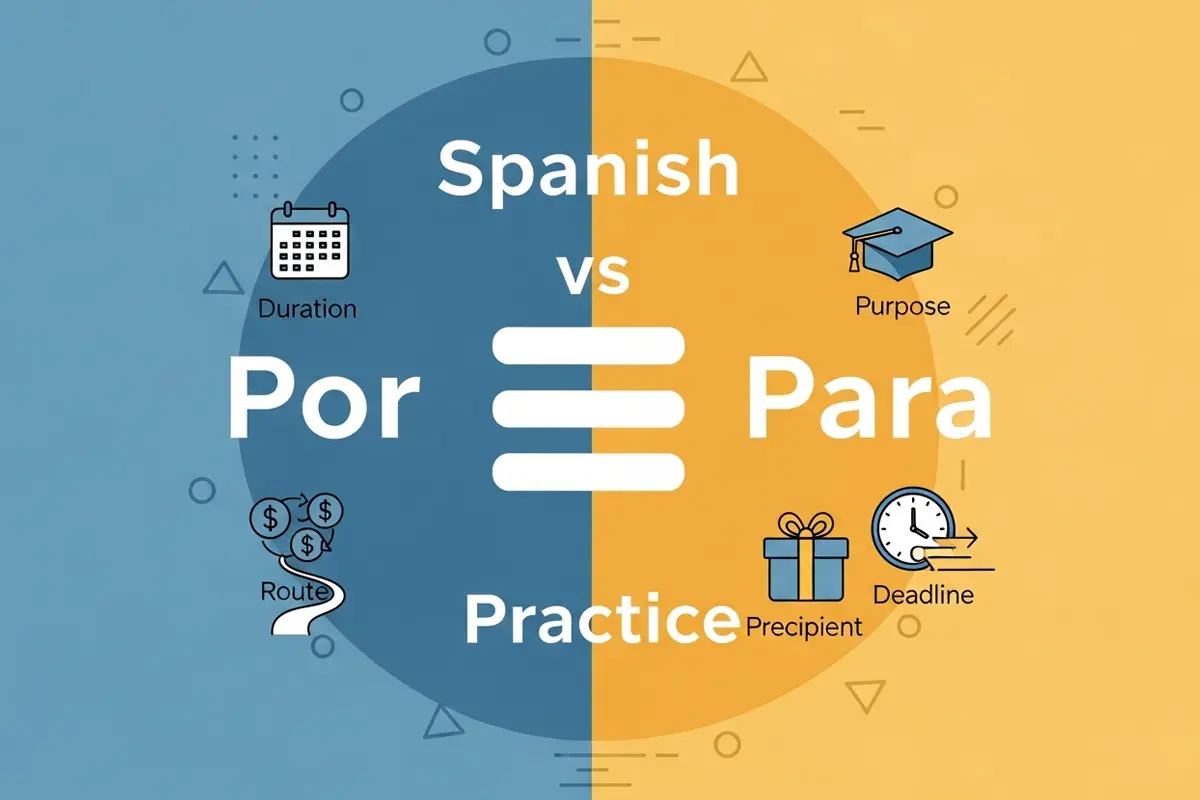
TL;DR — Spanish Por vs Para Practice
- Use por for causes, reasons, exchanges, movement, and duration.
- Use para for purpose, destination, recipients, and deadlines.
- The difference is about why vs. for what goal.
- The fastest way to master this is spanish por vs para practice with real sentences, not memorization.
Table of Contents
Open Table of Contents
- Spanish Por vs Para Practice — The Short Answer
- What Is the Difference Between Por and Para?
- Spanish Por vs Para Practice: Try It Yourself
- When Do You Use Por in Spanish?
- When Do You Use Para in Spanish?
- Por vs Para: Side-by-Side Comparison
- Why Is Por vs Para So Difficult for Learners?
- How Can You Practice Por vs Para Effectively?
- Common Mistakes in Spanish Por vs Para Practice
- FAQ — Spanish Por vs Para Practice
- What is the difference between por and para in Spanish?
- When should I use por instead of para?
- When should I use para instead of por?
- Why is por vs para so hard for English speakers?
- Is there an easy way to remember por vs para?
- Does por or para come before infinitive verbs?
- Are por and para interchangeable?
- Should I memorize rules or practice with examples?
- What is the best way to practice por vs para?
- Final Thoughts on Spanish Por vs Para Practice
Spanish Por vs Para Practice — The Short Answer
Use por when explaining a reason, cause, or exchange, and para when expressing a purpose, destination, or intended result.
If the sentence answers why something happens, use por. If it answers what the goal is, use para.
This guide focuses on spanish prepositions “por vs para” practice, with clear rules, comparisons, and exercises you can apply immediately.
What Is the Difference Between Por and Para?
Short answer:
- Por looks backward (cause, reason, explanation).
- Para looks forward (goal, purpose, outcome).
Example:
- Estudio por necesidad. (reason)
- Estudio para aprender español. (goal)
This conceptual split is recognized by official grammar authorities like the Real Academia Española, which explains por and para as expressing different semantic relationships rather than interchangeable meanings.
(See RAE guidance on Spanish prepositions in Nueva gramática de la lengua española.)
Takeaway: Ask yourself whether the sentence explains a cause or a goal.
Spanish Por vs Para Practice: Try It Yourself
Choose the correct preposition based on meaning, not translation.
👇 Do more Spanish prepositions Practice:
Prepositions: Use prepositions like en, a, de, por, para correctly.
When Do You Use Por in Spanish?
Use por to explain why something happens or how something is done.
Common Uses of Por
- Cause or reason
- Lo hice por ti.
- Exchange or price
- Pagué 20 euros por el libro.
- Movement through a place
- Caminamos por el parque.
- Duration of time
- Viví allí por dos años.
- Means of communication or transport
- Hablamos por teléfono.
Takeaway: Por explains background, cause, or method.
When Do You Use Para in Spanish?
Use para to show purpose, destination, or intended result.
Common Uses of Para
- Purpose or goal
- Estudio para aprender español.
- Destination
- Salimos para Madrid.
- Recipient
- Este regalo es para ti.
- Deadlines
- La tarea es para mañana.
- Opinions or standards
- Para mí, es importante.
Takeaway: Para points to a future result or target.
Por vs Para: Side-by-Side Comparison
| Situation | Use | Example |
|---|---|---|
| Reason or cause | por | Gracias por venir |
| Purpose or goal | para | Trabajo para ganar dinero |
| Price or exchange | por | Cambié euros por dólares |
| Recipient | para | Esto es para mi madre |
| Duration | por | Esperé por dos horas |
| Deadline | para | Es para el viernes |
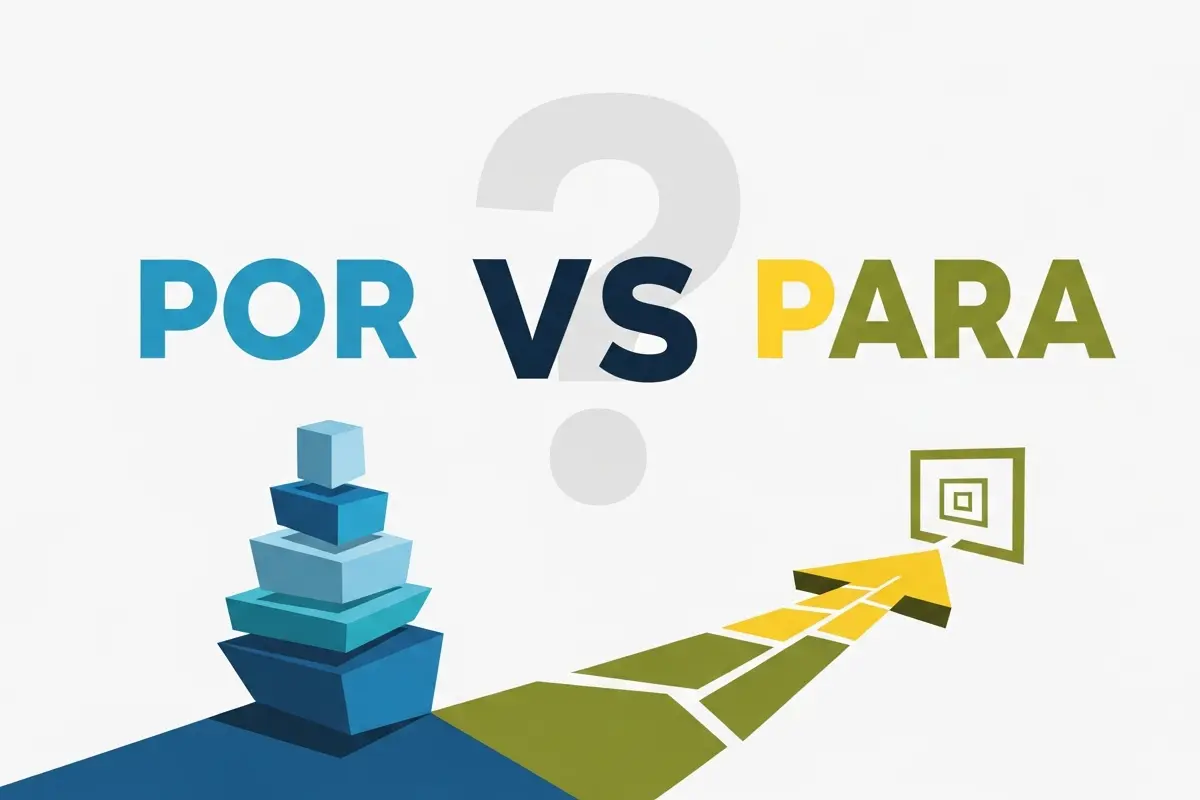
Takeaway: When in doubt, ask: cause or goal?
Why Is Por vs Para So Difficult for Learners?
English often uses “for” in situations where Spanish separates meaning more precisely.
Compare:
- I did it for you.
- Lo hice por ti. (reason)
- This is for you.
- Esto es para ti. (recipient)
Takeaway: Spanish forces you to be more precise about meaning.
How Can You Practice Por vs Para Effectively?
The best method is sentence-based practice that forces you to decide why an action happens.
Try this:
- Identify the verb.
- Ask if the sentence explains a reason or a goal.
- Choose por (reason) or para (goal).
Takeaway: Practice meaning, not rules.
Common Mistakes in Spanish Por vs Para Practice
- Translating directly from English
- Memorizing lists without context
- Ignoring sentence intention
Example mistake:
- ❌ Estudio por aprender español
- ✅ Estudio para aprender español
Takeaway: Translation is unreliable; intention matters.
FAQ — Spanish Por vs Para Practice
What is the difference between por and para in Spanish?
Por explains the reason, cause, exchange, or movement through something, while para shows purpose, destination, deadline, or recipient.
When should I use por instead of para?
Use por when you explain why something happens, express duration, talk about movement through a place, or indicate exchange (price, effort, or substitution).
When should I use para instead of por?
Use para to express goals, purposes, destinations, deadlines, recipients, or intended outcomes.
Why is por vs para so hard for English speakers?
English often uses “for” in situations where Spanish separates meaning into por and para, so direct translation leads to mistakes.
Is there an easy way to remember por vs para?
Yes. Think of por = reason or cause and para = goal or destination, then decide based on meaning, not translation.
Does por or para come before infinitive verbs?
Both can, but with different meanings: por + infinitive explains a reason, while para + infinitive shows a purpose or goal.
Are por and para interchangeable?
No. In most sentences, changing por to para (or vice versa) changes the meaning or makes the sentence incorrect.
Should I memorize rules or practice with examples?
Practice with real examples works better. Rules help at first, but meaning-based practice builds long-term accuracy.
What is the best way to practice por vs para?
The most effective method is short, focused practice with explanations—choosing based on meaning and reviewing mistakes immediately.
Final Thoughts on Spanish Por vs Para Practice
Por and para are not random. They reflect how the speaker understands the action.
If you focus on cause vs. goal, and practice with real sentences, the choice becomes predictable.
Consistent doing more Spanish grammar practice like por vs para practice is the fastest way to build accuracy and confidence.