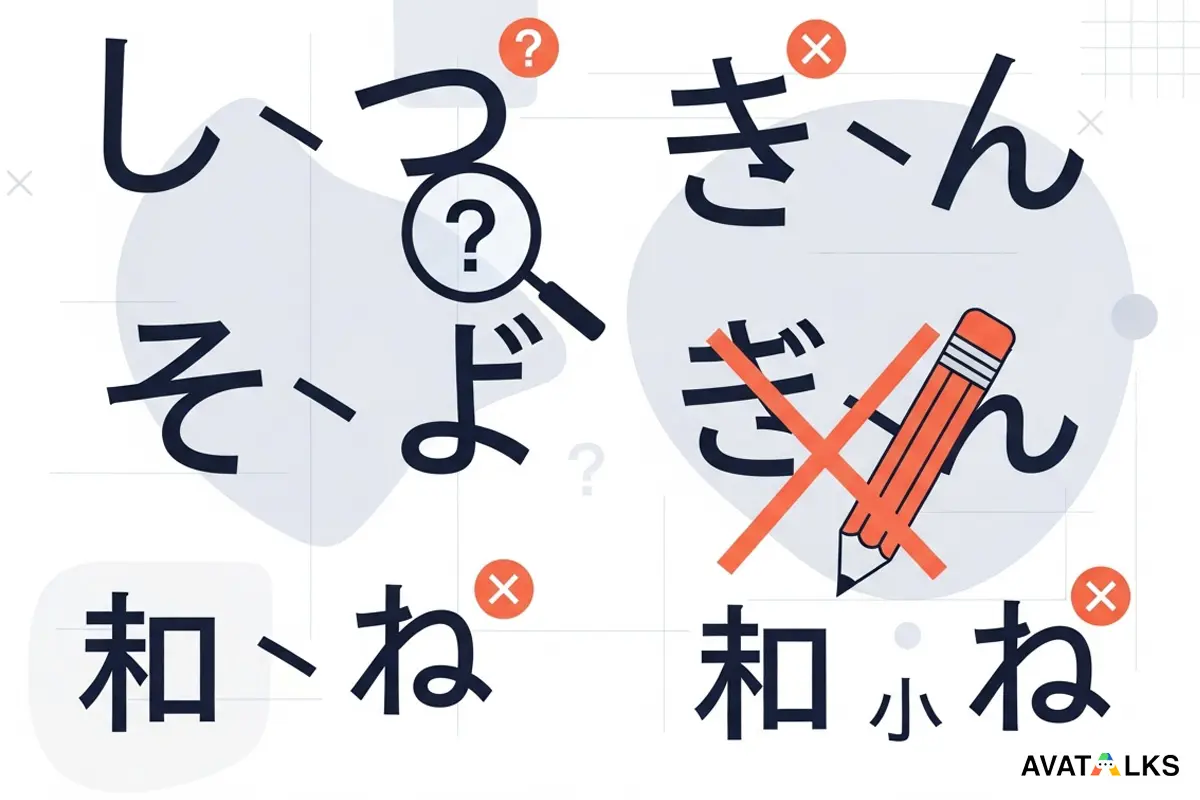
If you keep mixing up katakana like シ and ツ or ソ and ン, you are not the only one.
These are some of the most common katakana mistakes for beginners, and they happen for a simple reason: the characters look almost the same until your eyes learn what to notice.
The good news is that the fix is also simple.
You do not need a huge theory lesson. You need:
- the right visual clue
- a few real-word examples
- short contrast drills
- repeated exposure over a few days
That is what this guide gives you.
TL;DR
- The most common katakana mistakes come from similar-looking characters.
- The hardest pairs for many learners are:
- シ / ツ
- ソ / ン
- ク / ケ
- チ / テ
- ノ / フ
- The fastest fix is to focus on stroke direction and angle, not just general shape.
- Short contrast practice works better than random flashcards.
- If you want broader review after this, use our main Learn Katakana guide.
Learn Katakana in 7 Days
Use our structured katakana guide if you want a bigger plan for reading, writing, and reviewing katakana step by step.
Go to the main guide →Why katakana mistakes happen so easily
Katakana is built from clean lines, sharp angles, and small visual differences.
That makes it efficient once you know it well, but hard at the start.
A beginner often sees:
- the overall shape first
- the exact stroke angle second
- the stroke direction last
That is why characters like シ / ツ or ソ / ン feel confusing. Your brain groups them together too early.
The fix is to stop asking:
“Which one looks similar?”
and start asking:
“Which direction are the strokes pointing?”
The most common katakana mistakes
1. シ vs ツ
This is probably the most famous katakana trap.
| Character | Usual sound | Quick clue |
|---|---|---|
| シ | shi | small strokes spread more sideways |
| ツ | tsu | small strokes feel more vertical |
What to notice
The difference is not the overall shape. The difference is the direction of the short strokes.
A simple way to remember it:
- シ looks more sideways
- ツ looks more upright
Real-word examples
- シーツ = sheets
- ツアー = tour
- ツナ = tuna
Quick drill
Write and read:
- シ シ シ シ シ
- ツ ツ ツ ツ ツ
Then alternate:
- シ ツ シ ツ シ ツ
2. ソ vs ン
This pair also causes constant mistakes.
| Character | Usual sound | Quick clue |
|---|---|---|
| ソ | so | longer diagonal feels like it drops |
| ン | n | diagonal feels lighter and rises more |
What to notice
These two are easy to confuse if you only glance at them.
A simple memory hint:
- ソ feels like it falls
- ン feels like it lifts
Real-word examples
- ソフト = soft / software
- メロン = melon
- スポーツ = sports
Quick drill
Write and read:
- ソ ソ ソ ソ ソ
- ン ン ン ン ン
Then alternate:
- ソ ン ソ ン ソ ン
3. ク vs ケ
This pair is easier than シ / ツ or ソ / ン, but still worth training.
| Character | Usual sound | Quick clue |
|---|---|---|
| ク | ku | simpler shape |
| ケ | ke | extra stroke |
What to notice
If it has the extra stroke, it is ケ.
Real-word examples
- クラス = class
- ケーキ = cake
Quick drill
- ク ク ク ク ク
- ケ ケ ケ ケ ケ
- ク ケ ク ケ ク ケ
4. チ vs テ
This pair becomes confusing when learners read fast.
| Character | Usual sound | Quick clue |
|---|---|---|
| チ | chi | more compact and curved feeling |
| テ | te | clearer top line, more “flat” look |
Real-word examples
- チーズ = cheese
- テスト = test
Quick drill
- チ チ チ チ チ
- テ テ テ テ テ
- チ テ チ テ チ テ
5. ノ vs フ
These do not always get taught as an early confusion pair, but they do cause mistakes.
| Character | Usual sound | Quick clue |
|---|---|---|
| ノ | no | one clean slash |
| フ | fu | several strokes |
Real-word examples
- ノート = note
- フォーク = fork
Quick drill
- ノ ノ ノ ノ ノ
- フ フ フ フ フ
- ノ フ ノ フ ノ フ
6. ッ vs ク
This one becomes more important once you start reading longer katakana words.
| Character | Usual sound | Quick clue |
|---|---|---|
| ッ | small tsu | smaller, tighter |
| ク | ku | full-size character |
Why it matters
Small ッ changes timing in Japanese, so it is not just a visual difference.
Real-word examples
- パック
- ハック
The simplest rule that fixes most katakana mistakes
If you remember only one thing from this page, remember this:
katakana mistakes are usually solved by angle and direction, not by “general shape.”
That is the fastest mental shift.
A lot of learners stare at the whole character and still feel unsure.
Instead, train yourself to ask:
- where are the short strokes pointing?
- is this full-size or small?
- is there an extra stroke or not?
That is usually enough.
A better practice method than random flashcards
Random review can help, but it often does not fix visual confusion permanently.
A better method is contrast practice.
That means:
- two similar characters
- side by side
- repeated several times
- followed by real words
Example
Do not study:
- シ alone
- then later ツ alone
Study:
- シ vs ツ together
That makes the difference clearer much faster.
A 10-minute katakana fix routine
Here is a simple practice routine that works well.
Minutes 1 to 4: one confusing pair
Pick one pair only:
- シ / ツ
- ソ / ン
- ク / ケ
Write each one 5 to 10 times.
Minutes 5 to 7: read real words
Use 2 or 3 short katakana words that contain the pair.
Example:
- シーツ
- ツアー
- ツナ
Minutes 8 to 10: quick contrast test
Write the pair from memory in alternating order.
Example:
- シ ツ シ ツ シ ツ
- ソ ン ソ ン ソ ン
This is enough for one session.
Practice list
Use this like a short drill set.
Group 1 — シ / ツ
- シ シ シ シ シ
- ツ ツ ツ ツ ツ
- シ ツ シ ツ シ ツ
Words:
- シーツ
- ツアー
- ツナ
Group 2 — ソ / ン
- ソ ソ ソ ソ ソ
- ン ン ン ン ン
- ソ ン ソ ン ソ ン
Words:
- ソフト
- メロン
- スポーツ
Group 3 — ク / ケ
- ク ク ク ク ク
- ケ ケ ケ ケ ケ
- ク ケ ク ケ ク ケ
Words:
- クラス
- ケーキ
Group 4 — チ / テ
- チ チ チ チ チ
- テ テ テ テ テ
- チ テ チ テ チ テ
Words:
- チーズ
- テスト
Group 5 — ノ / フ
- ノ ノ ノ ノ ノ
- フ フ フ フ フ
- ノ フ ノ フ ノ フ
Words:
- ノート
- フォーク
Use katakana in context, not just as symbols
One reason learners stay confused is that they only review katakana as isolated symbols.
That is not enough.
You also need to see them in real words, because context helps your brain stop treating them like abstract lines.
That is why words like these are useful:
- メール
- テスト
- コーヒー
- スポーツ
- ノート
If you want more context, our guide to Katakana for Foreign Words fits well after this.
If your bigger problem is still overall kana reading, go back to Hiragana Practice or the main Learn Katakana guide.
FAQ
Why are シ and ツ so hard?
Because they have very similar shapes, and the difference depends mostly on the angle and direction of the small strokes.
Why are ソ and ン so easy to confuse?
For the same reason: the overall shape looks similar at first, so beginners need to notice the diagonal direction more carefully.
Should I memorize stroke order?
Yes. Stroke order helps because it reinforces direction, and direction is one of the main keys to telling katakana apart.
Will these mistakes disappear with practice?
Yes, but usually not from passive reading alone. They improve fastest with short contrast drills and real-word review.
Final thoughts
If katakana still feels slippery, that does not mean you are bad at Japanese.
It usually just means your eyes have not had enough contrast practice yet.
Start with the most confusing pairs. Keep the drills short. Focus on angle, direction, and real-word reading.
That is the fix that usually works better than trying to “just remember the shape.”