TL;DR
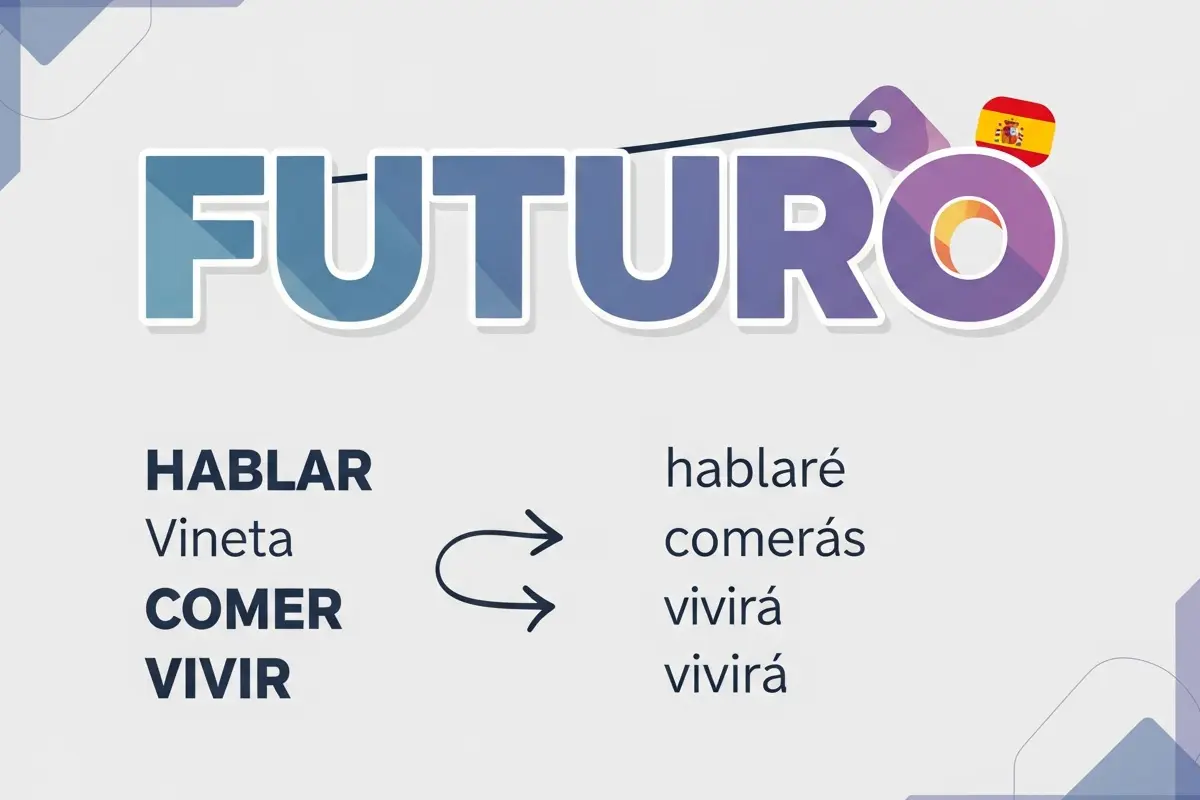
- The future tense in Spanish keeps the full infinitive and adds endings.
- Endings are: -é, -ás, -á, -emos, -éis, -án
- Works for -ar, -er, and -ir verbs (same conjugation pattern).
- There are 12 irregular verbs, but most follow the same rule.
- Future tense is used to express plans, predictions, assumptions, and promises.
Table of Contents
Open Table of Contents
- What Is the Future Tense in Spanish?
- What Is the Formula for Conjugation for Future Tense in Spanish?
- How Do You Conjugate Regular Verbs in the Future Tense?
- Irregular Verbs in the Future Tense
- When Do Spanish Speakers Use the Future Tense?
- Future Tense vs. “Ir + a + Infinitive”
- ❓ FAQ: Conjugation for Future Tense in Spanish
- What is the simplest rule for conjugating the future tense in Spanish?
- Do all verbs use the same endings in the future tense?
- Is the future tense common in everyday Spanish?
- What’s the difference between the future tense and the conditional tense?
- Do accent marks matter in the future tense?
- Is future tense conjugation the same in Spain and Latin America?
- What is the most common mistake learners make?
- Related Spanish Learning Guides
- Final Takeaway
- References & Exercises Materials
What Is the Future Tense in Spanish?
The future tense in Spanish is used to talk about actions that will happen later. The future tense often shows future events, predictions, or assumptions. Spanish grammar references note this (source: Spanish future tense — Wikipedia).
It is one of the simplest conjugations. This is because it uses the infinitive form and adds endings.
It is one of the easiest tenses to learn because the verb keeps its infinitive form, and you only add a future ending.
Example:
| Spanish | English |
|---|---|
| Yo hablaré | I will speak |
| Comerás mañana | You will eat tomorrow |
| Viviremos en Madrid | We will live in Madrid |
This rule works the same for all three verb groups: -ar, -er, and -ir.
What Is the Formula for Conjugation for Future Tense in Spanish?
The formula is:
Infinitive Verb + Future Ending
According to Instituto Cervantes, these endings are consistent across all verb groups.
| Subject | Ending |
|---|---|
| yo | -é |
| tú | -ás |
| él / ella / usted | -á |
| nosotros / nosotras | -emos |
| vosotros / vosotras | -éis |
| ellos / ellas / ustedes | -án |
Example With Three Verb Types
| Infinitive | Conjugation | Meaning |
|---|---|---|
| hablar | hablaré | I will speak |
| comer | comerás | You will eat |
| vivir | vivirán | They will live |
No stem change. No removing endings. Just attach.
How Do You Conjugate Regular Verbs in the Future Tense?
Answer:
To conjugate regular verbs in the future tense in Spanish, keep the infinitive and add the future endings: -é, -ás, -á, -emos, -éis, -án.
If you’re already familiar with other conjugations such as the present tense or preterite tense, this future tense will feel much simpler. You can review them in:
- Master Present Tense Spanish Easily with Charts & Tips
- Past Tense Conjugation Spanish: Complete Guide
Regular Verb Full Chart
| Person | Hablar (to speak) | Comer (to eat) | Vivir (to live) |
|---|---|---|---|
| yo | hablaré | comeré | viviré |
| tú | hablarás | comerás | vivirás |
| él/ella/usted | hablará | comerá | vivirá |
| nosotros/as | hablaremos | comeremos | viviremos |
| vosotros/as | hablaréis | comeréis | viviréis |
| ellos/ellas/ustedes | hablarán | comerán | vivirán |
Irregular Verbs in the Future Tense
Answer:
There are around 12 common irregular verbs in the future tense. Instead of using the full infinitive, they use a modified stem + the same future endings.
Linguistic resources from the University of Texas Spanish grammar archive confirm these stems are historically linked to Latin phonetic simplification patterns.
Irregular Verbs List
| Infinitive | Future Stem | Example |
|---|---|---|
| tener | tendr- | tendré |
| hacer | har- | harás |
| decir | dir- | dirá |
| poder | podr- | podremos |
| poner | pondr- | pondré |
| venir | vendr- | vendrán |
| salir | saldr- | saldré |
| querer | querr- | querrás |
| saber | sabr- | sabremos |
| haber | habr- | habrá (there will be) |
| caber | cabr- | cabrá |
| valer | valdr- | valdrá |
Example in sentences
-
Mañana habrá lluvia.
Tomorrow there will be rain. -
Tendrás tiempo más tarde.
You will have time later.
When Do Spanish Speakers Use the Future Tense?
Native speakers use the future tense for:
1. Plans and Predictions
Speak about what will happen.
- Estudiaré esta noche.
I will study tonight.
2. Assumptions or Guessing
A common cultural use across Spain and Latin America.
- ¿Dónde estará Juan? → Estará en casa.
Where is Juan? → He’s probably at home.
3. Promises
- Te llamaré mañana.
I will call you tomorrow.
4. Schedules
- El tren saldrá a las ocho.
The train will depart at eight.
Future Tense vs. “Ir + a + Infinitive”
Answer:
Both forms express future meaning, but “ir + a + infinitive” is more common in everyday conversation, while the future tense often sounds more formal, certain, or intentional.
This distinction is also noted in the Cervantes ELE curriculum.
| Form | Example | Usage |
|---|---|---|
| Future tense | Comerás verduras. | Strong prediction or rule |
| Ir + a + infinitive | Vas a comer verduras. | Natural spoken future |
For Spanish learners, it’s helpful to master both forms as they are used side by side culturally.
❓ FAQ: Conjugation for Future Tense in Spanish
What is the simplest rule for conjugating the future tense in Spanish?
The simplest rule is: keep the full infinitive and add the endings -é, -ás, -á, -emos, -éis, -án.
This rule works the same for -ar, -er, and -ir verbs.
Do all verbs use the same endings in the future tense?
Yes. All verbs — regular and irregular — share the same future endings.
Irregular verbs change the stem, not the endings.
Is the future tense common in everyday Spanish?
In conversation, many speakers prefer “ir + a + infinitive” (example: voy a comer).
However, the future tense is still used for predictions, certainty, formal speech, promises, and assumptions.
What’s the difference between the future tense and the conditional tense?
The future tense expresses what will happen, while the conditional expresses what would happen.
- Aprenderé español. → I will learn Spanish.
- Aprendería español. → I would learn Spanish.
Do accent marks matter in the future tense?
Yes — accents are essential in all forms except nosotros.
A helpful memory trick: 👉 Only the nosotros form has no accent.
Is future tense conjugation the same in Spain and Latin America?
Yes — the conjugation is the same everywhere.
The only difference is that Spain uses vosotros (–éis) while Latin America uses ustedes instead.
What is the most common mistake learners make?
Learners frequently:
- remove the verb ending instead of using the full infinitive
- confuse future endings (-é, -ás) with conditional endings (-ía)
- forget accent marks
Accent marks change meaning and pronunciation, so they matter.
Related Spanish Learning Guides
If you’re building a strong grammar foundation, these guides will help reinforce patterns:
- Spanish Sentence Structure: A Simple Beginner Guide
- Past Tense Conjugation Spanish: Complete Guide
- Mastering the Present Perfect Tense in Spanish
Final Takeaway
The easiest way to learn conjugation for future tense in Spanish is to remember one rule: keep the full infinitive and add the endings -é, -ás, -á, -emos, -éis, -án.
With just a few irregular stems and real usage practice, you’ll begin using this tense automatically and confidently.
References & Exercises Materials
- Marcoele: Futuro simple de indicativo – conjugación y usos – a focused grammar note that explains how to form and use the futuro simple in Spanish, including the regular endings and common irregular stems.
- La conjugación verbal en español (Educación Lengua Castellana) – an overview of Spanish verb tenses and forms, with tables that include the future tense alongside other key indicative and compound tenses.