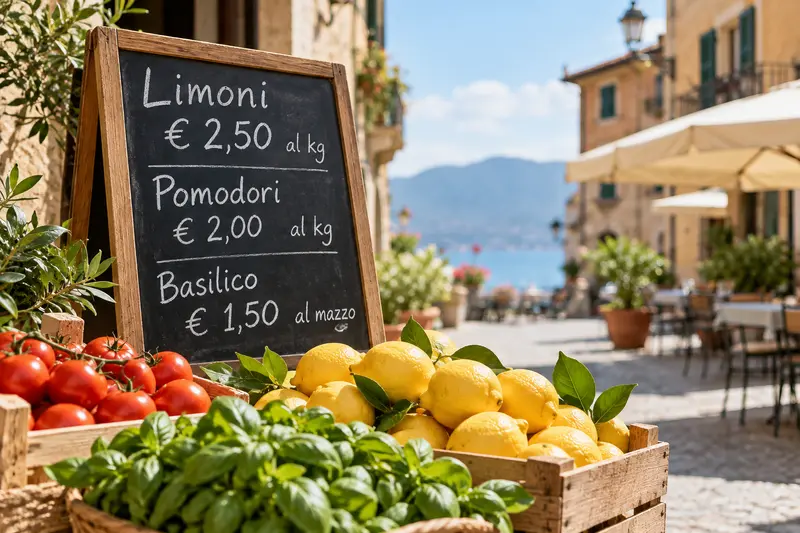
Learning Italian numbers 1–100 is easier than it might seem. Once you understand the patterns behind the numbers, you can count from uno to cento without memorizing every number separately.
The first twenty numbers require some memorization, but after that, Italian follows a mostly predictable system. For example, 21 is ventuno, 35 is trentacinque, and 99 is novantanove.
Numbers are also among the most practical things you can learn in Italian. You’ll use them when ordering food, asking about prices, telling someone your age, making reservations, or understanding dates and times.
In this guide, you’ll learn how to count in Italian from 0 to 100, pronounce each number, understand the important spelling rules, and practice using numbers in everyday conversations.
Table of Contents
Open Table of Contents
- Italian Numbers 1–100: Quick Reference
- Italian Numbers 0–10: Start with the Basics
- Italian Numbers 11–20
- Italian Numbers 21–30
- Italian Numbers 31–40
- Italian Numbers 41–50
- Italian Numbers 51–60
- Italian Numbers 61–70
- Italian Numbers 71–80
- Italian Numbers 81–90
- Italian Numbers 91–100
- Three Essential Rules for Writing Italian Numbers
- How to Use Italian Numbers in Everyday Life
- Italian Number Pronunciation: Common Difficulties
- Common Mistakes When Counting in Italian
- Italian Numbers Practice: Test Yourself
- A Simple Five-Day Plan to Learn Italian Numbers
- Frequently Asked Questions About Italian Numbers
- How do you count from 1 to 10 in Italian?
- How do you say 20 in Italian?
- How do you say 30 in Italian?
- How do you say 50 in Italian?
- How do you say 100 in Italian?
- Why is 21 ventuno instead of ventiuno?
- Why is 28 ventotto instead of ventiotto?
- Why does ventitré have an accent?
- Are Italian numbers written as one word?
- How do you say your age in Italian?
- What is the fastest way to learn Italian numbers?
- Key Takeaways
- Final Thoughts
Italian Numbers 1–100: Quick Reference
If you need a quick answer, here are the most important numbers to recognize first.
| Number | Italian | English |
|---|---|---|
| 0 | zero | zero |
| 1 | uno | one |
| 2 | due | two |
| 3 | tre | three |
| 4 | quattro | four |
| 5 | cinque | five |
| 6 | sei | six |
| 7 | sette | seven |
| 8 | otto | eight |
| 9 | nove | nine |
| 10 | dieci | ten |
| 20 | venti | twenty |
| 30 | trenta | thirty |
| 40 | quaranta | forty |
| 50 | cinquanta | fifty |
| 60 | sessanta | sixty |
| 70 | settanta | seventy |
| 80 | ottanta | eighty |
| 90 | novanta | ninety |
| 100 | cento | one hundred |
The key is to learn the numbers from 0 to 20, then memorize the multiples of ten.
After that, most two-digit numbers can be formed by combining these building blocks.
For example:
- 22 = ventidue
- 34 = trentaquattro
- 56 = cinquantasei
- 78 = settantotto
- 91 = novantuno
There are a few important spelling changes, which we’ll explain below.
Italian Numbers 0–10: Start with the Basics
The numbers from zero to ten are the foundation of counting in Italian.
Unlike larger numbers, these don’t follow a single pattern that lets you guess them.
You’ll need to learn them individually.
| Number | Italian | Approximate Pronunciation |
|---|---|---|
| 0 | zero | DZEH-roh |
| 1 | uno | OO-noh |
| 2 | due | DOO-eh |
| 3 | tre | treh |
| 4 | quattro | KWAHT-troh |
| 5 | cinque | CHEEN-kweh |
| 6 | sei | say |
| 7 | sette | SEHT-teh |
| 8 | otto | OHT-toh |
| 9 | nove | NOH-veh |
| 10 | dieci | DYEH-chee |
These English-style pronunciation guides are approximate. Italian vowels and consonants don’t always have exact English equivalents.
For the most reliable pronunciation, listen to the Italian audio and repeat.
Practice the First Five Numbers
Uno — One
Due — Two
Tre — Three
Quattro — Four
Cinque — Five
Pay particular attention to quattro and cinque.
In quattro, the double tt should be pronounced clearly.
In cinque, the letter c before i produces a sound similar to English “ch.”
Practice Numbers 6–10
Sei — Six
Sette — Seven
Otto — Eight
Nove — Nine
Dieci — Ten
Try counting from one to ten without looking at the table.
Then count backward from ten to one.
Counting backward is a useful exercise because it forces you to recall each number rather than simply repeat a memorized sequence.
Italian Numbers 11–20
The numbers from 11 to 20 introduce several important patterns.
Some resemble their corresponding single-digit numbers, but the spelling changes are not completely predictable.
| Number | Italian | Approximate Pronunciation |
|---|---|---|
| 11 | undici | OON-dee-chee |
| 12 | dodici | DOH-dee-chee |
| 13 | tredici | TREH-dee-chee |
| 14 | quattordici | kwaht-TOR-dee-chee |
| 15 | quindici | KWEEN-dee-chee |
| 16 | sedici | SEH-dee-chee |
| 17 | diciassette | dee-chahs-SEHT-teh |
| 18 | diciotto | dee-CHOHT-toh |
| 19 | diciannove | dee-chahn-NOH-veh |
| 20 | venti | VEHN-tee |
Notice that numbers 11–16 end in -dici.
However, numbers 17–19 begin with dici-.
This difference is one reason it’s worth learning the numbers from 11 to 19 individually.
Listen to Numbers 11–20
Undici — Eleven
Dodici — Twelve
Tredici — Thirteen
Quattordici — Fourteen
Quindici — Fifteen
Sedici — Sixteen
Diciassette — Seventeen
Diciotto — Eighteen
Diciannove — Nineteen
Venti — Twenty
A useful exercise is to practice the numbers in groups:
11–13: undici, dodici, tredici
14–16: quattordici, quindici, sedici
17–19: diciassette, diciotto, diciannove
Once these feel familiar, the rest of the numbers become much easier.
Italian Numbers 21–30
From 21 onward, Italian numbers become more systematic.
Most numbers are formed by combining the word for the multiple of ten with the corresponding single-digit number.
For example:
Venti + due = ventidue
Twenty + two = twenty-two.
However, there are two important exceptions involving numbers ending in uno and otto.
| Number | Italian |
|---|---|
| 21 | ventuno |
| 22 | ventidue |
| 23 | ventitré |
| 24 | ventiquattro |
| 25 | venticinque |
| 26 | ventisei |
| 27 | ventisette |
| 28 | ventotto |
| 29 | ventinove |
| 30 | trenta |
Let’s examine the patterns.
Why Is 21 Ventuno Instead of Ventiuno?
The final vowel of venti disappears before uno.
So:
venti + uno → ventuno
This process is called vowel elision.
The same pattern appears with other multiples of ten.
For example:
- 31 = trentuno
- 41 = quarantuno
- 51 = cinquantuno
- 61 = sessantuno
Why Is 28 Ventotto Instead of Ventiotto?
The same rule applies before otto.
venti + otto → ventotto
Other examples include:
- 38 = trentotto
- 48 = quarantotto
- 58 = cinquantotto
- 68 = sessantotto
Why Does Ventitré Have an Accent?
Numbers ending in -tré take an accent on the final é when tre is part of a compound number.
For example:
- 23 = ventitré
- 33 = trentatré
- 43 = quarantatré
- 53 = cinquantatré
But the standalone number tre does not need an accent.
This is a common spelling mistake among Italian learners.
Listen to the Three Important Patterns
Ventuno — Twenty-one
Ventitré — Twenty-three
Ventotto — Twenty-eight
These three examples demonstrate the most important spelling changes you’ll encounter when counting from 21 to 100.
Italian Numbers 31–40
The word for thirty is trenta.
Combine it with the single-digit numbers to form 31–39.
| Number | Italian |
|---|---|
| 31 | trentuno |
| 32 | trentadue |
| 33 | trentatré |
| 34 | trentaquattro |
| 35 | trentacinque |
| 36 | trentasei |
| 37 | trentasette |
| 38 | trentotto |
| 39 | trentanove |
| 40 | quaranta |
Notice how the same rules continue:
- Trenta + uno → trentuno
- Trenta + tre → trentatré
- Trenta + otto → trentotto
Trentacinque — Thirty-five
Once you understand this pattern, you don’t need to memorize each number independently.
Italian Numbers 41–50
The word for forty is quaranta.
| Number | Italian |
|---|---|
| 41 | quarantuno |
| 42 | quarantadue |
| 43 | quarantatré |
| 44 | quarantaquattro |
| 45 | quarantacinque |
| 46 | quarantasei |
| 47 | quarantasette |
| 48 | quarantotto |
| 49 | quarantanove |
| 50 | cinquanta |
Be careful with the spelling of quaranta.
English speakers sometimes expect a spelling resembling quarenty or quarante.
The correct Italian spelling is quaranta.
Quarantotto — Forty-eight
Italian Numbers 51–60
The word for fifty is cinquanta.
| Number | Italian |
|---|---|
| 51 | cinquantuno |
| 52 | cinquantadue |
| 53 | cinquantatré |
| 54 | cinquantaquattro |
| 55 | cinquantacinque |
| 56 | cinquantasei |
| 57 | cinquantasette |
| 58 | cinquantotto |
| 59 | cinquantanove |
| 60 | sessanta |
Cinquantasei — Fifty-six
Notice that cinquanta begins with the same cinqu- sequence found in cinque.
This connection can help you remember the word.
Italian Numbers 61–70
The word for sixty is sessanta.
| Number | Italian |
|---|---|
| 61 | sessantuno |
| 62 | sessantadue |
| 63 | sessantatré |
| 64 | sessantaquattro |
| 65 | sessantacinque |
| 66 | sessantasei |
| 67 | sessantasette |
| 68 | sessantotto |
| 69 | sessantanove |
| 70 | settanta |
Sessantasette — Sixty-seven
Pay attention to the double consonants in sessanta and sessantasette.
Italian double consonants are pronounced longer than single consonants.
This distinction can affect how natural your pronunciation sounds.
Italian Numbers 71–80
The word for seventy is settanta.
| Number | Italian |
|---|---|
| 71 | settantuno |
| 72 | settantadue |
| 73 | settantatré |
| 74 | settantaquattro |
| 75 | settantacinque |
| 76 | settantasei |
| 77 | settantasette |
| 78 | settantotto |
| 79 | settantanove |
| 80 | ottanta |
Settantotto — Seventy-eight
Notice the relationship between:
- Sette = seven
- Settanta = seventy
The spelling is similar, which can make the word easier to remember.
Italian Numbers 81–90
The word for eighty is ottanta.
| Number | Italian |
|---|---|
| 81 | ottantuno |
| 82 | ottantadue |
| 83 | ottantatré |
| 84 | ottantaquattro |
| 85 | ottantacinque |
| 86 | ottantasei |
| 87 | ottantasette |
| 88 | ottantotto |
| 89 | ottantanove |
| 90 | novanta |
Ottantotto — Eighty-eight
This number is a useful pronunciation exercise because it contains several repeated t sounds.
Try saying it slowly first.
Then increase your speed while keeping the consonants clear.
Italian Numbers 91–100
The word for ninety is novanta.
| Number | Italian |
|---|---|
| 91 | novantuno |
| 92 | novantadue |
| 93 | novantatré |
| 94 | novantaquattro |
| 95 | novantacinque |
| 96 | novantasei |
| 97 | novantasette |
| 98 | novantotto |
| 99 | novantanove |
| 100 | cento |
Novantanove — Ninety-nine
Cento — One hundred
Congratulations! You now have all the building blocks needed to count from zero to one hundred in Italian.
But recognizing the numbers in a table is only the beginning.
The next step is learning how to use them naturally.
Three Essential Rules for Writing Italian Numbers
Before moving into practical examples, let’s review the three spelling rules that cause the most confusion.
Rule 1: Drop the Final Vowel Before Uno and Otto
When a multiple of ten ends in a vowel, that final vowel is dropped before uno and otto.
Examples:
| Incorrect | Correct |
|---|---|
| ventiuno | ventuno |
| ventiotto | ventotto |
| trentauno | trentuno |
| quarantaotto | quarantotto |
| cinquantauno | cinquantuno |
| novantaotto | novantotto |
This rule applies throughout the numbers from 21 to 99.
Rule 2: Add an Accent to Compound Numbers Ending in Tre
When a compound number ends in tre, the final vowel takes an acute accent.
Examples:
| Number | Correct Spelling |
|---|---|
| 3 | tre |
| 23 | ventitré |
| 33 | trentatré |
| 43 | quarantatré |
| 63 | sessantatré |
| 83 | ottantatré |
| 93 | novantatré |
Remember:
Tre by itself has no accent.
Ventitré and similar compound numbers do.
Rule 3: Write Compound Numbers as One Word
In standard Italian spelling, compound numbers from 21 to 99 are normally written as one word.
For example:
- ventidue
- trentacinque
- quarantasette
- sessantaquattro
- novantanove
Don’t separate them into two words as you would in English.
English: twenty-five
Italian: venticinque
Italian also doesn’t normally use a hyphen between the parts.
How to Use Italian Numbers in Everyday Life
Numbers become much easier to remember when you connect them to realistic situations.
Let’s look at five common uses.
1. Asking About Prices
When shopping in Italy, you’ll frequently hear numbers followed by euro.
For example:
Costa venticinque euro.
It costs twenty-five euros.
Another example:
Costa quarantotto euro.
It costs forty-eight euros.
Notice that euro remains unchanged in these examples.
Italian generally uses euro as an invariable noun.
This means you say:
- un euro
- due euro
- venti euro
- cento euro
You don’t add an -s as you would in English.
2. Telling Someone Your Age
In Italian, age is expressed using the verb avere, meaning to have.
English speakers say:
“I am twenty-five years old.”
Italian speakers say:
Ho venticinque anni.
Literally, “I have twenty-five years.”
Other examples:
Ho trentadue anni.
I’m thirty-two years old.
Ho quarantuno anni.
I’m forty-one years old.
The key pattern is:
Ho + number + anni
This is one of the most useful beginner sentence structures involving Italian numbers.
3. Ordering Food and Drinks
Numbers are essential when ordering several items.
For example:
Vorrei due cappuccini.
I would like two cappuccinos.
Another example:
Vorrei tre cornetti.
I would like three croissants.
Notice that the nouns change to their plural forms:
- un cappuccino → due cappuccini
- un cornetto → tre cornetti
Numbers and noun agreement are closely connected in Italian.
If you’d like to practice ordering drinks in a realistic setting, see our guide to ordering coffee in Italy.
4. Talking About Dates
Numbers are also used to express calendar dates.
For example:
Oggi è il venticinque aprile.
Today is April 25.
Italian normally uses cardinal numbers for dates.
However, the first day of the month is an important exception.
You say:
Il primo maggio.
May 1.
Not:
Il uno maggio.
This distinction is useful when talking about birthdays, appointments, and travel dates.
5. Understanding Phone Numbers
Phone numbers are usually spoken digit by digit in Italian, although speakers may sometimes group digits together.
For example, imagine the number:
347 582 1906
You could read it as:
Tre quattro sette cinque otto due uno nove zero sei.
For beginners, practicing digits individually is especially helpful.
Start with short sequences of three or four digits.
Then gradually move to longer numbers.
Italian Number Pronunciation: Common Difficulties
Italian numbers follow regular patterns, but pronunciation can still be challenging.
Here are four things to watch.
1. Double Consonants
Italian distinguishes between single and double consonants.
Compare:
- sette
- otto
- quattro
- settanta
In these words, the double consonants should be held slightly longer.
This is different from ordinary English pronunciation, where doubled letters don’t usually produce longer consonant sounds.
2. Clear Italian Vowels
Italian vowels are generally pronounced more consistently than English vowels.
For example:
Venti ends with an i sound.
Trenta ends with an a sound.
Quaranta also ends with an a sound.
Avoid reducing these final vowels to a vague English-style “uh.”
3. The Stress in Longer Numbers
Some Italian numbers have several syllables.
Examples include:
- quattordici
- diciassette
- quarantacinque
- cinquantanove
Don’t assume that every number has the same stress pattern.
Listen carefully to the pronunciation and imitate the rhythm.
4. Similar-Sounding Numbers
Some numbers can be confused when spoken quickly.
For example:
- sessanta — sixty
- settanta — seventy
These are particularly important to distinguish when discussing prices, ages, or quantities.
Practice listening to both words until you can recognize them without looking at the spelling.
Common Mistakes When Counting in Italian
Here are five errors beginners frequently make.
Mistake 1: Writing Ventiuno Instead of Ventuno
Incorrect:
ventiuno
Correct:
ventuno
Remember to remove the final vowel before uno.
Mistake 2: Writing Trentaotto Instead of Trentotto
Incorrect:
trentaotto
Correct:
trentotto
The final vowel disappears before otto.
Mistake 3: Forgetting the Accent in Ventitré
Incorrect:
ventitre
Correct:
ventitré
The accent is required in compound numbers ending in -tré.
Mistake 4: Separating Compound Numbers
Incorrect:
quaranta cinque
Correct:
quarantacinque
Italian compound numbers are normally written as a single word.
Mistake 5: Using Essere to Express Age
Incorrect:
Sono venticinque anni.
Correct:
Ho venticinque anni.
Italian uses avere when expressing someone’s age.
This is a grammatical difference, not simply a vocabulary difference.
Italian Numbers Practice: Test Yourself
Now it’s time to check what you’ve learned.
Try answering the questions before looking at the solutions.
Exercise 1: Translate These Numbers into Italian
Write the Italian words for:
- 12
- 21
- 33
- 48
- 56
- 67
- 78
- 83
- 99
- 100
Answers
- dodici
- ventuno
- trentatré
- quarantotto
- cinquantasei
- sessantasette
- settantotto
- ottantatré
- novantanove
- cento
If you made mistakes, identify the pattern behind them.
Did you forget an accent?
Did you forget to remove a vowel?
Or did you confuse two multiples of ten?
Understanding the reason for a mistake is more useful than simply memorizing the correct answer.
Exercise 2: Correct the Spelling
Find the mistakes in these Italian numbers:
- ventiuno
- trentaotto
- quarantatre
- cinquanta uno
- novantaotto
Answers
- ventuno
- trentotto
- quarantatré
- cinquantuno
- novantotto
Exercise 3: Translate the Sentences
Translate these sentences into Italian.
1. I am thirty years old.
Answer:
Ho trenta anni.
In natural Italian, the final vowel of trenta is commonly elided before anni:
Ho trent’anni.
2. It costs forty-five euros.
Answer:
Costa quarantacinque euro.
3. I would like two cappuccinos.
Answer:
Vorrei due cappuccini.
4. Today is May 1.
Answer:
Oggi è il primo maggio.
5. I am twenty-eight years old.
Answer:
Ho ventotto anni.
Practice speaking these sentences aloud rather than only reading them.
This will help you connect the written numbers with their spoken forms.
A Simple Five-Day Plan to Learn Italian Numbers
You don’t need to memorize all 100 numbers in one day.
A short, structured plan is usually more effective.
Day 1: Learn 0–20
Focus on the numbers that require the most memorization.
Practice counting forward and backward.
Day 2: Learn the Multiples of Ten
Memorize:
- venti
- trenta
- quaranta
- cinquanta
- sessanta
- settanta
- ottanta
- novanta
- cento
Once these are familiar, most larger numbers become much easier.
Day 3: Practice Numbers Ending in 1, 3, and 8
Focus on the three most important spelling patterns.
Examples:
- ventuno
- trentatré
- quarantotto
- cinquantuno
- sessantatré
- settantotto
Day 4: Practice Real-Life Sentences
Use numbers to describe:
- Your age.
- Prices.
- Quantities.
- Dates.
- Phone numbers.
For example:
Ho trentacinque anni.
I’m thirty-five years old.
Costa ventotto euro.
It costs twenty-eight euros.
Day 5: Practice Listening
Ask someone to say random numbers between 1 and 100.
Write down the numbers you hear.
Then check your answers.
If you’re practicing alone, use the audio examples throughout this guide.
For additional beginner vocabulary, see our basic Italian words guide. It complements this lesson by introducing everyday words you can combine with numbers.
Frequently Asked Questions About Italian Numbers
How do you count from 1 to 10 in Italian?
The numbers are:
Uno, due, tre, quattro, cinque, sei, sette, otto, nove, dieci.
These are the foundation for learning larger Italian numbers.
How do you say 20 in Italian?
Twenty is venti.
It forms the base for numbers 21–29.
For example:
- 21 = ventuno
- 22 = ventidue
- 23 = ventitré
How do you say 30 in Italian?
Thirty is trenta.
For example:
- 31 = trentuno
- 35 = trentacinque
- 38 = trentotto
How do you say 50 in Italian?
Fifty is cinquanta.
For example:
- 51 = cinquantuno
- 55 = cinquantacinque
- 58 = cinquantotto
How do you say 100 in Italian?
One hundred is cento.
The word is pronounced approximately CHEN-toh.
Why is 21 ventuno instead of ventiuno?
Italian drops the final vowel of the multiple of ten before uno.
Therefore:
venti + uno → ventuno
The same pattern applies to trentuno, quarantuno, and other similar numbers.
Why is 28 ventotto instead of ventiotto?
The final vowel of venti disappears before otto.
Therefore:
venti + otto → ventotto
This spelling rule applies throughout the numbers from 21 to 99.
Why does ventitré have an accent?
Italian compound numbers ending in tre take an accent on the final vowel.
For example:
- ventitré
- trentatré
- quarantatré
The standalone word tre does not need an accent.
Are Italian numbers written as one word?
Compound numbers from 21 to 99 are normally written as one word.
For example:
venticinque
not
venti cinque
How do you say your age in Italian?
Use the verb avere.
For example:
Ho venticinque anni.
I’m twenty-five years old.
Italian literally expresses this as “I have twenty-five years.”
What is the fastest way to learn Italian numbers?
Start with numbers 0–20, then learn the multiples of ten.
Next, practice the rules for numbers ending in 1, 3, and 8.
Finally, use numbers in realistic situations such as shopping, discussing ages, and understanding prices.
Short daily listening and speaking exercises are more useful than memorizing a long list once.
Key Takeaways
Learning Italian numbers 1–100 becomes much easier when you understand the underlying patterns.
Remember these essential points:
- Learn 0–20 first.
- Memorize the multiples of ten.
- Drop the final vowel before uno and otto.
- Add an accent to compound numbers ending in -tré.
- Write compound numbers as one word.
- Practice numbers in real situations rather than memorizing lists alone.
Once you understand these rules, you’ll be able to form most Italian numbers between 21 and 99 without consulting a chart.
Final Thoughts
Italian numbers are one of the most useful foundations for everyday communication.
Whether you’re buying a train ticket, ordering coffee, discussing prices, or telling someone your age, knowing how to count confidently makes real conversations easier.
Start with the basics, pay attention to spelling patterns, and practice pronunciation regularly.
You don’t need to learn everything perfectly in one session.
With consistent practice, numbers like ventitré, quarantotto, and novantanove will gradually become as familiar as uno, due, and tre.