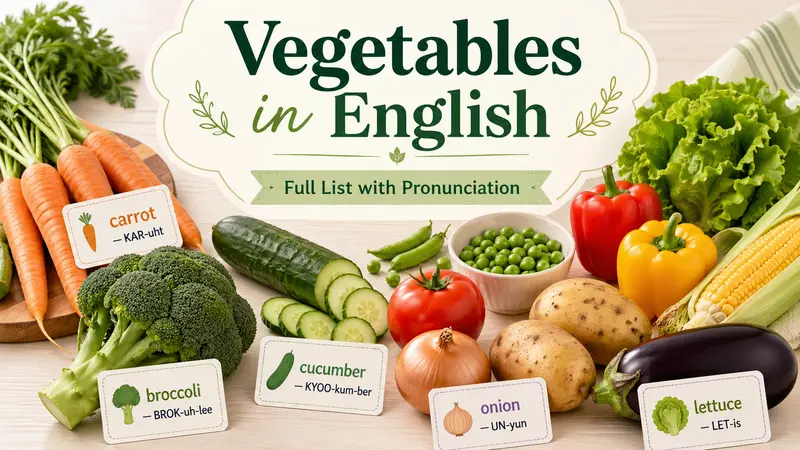
If you are learning English, vegetable vocabulary is one of the most useful food topics to study.
You see vegetable words in supermarkets, recipes, restaurant menus, cooking videos, school books, and daily conversation. They are practical words that come up again and again.
In this guide, you will find a full list of vegetables in English, grouped by type, with pronunciation support and simple examples.
If you also want matching food vocabulary, our post on Fruit Words in English: Full List with Pronunciation is a helpful companion.
Common everyday vegetables
These are the vegetable words learners will see most often.
| Vegetable word | Pronunciation | Type |
|---|---|---|
| potato | everyday vegetable | |
| tomato | everyday vegetable | |
| onion | everyday vegetable | |
| carrot | root vegetable | |
| cabbage | leafy vegetable | |
| lettuce | leafy vegetable | |
| cucumber | everyday vegetable | |
| pepper | pod vegetable | |
| corn | seed vegetable | |
| mushroom | everyday vegetable | |
| broccoli | green vegetable | |
| spinach | leafy vegetable |
Root vegetables in English
Root vegetables grow under the ground.
| Vegetable word | Pronunciation | Type |
|---|---|---|
| carrot | root vegetable | |
| potato | root vegetable | |
| sweet potato | root vegetable | |
| beet | root vegetable | |
| radish | root vegetable | |
| turnip | root vegetable | |
| parsnip | root vegetable | |
| yam | root vegetable | |
| cassava | root vegetable | |
| rutabaga | root vegetable |
Leafy green vegetables in English
These vegetables are common in salads, soups, and cooked dishes.
| Vegetable word | Pronunciation | Type |
|---|---|---|
| lettuce | leafy vegetable | |
| cabbage | leafy vegetable | |
| spinach | leafy vegetable | |
| kale | leafy vegetable | |
| bok choy | leafy vegetable | |
| Swiss chard | leafy vegetable | |
| arugula | leafy vegetable | |
| collard greens | leafy vegetable | |
| watercress | leafy vegetable |
Green vegetables and cruciferous vegetables
These are very common in healthy-food vocabulary.
| Vegetable word | Pronunciation | Type |
|---|---|---|
| broccoli | green vegetable | |
| cauliflower | green vegetable | |
| Brussels sprouts | green vegetable | |
| asparagus | green vegetable | |
| celery | green vegetable | |
| green bean | pod vegetable | |
| okra | pod vegetable | |
| zucchini | green vegetable | |
| eggplant | everyday vegetable |
Pod vegetables, beans, and peas
These are common in soups, side dishes, and everyday meals.
| Vegetable word | Pronunciation | Type |
|---|---|---|
| pea | pod vegetable | |
| green bean | pod vegetable | |
| snap pea | pod vegetable | |
| snow pea | pod vegetable | |
| broad bean | pod vegetable | |
| chickpea | bean | |
| lentil | bean |
More vegetable words in English
Here are more useful vegetable words that often appear in cooking and shopping.
| Vegetable word | Pronunciation | Type |
|---|---|---|
| garlic | bulb vegetable | |
| leek | bulb vegetable | |
| shallot | bulb vegetable | |
| scallion | bulb vegetable | |
| pumpkin | squash | |
| squash | squash | |
| butternut squash | squash | |
| artichoke | flower vegetable | |
| fennel | other vegetable |
Vegetable or vegetables?
This is a simple but useful grammar point.
- vegetable = one vegetable
- A carrot is a vegetable.
- vegetables = more than one vegetable
- I buy vegetables every week.
Simple example sentences
Here are a few easy ways to use vegetable words in English:
- I eat carrots and broccoli for dinner.
- She bought potatoes, onions, and tomatoes.
- We made a salad with lettuce and cucumber.
- My favorite vegetables are spinach and peas.
- He added garlic and mushrooms to the soup.
Common mistakes learners make
1. Confusing fruit and vegetables
Some foods can be confusing, especially words like:
- tomato
- pepper
- eggplant
- cucumber
In cooking English, people usually treat them as vegetables even if science may classify some of them differently.
2. Learning the words without using them
It is easier to remember vegetable words when you use them in:
- shopping lists
- recipes
- simple sentences
- restaurant talk
3. Mixing up similar words
Some vegetable pairs can be confusing at first:
- onion and shallot
- lettuce and cabbage
- pea and bean
- zucchini and cucumber
A simple way to study vegetables in English
A good order is:
First, learn the 10 to 15 most common vegetables.
Then, group the others by type.
Then, practice pronunciation.
Then, use the words in short sentences.
That makes a long list feel much easier.
FAQ
What are common vegetable words in English?
Some of the most common vegetable words in English are potato, tomato, onion, carrot, cabbage, lettuce, cucumber, and broccoli.
Is tomato a vegetable in English?
In everyday cooking English, people usually treat tomato as a vegetable.
What is the easiest way to learn vegetables in English?
Start with the most common words, group them by type, listen to the pronunciation, and practice them in short sentences.
What is the difference between vegetable and vegetables?
Vegetable is singular. Vegetables is plural.
Final thoughts
A long vegetable list can feel dry at first, but these are some of the most useful food words in English.
You will meet them in grocery stores, recipes, menus, school books, and everyday conversation. That is why vegetable vocabulary is worth learning well.
Start with the words you already see often, such as potato, carrot, onion, and tomato. Then add the rest by group. Once you hear them, say them, and use them in real situations, they become much easier to remember.
That is when a long vocabulary list turns into real, usable English.