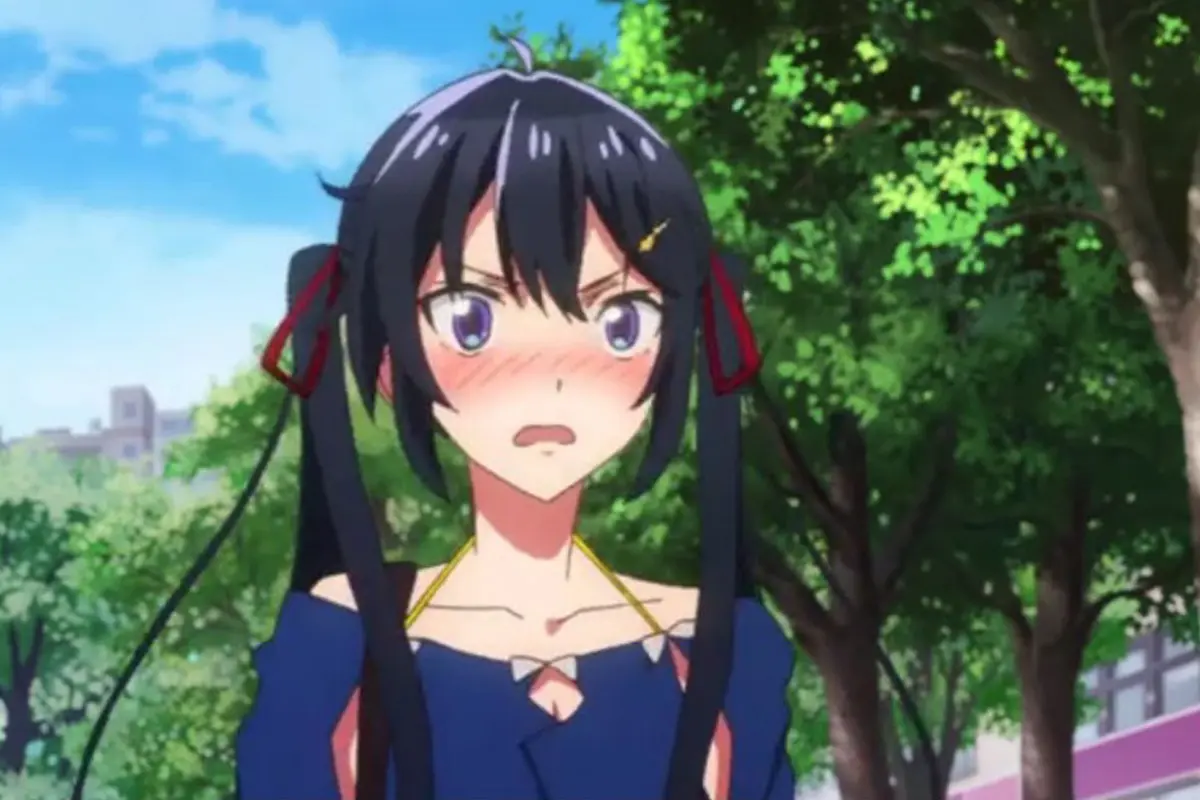
A tsundere is one of the most recognizable character archetypes in Japanese anime, manga, and games.
The basic idea is simple:
A tsundere acts cold, defensive, or harsh on the outside, but gradually reveals a caring and affectionate side.
The word combines two opposite emotional patterns:
- tsun tsun (ツンツン) → cold, prickly, or distant behavior
- dere dere (デレデレ) → affectionate, lovestruck, or sweet behavior
This contrast is what makes the archetype popular: the character may deny their feelings, but their actions reveal that they actually care.
In this guide, you will learn:
- what tsundere means
- how the Japanese word is formed
- how to pronounce ツンデレ
- common personality traits
- famous anime examples
- differences between tsundere and other “dere” types
- how the term is used in Japanese culture
TL;DR: What is a Tsundere?
A tsundere is a fictional character type who appears cold or unfriendly at first but slowly shows kindness, loyalty, or romantic feelings.
| Part | Meaning |
|---|---|
| Tsun tsun (ツンツン) | Cold, prickly, distant attitude |
| Dere dere (デレデレ) | Affectionate, loving behavior |
| Tsundere (ツンデレ) | A character who combines both sides |
Typical tsundere traits include:
- acting tough while secretly caring
- denying their own feelings
- becoming embarrassed when showing affection
- helping others while pretending they do not care
- slowly becoming more emotionally open
The appeal comes from the contrast between their outside behavior and their true feelings.
What does Tsundere mean in Japanese?
The word tsundere (ツンデレ) is a Japanese internet and pop culture term created by combining two expressions:
Tsun tsun (ツンツン)
This describes behavior that feels:
- cold
- sharp
- distant
- unfriendly
A person acting tsun tsun may avoid showing emotion or respond in a blunt way.
Dere dere (デレデレ)
This describes behavior that is:
- affectionate
- sweet
- lovestruck
- openly caring
Together, these two ideas create the contrast behind the archetype:
cold outside + warm inside
This naming pattern is also used for other anime personality categories, such as:
- Kuudere — calm and emotionally controlled outside, caring inside
- Yandere — affectionate but obsessive or extreme
- Dandere — quiet or shy characters who slowly open up
How do you pronounce Tsundere?
Tsundere is written as:
ツンデレ
and pronounced:
tsun-de-re
(tsoon-deh-reh)
The pronunciation can be separated into three parts:
| Sound | Japanese | Explanation |
|---|---|---|
| Tsu | ツン | Similar to the “tsu” sound in “tsunami” |
| De | デ | A clear “deh” sound |
| Re | レ | Japanese “re” sound, between English “r” and “l” |
Unlike English words, Japanese syllables are usually pronounced evenly:
ツン・デ・レ
tsun - de - re
Where did the Tsundere archetype come from?
The term became widely popular in Japanese online communities during the early 2000s.
It was especially associated with:
- visual novels
- dating simulation games
- anime fandom discussions
As fans began categorizing different character personalities, the -dere labels became a simple way to describe recurring storytelling patterns.
Early famous examples helped spread the concept internationally, including characters such as:
- Asuka Langley from Neon Genesis Evangelion
- Rin Tohsaka from Fate/stay night
- Taiga Aisaka from Toradora!
Over time, tsundere became more than just an anime description. It became a global pop culture term used by fans when discussing character personalities.
Common traits of a Tsundere character
Not every character who acts cold is a tsundere.
The key idea is the contrast between their outer behavior and their true feelings.
Common traits include:
1. A defensive attitude
A tsundere often reacts strongly when emotions become uncomfortable.
They may:
- deny their feelings
- avoid admitting they care
- become embarrassed when praised
- act annoyed when they are actually worried
For example:
“I only helped you because I had nothing better to do.”
The words sound cold, but the action shows kindness.
2. Hidden kindness
One of the defining features of this archetype is that affection is often shown indirectly.
Instead of saying:
“I care about you.”
the character may:
- bring someone food without explaining why
- protect someone during a dangerous situation
- remember small details
- help quietly when nobody is watching
Their actions reveal feelings that their words try to hide.
3. Emotional contrast
The most recognizable pattern is the difference between two sides:
| Outside behavior | Hidden feelings |
|---|---|
| Angry or impatient | Caring |
| Confident | Easily embarrassed |
| Independent | Wants connection |
| Harsh words | Genuine affection |
This contrast creates the emotional tension that makes the character interesting.
4. Slow emotional development
Many tsundere characters are written with a gradual character arc.
At the beginning:
- they keep emotional distance
- they avoid vulnerability
- they struggle to communicate honestly
Later:
- they become more trusting
- they show affection more openly
- their softer personality becomes easier to see
This gradual change is often the main appeal of the character.
How to recognize a Tsundere in anime or manga
A quick checklist:
A character is likely tsundere if they:
- act annoyed around someone they actually like
- deny having romantic feelings
- become embarrassed when their kindness is noticed
- switch between cold and caring behavior
- show affection through actions rather than direct words
However, a character who is simply rude or aggressive is not automatically tsundere.
The important part is the hidden affectionate side.
Why are Tsundere characters popular?
The popularity of this archetype comes from several storytelling elements.
Emotional payoff
A character who slowly opens up creates a stronger feeling of progress.
When someone who usually hides emotions finally shows genuine affection, the moment feels meaningful because the audience has seen the change.
Relatable emotions
Many people understand the difficulty of expressing feelings directly.
The archetype exaggerates a common human experience:
- wanting to appear strong
- feeling embarrassed about vulnerability
- struggling to say what you really mean
Character growth
A well-written tsundere is not just “mean but secretly nice.”
The best examples show emotional development:
- learning to trust others
- becoming more honest
- understanding their own feelings
Classic vs. Modern Tsundere
The archetype has changed over time.
Many fans divide tsundere characters into two broad styles.
Classic Tsundere (Type A)
The classic version has a stronger tsun side at the beginning.
Common characteristics:
- more aggressive reactions
- frequent denial of feelings
- stronger emotional conflicts
- obvious embarrassment
The character may appear genuinely hostile before slowly becoming warmer.
Example:
Akane Tendo (Ranma ½)
Modern Tsundere (Type B)
Modern versions are usually softer.
Common characteristics:
- awkward emotional expression
- playful teasing
- occasional embarrassment
- kindness hidden behind pride
They may already care about someone but struggle to admit it.
Examples:
- Kurisu Makise (Steins;Gate)
- Mikoto Misaka (A Certain Scientific Railgun)
Classic vs Modern comparison
| Classic Tsundere | Modern Tsundere | |
|---|---|---|
| First impression | More aggressive | More playful or awkward |
| Main conflict | Strong denial | Difficulty expressing feelings |
| Emotional change | Large transformation | Gradual opening |
| Personality style | Hot-tempered | Defensive but softer |
Both versions share the same core idea:
A person who struggles to express affection openly.
Tsundere vs other dere types
Japanese pop culture uses several “-dere” labels to describe different personality patterns.
While they can overlap, each type has a different emotional style.
| Type | Main idea | Typical behavior |
|---|---|---|
| Tsundere | Cold outside, warm inside | Acts harsh or defensive but secretly cares |
| Kuudere | Calm outside, warm inside | Emotionally controlled and quietly affectionate |
| Dandere | Quiet outside, shy inside | Avoids communication because of shyness or insecurity |
| Yandere | Loving but extreme | Affection can become obsessive or possessive |
| Deredere | Openly affectionate | Expresses love and kindness directly |
The easiest way to remember the difference:
- Tsundere → “I care, but I won’t admit it.”
- Kuudere → “I care, but I don’t show much emotion.”
- Dandere → “I care, but I’m too shy to speak.”
- Yandere → “I care so much that it becomes extreme.”
- Deredere → “I care, and everyone knows it.”
For example:
A tsundere might say:
“I didn’t do this for you or anything.”
A kuudere might quietly help without saying anything.
A dandere might want to help but struggle to start a conversation.
Famous Tsundere characters in anime
Many characters are described as tsundere because they combine a strong personality with a hidden caring side.
Different fans may classify characters differently, but these examples are commonly associated with the archetype.
| Character | Anime | Why they are considered tsundere |
|---|---|---|
| Taiga Aisaka | Toradora! | Strong personality, sharp attitude, but deeply caring |
| Rin Tohsaka | Fate/stay night | Confident and competitive while hiding affection |
| Asuka Langley Soryu | Neon Genesis Evangelion | Proud and aggressive but emotionally vulnerable |
| Mikoto Misaka | A Certain Scientific Railgun | Independent and stubborn, but protective of others |
| Kurisu Makise | Steins;Gate | Intelligent and sarcastic while gradually opening up |
A good tsundere character is not simply “mean.”
The appeal comes from discovering the softer personality behind the defensive behavior.
Is Tsundere a real personality type?
No.
Tsundere is not a psychological classification.
It is a fictional character archetype used in:
- anime
- manga
- visual novels
- games
- Japanese pop culture discussions
However, the reason the archetype feels familiar is that it exaggerates real human behaviors, such as:
- feeling embarrassed about showing affection
- hiding vulnerability
- having difficulty expressing emotions directly
Real people are much more complex than a single character label.
How is “tsundere” used in Japanese?
The word tsundere (ツンデレ) originally became popular among anime and gaming communities, but it has also entered casual Japanese conversation.
People may use it jokingly to describe someone who acts cold but is actually kind.
Example:
あの人、ツンデレだね。
(Ano hito, tsundere da ne.)
Meaning:
“That person is such a tsundere.”
It can be used playfully when someone:
- refuses to admit they care
- acts stubborn but helps others
- hides affection behind a tough attitude
However, it is still strongly connected with anime and pop culture, so the context matters.
Common Japanese expressions related to Tsundere behavior
If you are learning Japanese through anime, you may encounter expressions connected with this personality style.
| Japanese | Meaning | Usage |
|---|---|---|
| べ、別に… | ”It’s not like…” | A stereotypical tsundere-style denial |
| バカ (baka) | Idiot / fool | Often used emotionally, depending on context |
| うるさい (urusai) | Noisy / annoying | Telling someone to stop bothering you |
| しょうがない (shōganai) | It can’t be helped | Accepting a situation |
Important note:
Anime often exaggerates these expressions for comedy and drama. Real conversations are usually much more natural.
Learning these phrases can help Japanese learners understand character emotions, but they should also learn how native speakers actually use them in daily life.
Learning Japanese through Tsundere characters
Anime characters can be a fun way to notice how Japanese expresses emotion.
Tsundere characters are especially useful for learning:
Casual speech
You may hear:
- shortened sentences
- emotional reactions
- informal vocabulary
Tone and context
Japanese communication often depends heavily on:
- voice tone
- relationship between speakers
- situation
The same words can sound playful, rude, or affectionate depending on delivery.
Cultural nuance
Tsundere characters often highlight a Japanese communication style where feelings may be expressed indirectly rather than through direct statements.
For learners, this is a good reminder:
Understanding Japanese is not only about translating words. It is also about understanding intention and context.
Frequently asked questions about Tsundere
What does tsundere mean?
Tsundere describes a character archetype that appears cold, harsh, or emotionally distant at first, but gradually reveals a caring and affectionate side.
The word combines:
- tsun tsun (ツンツン) → prickly, aloof, or cold behavior
- dere dere (デレデレ) → affectionate, lovestruck behavior
In simple terms:
Tsundere = cold outside, warm inside.
Is tsundere only used in anime?
No.
Although the term became popular through anime, manga, and visual novels, tsundere is also used casually in Japanese conversations to describe someone who acts tough but is secretly kind.
However, outside pop culture contexts, it is usually used jokingly rather than as a serious personality description.
Is tsundere a real personality type?
No.
Tsundere is a fictional character archetype, not a psychological diagnosis.
It is a storytelling tool that exaggerates certain human behaviors, such as:
- difficulty expressing feelings
- embarrassment about showing affection
- emotional defensiveness
Real people cannot be accurately described by a single anime personality label.
Are tsundere characters always female?
No.
Although many famous tsundere characters are female, male tsundere characters also exist in anime, manga, games, and novels.
The important part is not gender.
The key pattern is:
A person who hides their affection behind a defensive or cold attitude.
What is the difference between tsundere and kuudere?
The main difference is how emotions are expressed.
| Type | Emotional style |
|---|---|
| Tsundere | Shows affection through denial, arguments, or emotional reactions |
| Kuudere | Shows affection through calm actions and quiet support |
A tsundere may say:
“I didn’t do this because I care about you!”
A kuudere may simply help without saying anything.
Both characters may care deeply, but they communicate feelings differently.
What is the difference between tsundere and yandere?
Both can involve strong feelings, but the emotional direction is different.
| Type | Main trait |
|---|---|
| Tsundere | Hides affection behind a defensive attitude |
| Yandere | Shows extreme affection that may become obsessive |
A tsundere usually struggles with expressing love.
A yandere usually struggles with controlling the intensity of love.
How to recognize a Tsundere character
A character is often considered tsundere when they show a combination of these traits:
- acts annoyed toward someone they care about
- denies having romantic feelings
- becomes embarrassed when praised
- helps others but refuses to admit why
- gradually becomes more open and affectionate
The important part is the contrast:
The outside behavior and inner feelings do not match.
That contrast creates the emotional appeal of the archetype.
Final thoughts
Tsundere is one of the most recognizable character archetypes in Japanese pop culture.
The appeal comes from the emotional journey:
- a character starts with distance or resistance
- trust slowly develops
- hidden feelings become visible
- the audience sees a softer side
For Japanese learners, understanding terms like tsundere, kuudere, and other anime expressions can make Japanese media easier to understand.
However, remember that anime often exaggerates real communication styles for entertainment.
Learning Japanese is not only about knowing words—it is also about understanding the emotions, relationships, and cultural context behind them.
A character saying “baka” or refusing to admit they care may be funny in anime, but the real meaning always depends on the situation.