TL;DR
- You can learn Spanish fast by speaking early, not waiting for perfection.
- Daily exposure beats long, irregular study sessions.
- Focus on high-frequency words, not rare grammar rules.
- Listening and speaking speed up progress more than memorization.
- A clear system matters more than raw talent.
Table of Contents
Open Table of Contents
- How to Learn Spanish Fast — What Actually Works
- What Does “Fast” Mean When Learning Spanish?
- Why Most People Learn Spanish Slowly (Without Realizing It)
- The Core Principle: Speak Before You Feel Ready
- How Much Time Should You Study Each Day?
- What Should You Study First to Learn Spanish Fast?
- Why Listening Is the Fastest Skill Builder
- How to Learn Spanish Fast Without Living Abroad
- Should You Use Apps to Learn Spanish Fast?
- The Fastest Way to Build Vocabulary
- Why Pronunciation Matters Early
- Common Myths About Learning Spanish Fast
- A Simple Weekly Plan to Learn Spanish Fast
- How Long Until You Can Speak Confidently?
- How to Measure If You’re Actually Learning Spanish Fast
- The Input → Output → Feedback Loop That Speeds Everything Up
- Final Advice: Speed Comes From Simplicity
How to Learn Spanish Fast — What Actually Works
If you want to learn Spanish fast, the most important principle is simple:
Spanish improves fastest when you use it actively every day.
Many learners assume they need months of grammar study before speaking. In reality, speaking early—even imperfectly—is what builds real fluency.
At Avatalks, we’ve observed that learners who begin speaking practice within their first week progress significantly faster than those who focus only on passive learning like reading or flashcards. Speaking forces your brain to recall words, form sentences, and process language in real time.
Fast learners don’t wait until they feel ready. They practice while still learning.
If you want to understand how modern tools accelerate this process, see our guide on AI language learning.
What Does “Fast” Mean When Learning Spanish?
Most English speakers can realistically expect:
- 2–4 weeks: Basic survival phrases feel natural
- 2–3 months: Simple conversations become manageable
- 6–12 months: Comfortable conversational fluency
Spanish is one of the fastest languages for English speakers to learn because:
- Pronunciation is consistent
- Many words share Latin roots with English
- Sentence structure is predictable
For a detailed timeline, see:
How long it takes to learn Spanish
Most learners need 600–750 hours to reach strong conversational fluency, but daily speaking accelerates progress significantly.
Read Now →Why Most People Learn Spanish Slowly (Without Realizing It)
❓ What slows people down the most?
The biggest mistake is waiting too long to speak.
Many learners:
- Memorize grammar but avoid conversation
- Study irregular verbs they rarely use
- Translate everything mentally before speaking
Spanish improves fastest when you use imperfect language early, even if it feels uncomfortable.
If you’re not sure how to practice speaking without freezing, this guide gives simple ways to start:

Spanish conversation practice
If you’re searching for the best ways to improve your Spanish conversation practice, the short answer is: consistency, real-life interaction, and structured learning tools.
Read Now →The Core Principle: Speak Before You Feel Ready
❓ Should you speak Spanish before you “know enough”?
Yes. Always.
Language ability grows through use, not preparation alone.
Even simple sentences build confidence and listening skill.
Example:
- Instead of waiting to master verb tenses, say:
- Quiero café.
- Voy mañana.
- No entiendo.
These phrases show up constantly in real conversations, so you get “high return” practice.
How Much Time Should You Study Each Day?
❓ Is one hour a day enough?
Yes — if the hour is used well.
A fast-learning daily routine:
- 15 minutes listening
- 15 minutes speaking
- 15 minutes vocabulary
- 15 minutes reading or review
Short daily sessions beat long weekly ones every time.
Tip: If one full hour feels hard, do two 25-minute blocks (morning + evening). You’ll often get better focus.
What Should You Study First to Learn Spanish Fast?
❓ What matters most at the beginning?
Focus on:
- High-frequency verbs (ser, estar, tener, ir)
- Everyday nouns and connectors (y, pero, porque, también)
- Present tense + common phrases you can reuse
Skip early:
- Rare grammar rules
- Advanced verb moods
- Literary vocabulary
Also, learn sentence building early. It reduces “blank mind” moments.
If you want a clean beginner roadmap for word order and simple patterns, read:
Spanish sentence structure
If you’re learning Spanish, one of the first things you’ll need to master is how to build proper sentences. Understanding Spanish sentence structure is key to making sense, sounding natural, and communicating effectively.
Read Now →Why Listening Is the Fastest Skill Builder
❓ Does listening really help that much?
Yes. Listening trains:
- Your ear
- Your pronunciation
- Your sentence rhythm
Good listening sources:
- Slow Spanish podcasts
- Short videos with subtitles
- Everyday conversations
If you want a practical listening plan (what to use and how to do it daily), follow listen and learn Spanish.
A simple rule: don’t “just listen.” Repeat out loud a few lines each day. That’s where speed comes from.
How to Learn Spanish Fast Without Living Abroad
❓ Do you need immersion to learn fast?
No — but you need daily contact.
Create immersion by:
- Changing your phone language to Spanish
- Watching Spanish shows with Spanish subtitles
- Following Spanish creators online
- Speaking with real people regularly
Consistency matters more than location.
Try this: pick one daily situation (coffee, commute, gym) and attach Spanish to it. Same time, same context, every day.
Should You Use Apps to Learn Spanish Fast?
❓ Are apps helpful or a waste of time?
Apps help when they support speaking, not replace it.
Use apps for:
- Vocabulary review
- Daily habits
- Short practice sessions
Avoid relying only on:
- Gamified tapping
- Passive quizzes
- Endless streak chasing
If you’re curious how modern tools speed things up, our guide explains what actually helps and what doesn’t:

Learn Spanish with AI: Smarter, Faster Language Learning
Learning a language doesn’t need to be slow or boring—AI is changing everything, including how we learn Spanish.
Read Now →The Fastest Way to Build Vocabulary
❓ How many words do you actually need?
You can express most daily ideas with 1,000–1,500 words.
Focus on:
- Verbs (you can’t speak without them)
- Common adjectives (bueno, grande, pequeño, rápido)
- Time and place words (hoy, mañana, aquí, allí)
Learn words in context:
- Tengo + noun
- Quiero + noun
- Voy a + verb
This is faster than memorizing isolated lists because your brain stores “ready-to-use” chunks.
Why Pronunciation Matters Early
❓ Should pronunciation come before grammar?
Yes.
Clear pronunciation:
- Improves understanding
- Builds confidence
- Reduces listening fatigue
Spanish pronunciation is consistent, which makes early practice especially effective.
If you want a quick, accurate guide to the sounds that matter most, use:
how to pronounce Spanish vowels
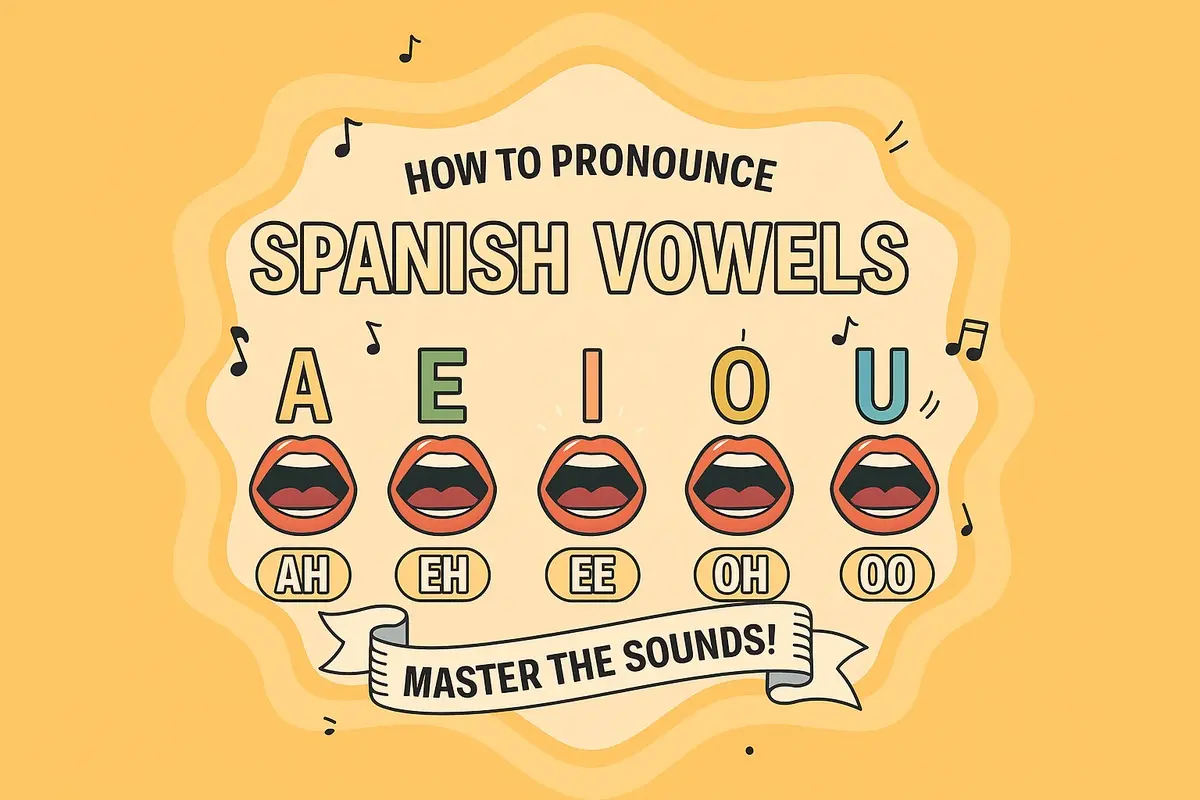
If you’re searching for how to pronounce Spanish vowels, here’s the quick answer: Spanish has five vowels — A, E, I, O, U — and each one is always pronounced exactly the same way, no matter the word. Unlike English, where vowels change sound depending on context, Spanish vowels are consistent, short, and clear.
Read Now →Common Myths About Learning Spanish Fast
❌ Myth 1: You must master grammar first
Reality: Grammar improves naturally through use.
❌ Myth 2: Adults learn slower
Reality: Adults learn faster with structure and motivation.
❌ Myth 3: Talent matters most
Reality: Systems beat talent every time.
A helpful mindset shift: aim for “clear and useful,” not “perfect.”
A Simple Weekly Plan to Learn Spanish Fast
Daily
- Listen for 15–30 minutes
- Speak at least once (even 3–5 minutes counts)
- Learn 5–10 useful words
Weekly
- Review your most common mistakes
- Repeat your top 20 phrases until they feel automatic
- Increase speaking time with a partner or tutor
Small actions, repeated daily, compound quickly.
How Long Until You Can Speak Confidently?
❓ When do learners usually feel comfortable?
Most learners report:
- 1 month: Basic phrases feel natural
- 3 months: Simple conversations work
- 6 months: Comfortable everyday use
Progress is not linear — it accelerates with use.
If you want a more detailed timeline with milestones and expectations, check how long it takes to learn Spanish.
How to Measure If You’re Actually Learning Spanish Fast
❓ How can you tell if your Spanish is improving week by week?
Learning fast is not about how many lessons you finish — it’s about what you can do without thinking.
A simple weekly self-check keeps you honest and motivated.
1️⃣ Speaking check (output)
Ask yourself:
- Can I talk for 2 minutes about my day without switching to English?
- Can I ask basic questions naturally (¿Dónde está…?, ¿Qué piensas de…?)?
If speaking still feels blocked, it’s usually not vocabulary — it’s sentence confidence.
That’s why frequent conversation matters more than “knowing more words.”
If you want a structure for this, your guide on Spanish conversation practice shows how to turn short daily speaking into real fluency.
2️⃣ Listening check (input)
Ask:
- Can I understand the topic of a short clip without subtitles?
- Can I catch key details like time, place, or intention?
You don’t need full comprehension.
Understanding 60–70% is the sweet spot for fast progress.
If listening feels overwhelming, revisit your daily routine using the approach in listen and learn Spanish. Short, repeatable listening beats long sessions.
3️⃣ Vocabulary check (usefulness)
Ask:
- Did I use this word in a sentence this week?
- Did I hear it in real content?
If the answer is no, that word is slowing you down.
Fast learners focus on:
- Verbs they say every day
- Phrases they repeat often
- Connectors that unlock longer sentences
4️⃣ Grammar check (just enough)
Ask:
- Can I use the present tense without stopping?
- Can I link ideas with pero, porque, entonces?
If grammar feels messy, it’s often a structure issue, not intelligence.
Your Spanish sentence structure guide helps rebuild clarity fast.
You’re learning Spanish fast when thinking decreases and reacting increases.
The Input → Output → Feedback Loop That Speeds Everything Up
❓ What’s the fastest learning system for Spanish?
Fast learners don’t study randomly.
They repeat a simple loop every day:
Input → Output → Feedback
This loop can fit into 30–45 minutes and works at any level.
Step 1: Input (10–15 minutes)
Choose one short piece of Spanish:
- A short video
- A podcast clip
- A short article
Your goal is meaning, not perfection.
Listen or read once for the main idea.
Then collect 5–8 useful chunks, not isolated words.
Examples:
- Tengo ganas de…
- No sé si puedo…
- ¿Qué te parece si…?
Chunks are faster than single words because they’re ready to speak.
Step 2: Output (10–15 minutes)
Use those chunks immediately:
- Say them out loud
- Change only one element (time, place, person)
Example:
- Tengo ganas de café.
- Tengo ganas de viajar.
- Tengo ganas de aprender más.
If you need a quick verb check, use a Spanish verb conjugation chart — but don’t stop speaking for perfection.
Speaking slightly wrong is still progress.
Step 3: Feedback (5–10 minutes)
Feedback is what turns practice into speed.
Do one of these:
- Record yourself and listen once
- Get a correction from a tutor or partner
- Notice the same mistake repeating
Fix only the top 2–3 mistakes, then repeat the corrected version out loud.
This is how confusion turns into confidence.
Why spaced review beats cramming
Daily, short review wins.
Revisiting the same phrases on Day 1, Day 3, Day 7, and Day 14 locks them into memory far better than long study sessions.
That’s why learners who “study less” often improve faster — their review is smarter.
A realistic weekly rhythm
Monday–Friday
- 10–15 min input
- 10–15 min speaking
- 5–10 min review
Saturday
- Longer conversation
- Error review + re-speaking
Sunday
- Light review + plan next week’s topics
This rhythm pairs well with expectations in how long it takes to learn Spanish.
Fast progress comes from small loops done daily, not massive effort done rarely.
Final Advice: Speed Comes From Simplicity
Learning Spanish fast is not about doing more — it’s about doing the right things consistently.
Speak early. Listen daily. Learn what you actually use.
Fluency grows from action, not preparation.
Learn Spanish Faster with Avatalks
If you want a clear, structured way to learn Spanish fast, Avatalks helps you practice real conversations daily using AI-powered characters and guided lessons.
You can learn Spanish — and 20+ other languages — with your native language as the base, making progress faster and more natural.