Spanish Grammar Practice
Spanish grammar practice means actively using grammar through targeted exercises—choosing forms, building sentences, correcting mistakes, and repeating patterns—until they feel natural.
This page is a Spanish grammar practice online hub, designed for learners who want free Spanish grammar practice through focused exercises—not just explanations.
Instead of listing rules, this guide helps you choose the right grammar exercises by topic, practice them with intention, and turn understanding into real usage.
TL;DR
- This is a Spanish grammar practice hub with exercises organized by topic, not a grammar textbook.
- Each section links to focused practice pages with explanations + quizzes.
- Use it to fix common grammar problems like tense choice, pronouns, and sentence structure.
- Most learners progress faster by practicing one topic at a time, then reusing it in speaking or writing.
- If you want grammar to stick, practice beats reading—especially with feedback and repetition.
How to use this Spanish grammar practice hub
You don’t need to finish everything in order.
Use this hub based on your current problem, not your level.
- Confused between two forms?
Start with contrast topics like ser vs estar or preterite vs imperfect. - Making sentence mistakes?
Practice pronoun placement, adjective position, or gender rules. - Struggling to express feelings, reactions, or commands?
Focus on gustar, reflexive verbs, or commands.
Best practice rule:
Pick one grammar topic per week, practice it daily for 10–15 minutes, then reuse it in short speaking or writing.
Spanish grammar practice by topic
Below is a structured overview of Spanish grammar exercises by topic, grouped by how learners actually struggle with Spanish.
🔹 Core verb meaning & contrast
These topics fix confusion between verbs that look similar but mean different things depending on context.
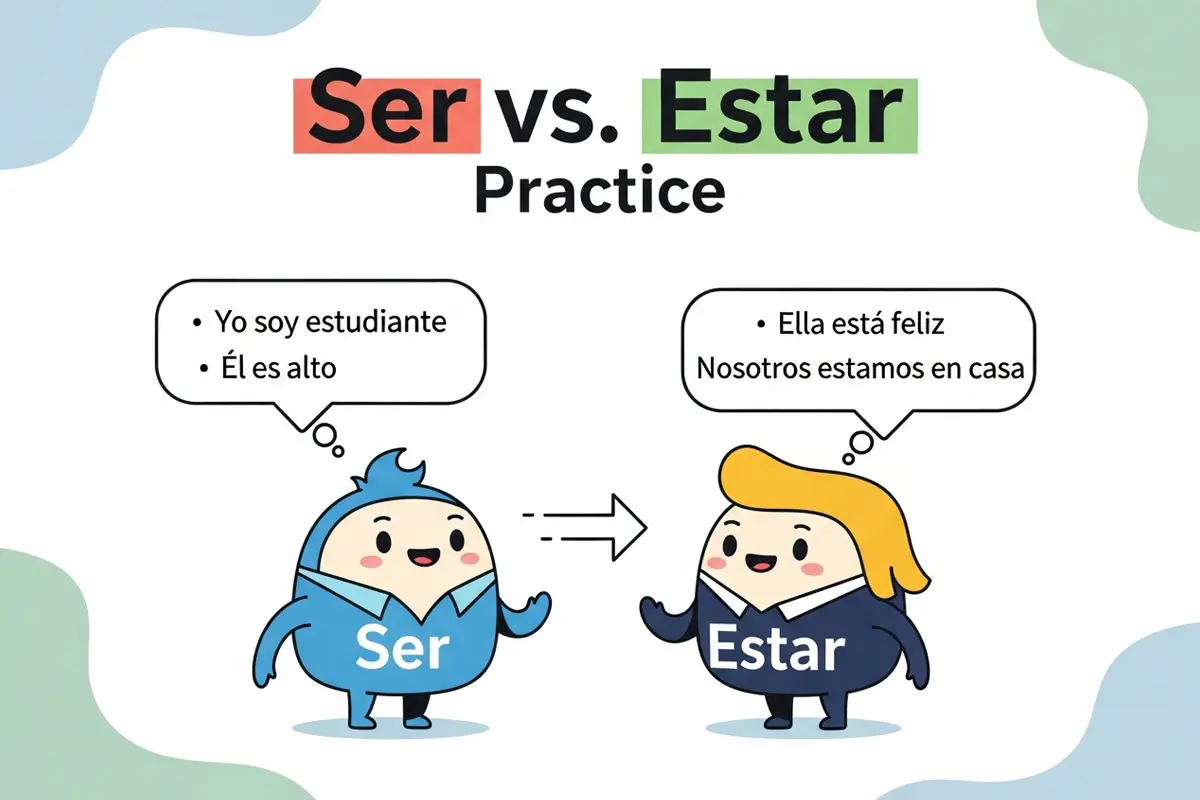
Spanish Ser vs Estar Practice
Practice when to describe identity vs states, with contrast exercises and real sentences.
Practice →
Spanish Gustar Practice
Train sentence structures for likes, dislikes, and reactions using me gusta / me encanta.
Practice →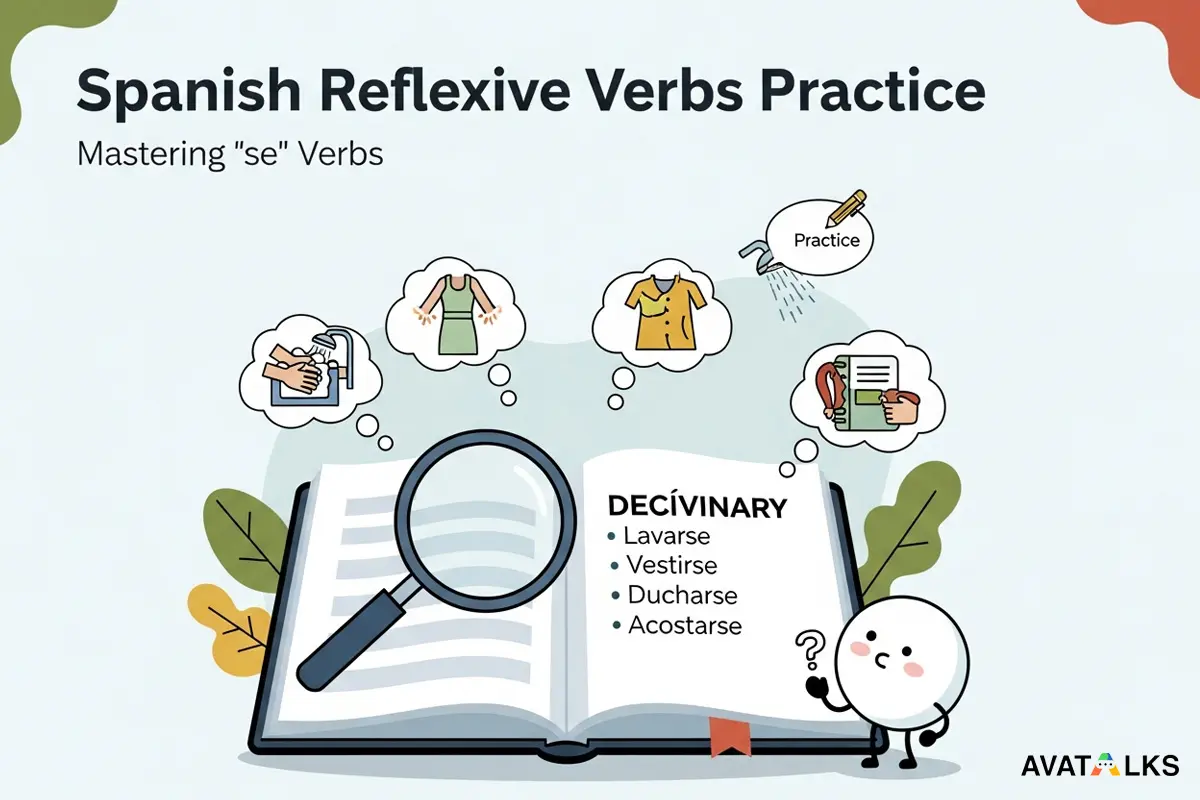
Spanish Reflexive Verbs Practice
Practice verbs like irse, ponerse, sentirse to express changes, emotions, and actions.
Practice →🔹 Tenses & time reference
These exercises help you express when something happened and how it relates to the present.
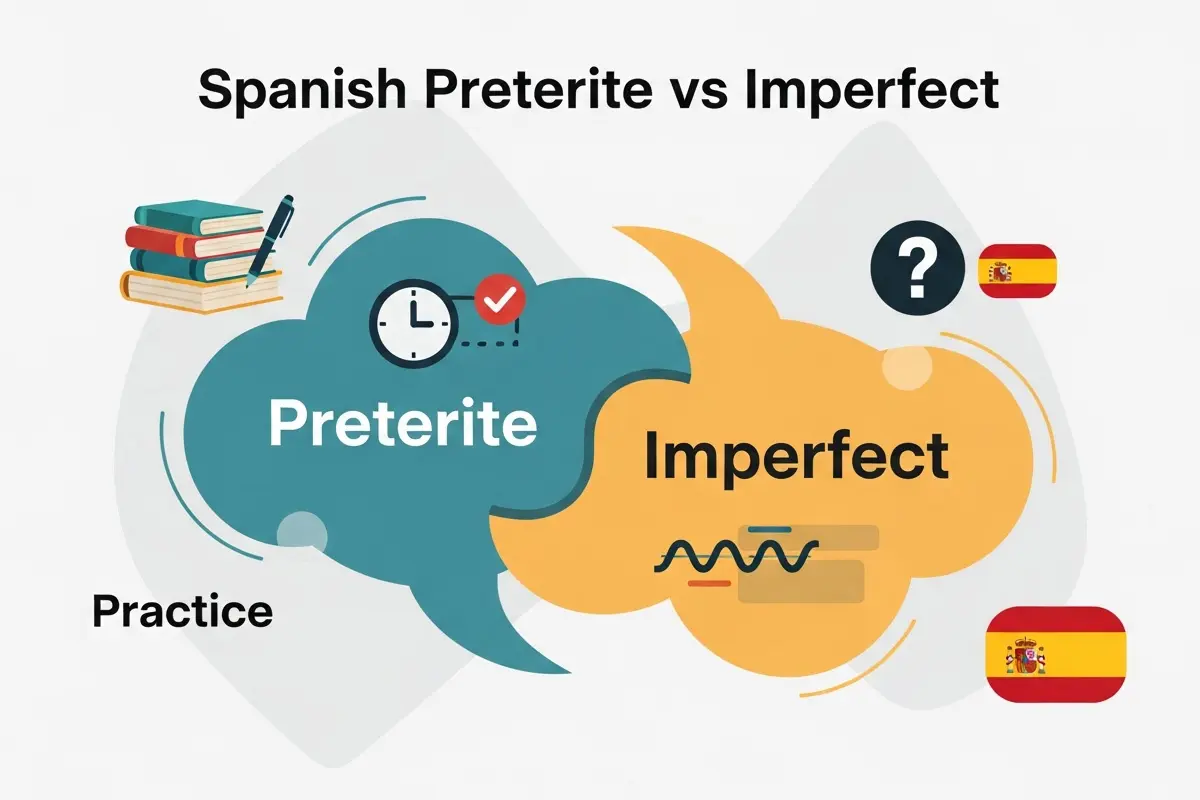
Preterite vs Imperfect Practice
Learn when to describe completed actions vs background or ongoing past events.
Practice →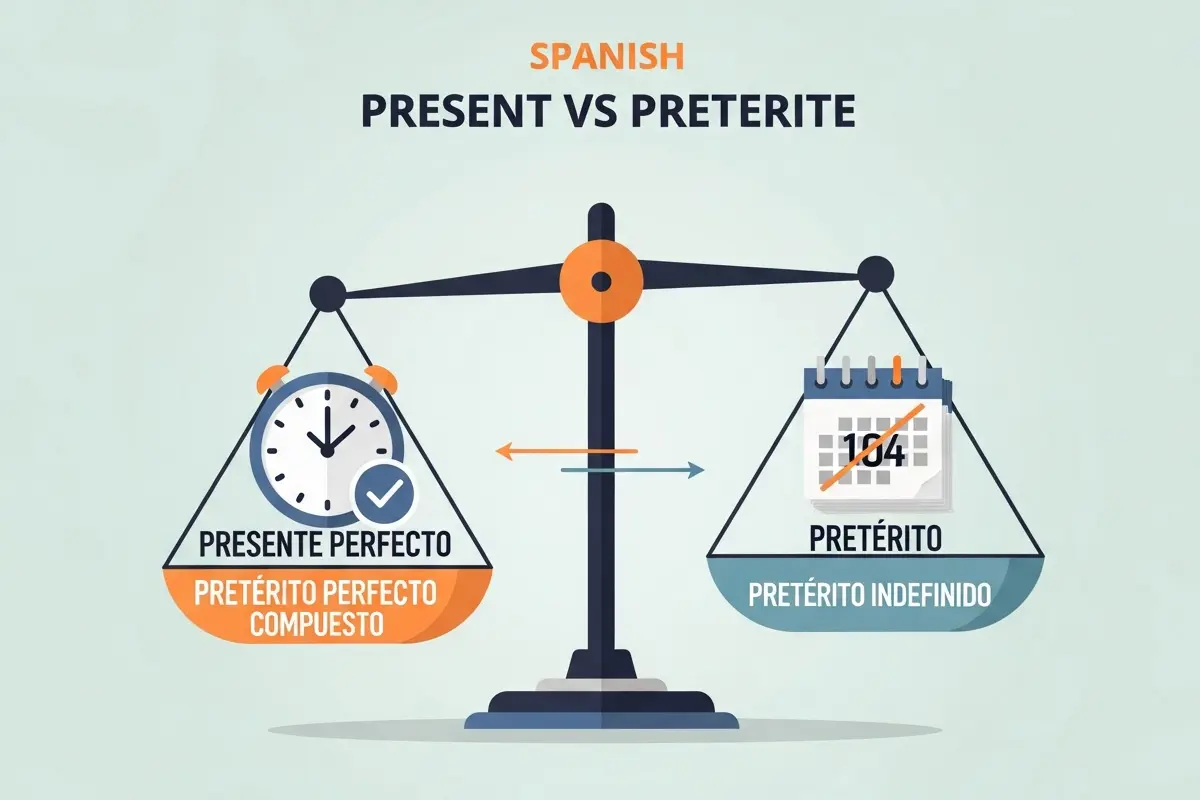
Present Perfect vs Preterite Practice
Compare Spain vs Latin America usage and practice choosing the right tense.
Practice →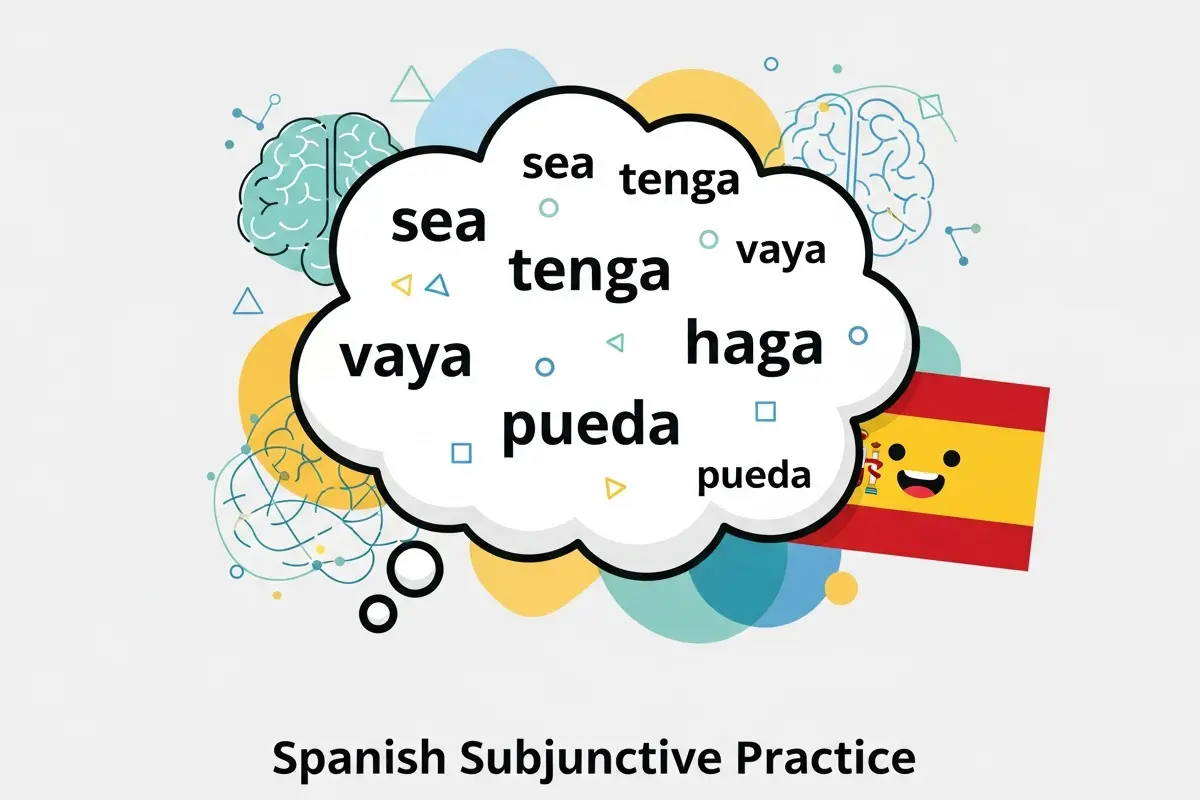
Spanish Subjunctive Practice
Practice trigger phrases for doubt, emotion, and uncertainty with guided exercises.
Practice →🔹 Sentence structure & grammar mechanics
These topics fix the most common sentence-building errors learners make.
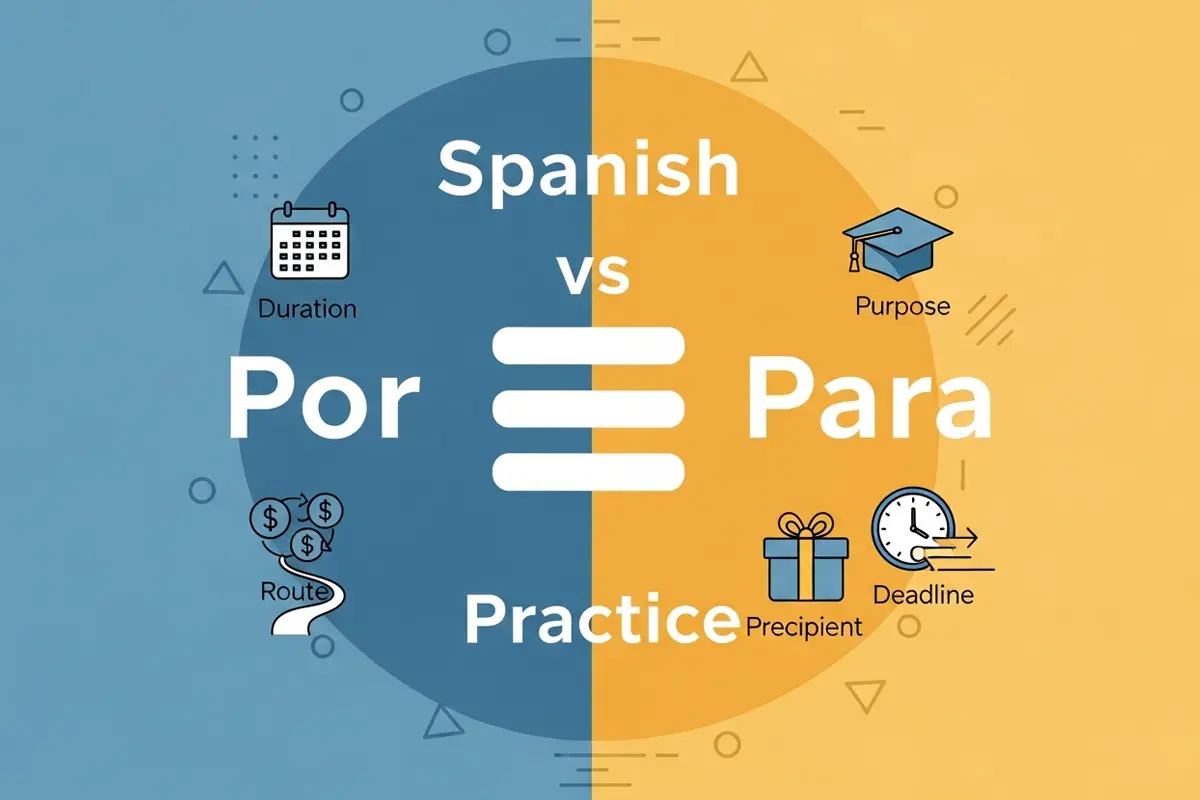
Por vs Para Practice
Practice expressing purpose, reason, destination, and exchange correctly.
Practice →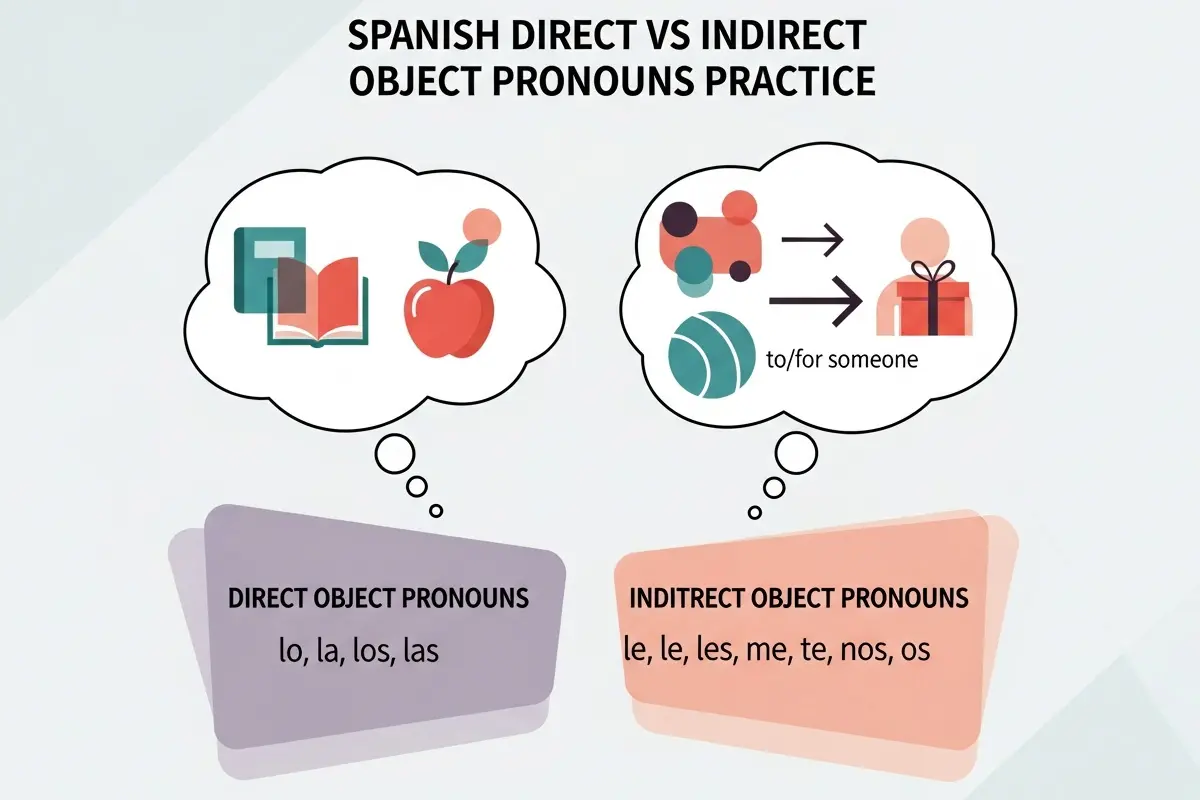
Direct vs Indirect Object Pronouns Practice
Train lo / la / le usage and avoid common pronoun order mistakes.
Practice →
Spanish Pronoun Placement Practice
Practice pronoun position before verbs, after infinitives, and with commands.
Practice →
Spanish Adjective Position Practice
Learn how adjective placement changes meaning and emphasis.
Practice →
Spanish Gender Rules Practice
Practice masculine vs feminine nouns, exceptions, and agreement patterns.
Practice →
Spanish Commands Practice
Practice tú, usted, and nosotros commands with real-life examples.
Practice →Why grammar practice works better than reading rules
Reading grammar explanations helps you recognize forms, but practice forces recall and decision-making.
That mental effort is what builds real fluency.
Effective Spanish grammar exercises:
- Make you choose between similar options
- Expose patterns repeatedly
- Correct mistakes early
- Encourage sentence-level thinking
Key takeaway:
Grammar becomes automatic only when your brain practices using it, not just recognizing it.
From grammar practice to real Spanish use
Grammar practice works best when it connects to output.
After practicing a topic:
- Say 2–3 sentences out loud using that structure
- Write one short message or mini-dialogue
- Reuse the same grammar in listening or reading
This loop—practice → output → feedback—is what turns exercises into usable Spanish.
Spanish grammar practice: common questions
How often should I practice Spanish grammar?
Short daily practice (10–15 minutes) is more effective than long, irregular sessions.
Should beginners do grammar exercises?
Yes, as long as exercises are focused and contextual, not abstract rule memorization.
Is grammar practice useful for speaking?
Absolutely. Speaking improves faster when grammar patterns are already trained through practice.
How long until grammar feels natural?
Most learners notice improvement within 3–4 weeks of consistent, focused practice.
Final takeaway
If your goal is to practice Spanish grammar online, this hub gives you a clear path:
choose one topic, practice it deeply, and reuse it in real communication.
Grammar doesn’t become natural by reading more—it becomes natural by practicing smarter.