TL;DR
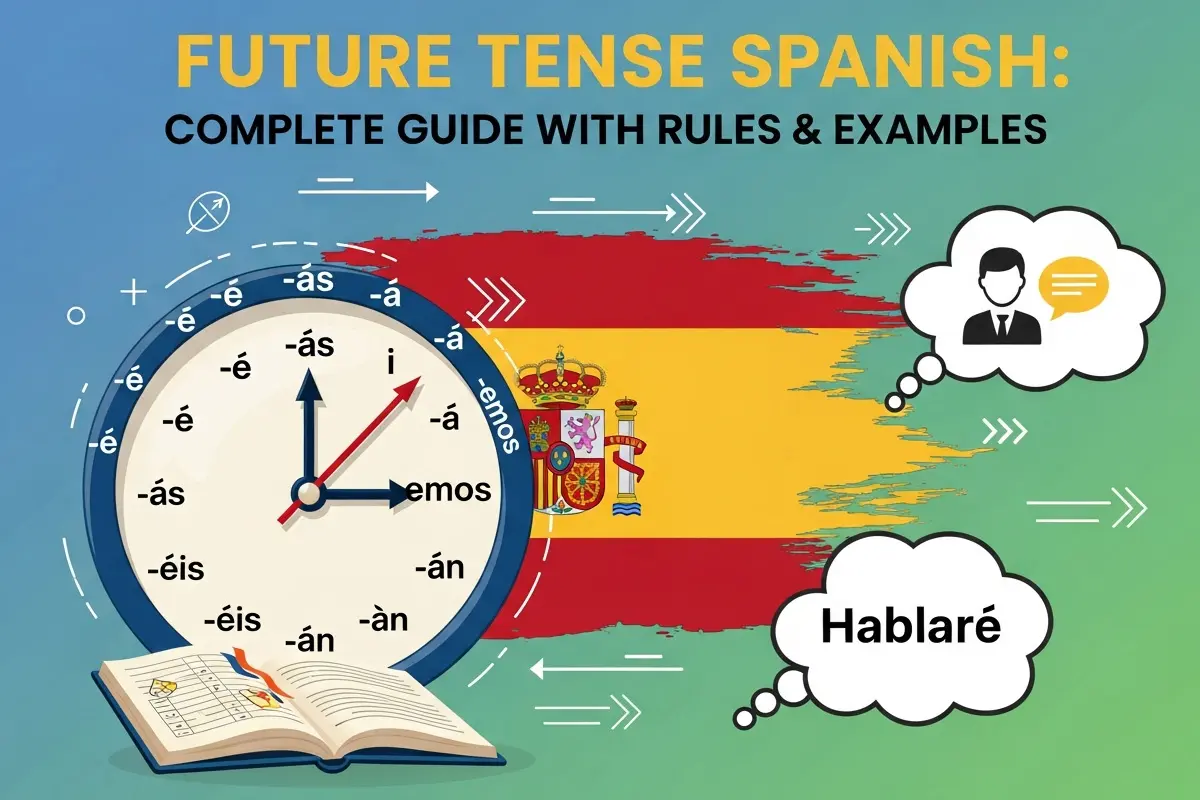
- Future tense Spanish is a system, not a single verb form.
- Spanish expresses the future using present tense, ir + a, simple future, future perfect, modal verbs, and subjunctive clauses.
- The simple future tense is used mainly for promises, certainty, predictions, and probability.
- Fluent Spanish comes from choosing the right construction for the meaning, not memorizing endings alone.
Future Tense Spanish — Quick Answer
The future tense in Spanish expresses actions or situations that happen after the present moment, but Spanish uses multiple constructions—not just one tense—to talk about the future.
Native speakers choose between the present tense, ir + a + infinitive, the simple future, modal verbs, and other forms based on certainty, intention, probability, and context, not just time.
Table of Contents
Open Table of Contents
- What Is the Future Tense in Spanish?
- The Core Rule Behind Future Tense Spanish
- Future Tense Spanish Conjugation Chart
- Irregular Future Tense Verbs in Spanish
- When to Use Each Future Construction (Decision Guide)
- Future Tense Spanish vs Other Tenses
- Real-World Examples of Future Tense Spanish
- Common Mistakes Learners Make
- Practice: Choose the Right Future Construction
- How Kids Learn the Future Tense (Why This Matters)
- Final Takeaway
What Is the Future Tense in Spanish?
Future tense Spanish refers to the grammatical ways Spanish expresses events that have not happened yet.
Unlike English, Spanish does not rely only on “will.”
Instead, it distributes future meaning across verb tense, structure, and context.
Spanish future meaning is grammatical and functional.
The Core Rule Behind Future Tense Spanish
❓ What is the most important rule to understand?
Meaning comes before conjugation.
Spanish speakers ask:
- Is this planned?
- Is it guaranteed?
- Is it a guess?
- Is it polite?
The answer determines the construction.
Key principle: The future tense is chosen by intention and certainty, not by time alone.
Future Tense Spanish Conjugation Chart
❓ How is the simple future tense formed?
Add future endings to the verb in its infinitive form.
Regular endings (AR, ER, IR verbs)
| Person | Ending | Example (hablar) |
|---|---|---|
| yo | -é | hablaré |
| tú | -ás | hablarás |
| él/ella | -á | hablará |
| nosotros | -emos | hablaremos |
| vosotros | -éis | hablaréis |
| ellos | -án | hablarán |
This rule applies to all AR, ER, and IR verbs.
Spanish future tense uses one shared set of endings across verb types.
Related Resource:
Conjugation for future tense in Spanish
Conjugation for future tense in Spanish is simple: keep the infinitive and add -é, -ás, -á, -emos, -éis, -án. This guide makes it easy with examples and charts.
Read Now →Irregular Future Tense Verbs in Spanish
❓ Are there irregular verbs in the future tense?
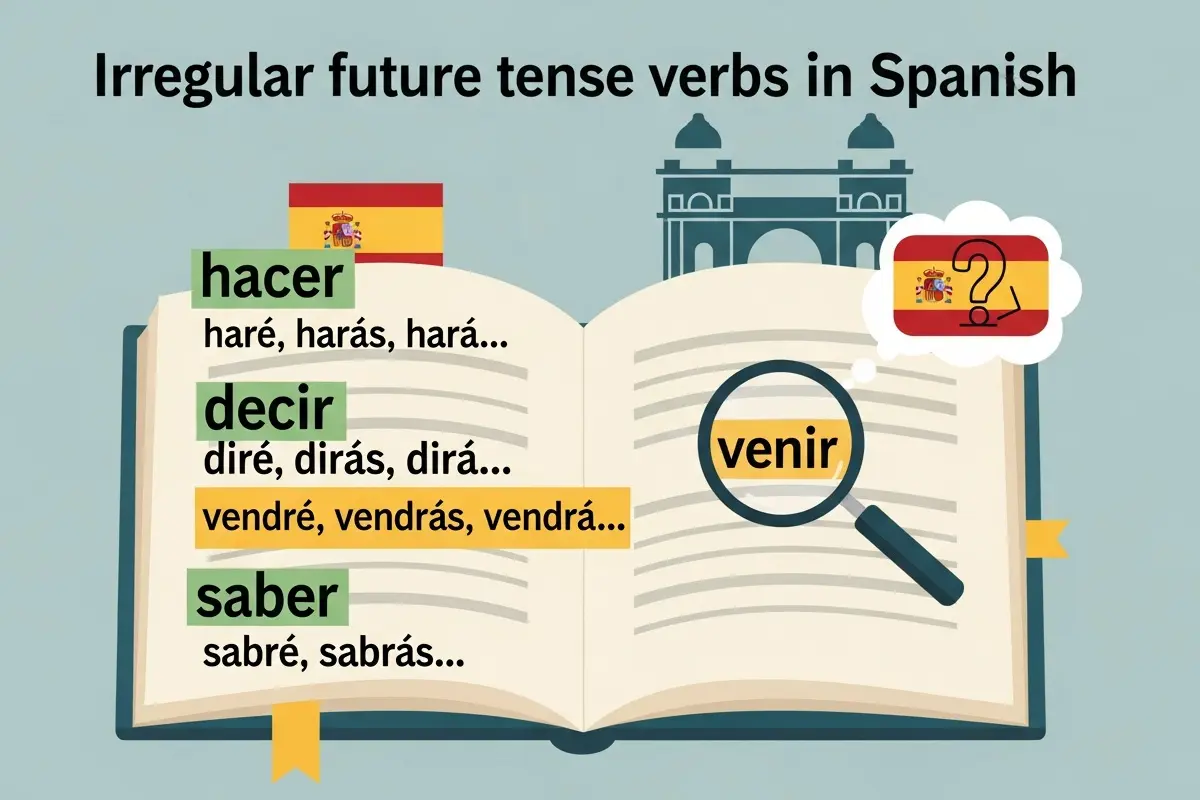
Yes—but the endings stay regular. Only the stem changes.
Common irregular stems
| Infinitive | Future Stem |
|---|---|
| tener | tendr- |
| venir | vendr- |
| decir | dir- |
| hacer | har- |
| poder | podr- |
| salir | saldr- |
| saber | sabr- |
| haber | habr- |
Example:
- Tendré tiempo mañana.
- Habrá problemas.
Irregular future verbs change the stem, not the endings.
Related Resource:
Irregular Future Tense Verbs in Spanish
Learn which Spanish verbs change their stem in the future tense and how to conjugate them correctly with clear patterns and examples.
Read Now →When to Use Each Future Construction (Decision Guide)
1️⃣ Present tense for scheduled or certain events
- Mañana trabajo.
- El tren sale a las ocho.
Related Resource:
Future tense vs present tense in Spanish
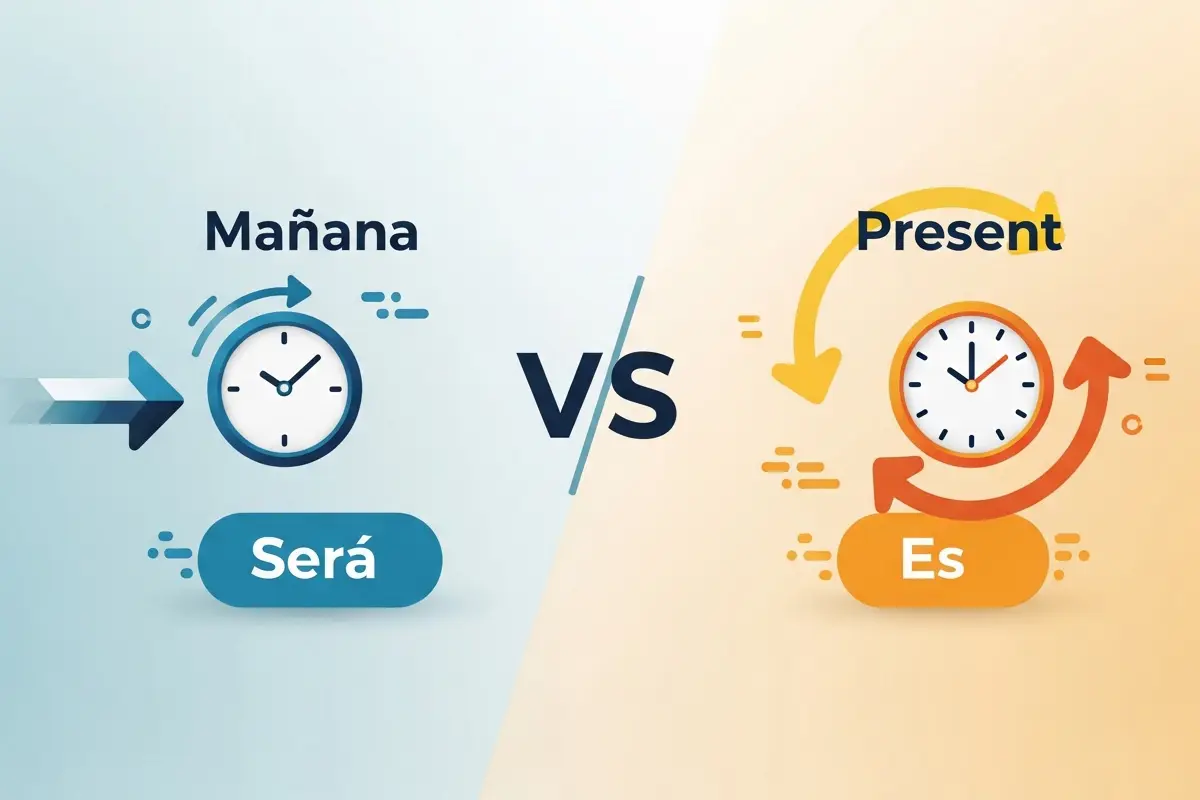
Learn when to use the future vs present tense in Spanish with examples, grammar rules, comparison charts, and real usage patterns.
Read Now →2️⃣ Ir + a + infinitive for planned intentions
- Voy a estudiar esta noche.
- Vamos a viajar mañana.
3️⃣ Simple future tense for certainty and promises
- Te llamaré mañana.
- Lo haré.
4️⃣ Simple future for probability or guessing
- Estará cansado.
- ¿Dónde estará?
Related Resource:
When to Use the Future Tense in Spanish for Probability
Learn when to use the future tense in Spanish for probability with clear examples, grammar patterns, and real usage explanations.
Read Now →5️⃣ Future perfect for completed future actions
- Para mañana, habré terminado.
→ Compare clearly in:
Spanish Simple Future vs Future Perfect Tense Explained
Spanish simple future vs future perfect tense explained clearly with rules, examples, and real usage so you know exactly which tense to choose.
Read Now →Spanish future tense is a toolbox, not a single tool.
Future Tense Spanish vs Other Tenses
| Comparison | Difference |
|---|---|
| Future vs Present | Certainty vs scheduling |
| Future vs Conditional | Commitment vs politeness |
| Future vs Ir + a | Prediction vs intention |
Learn more:
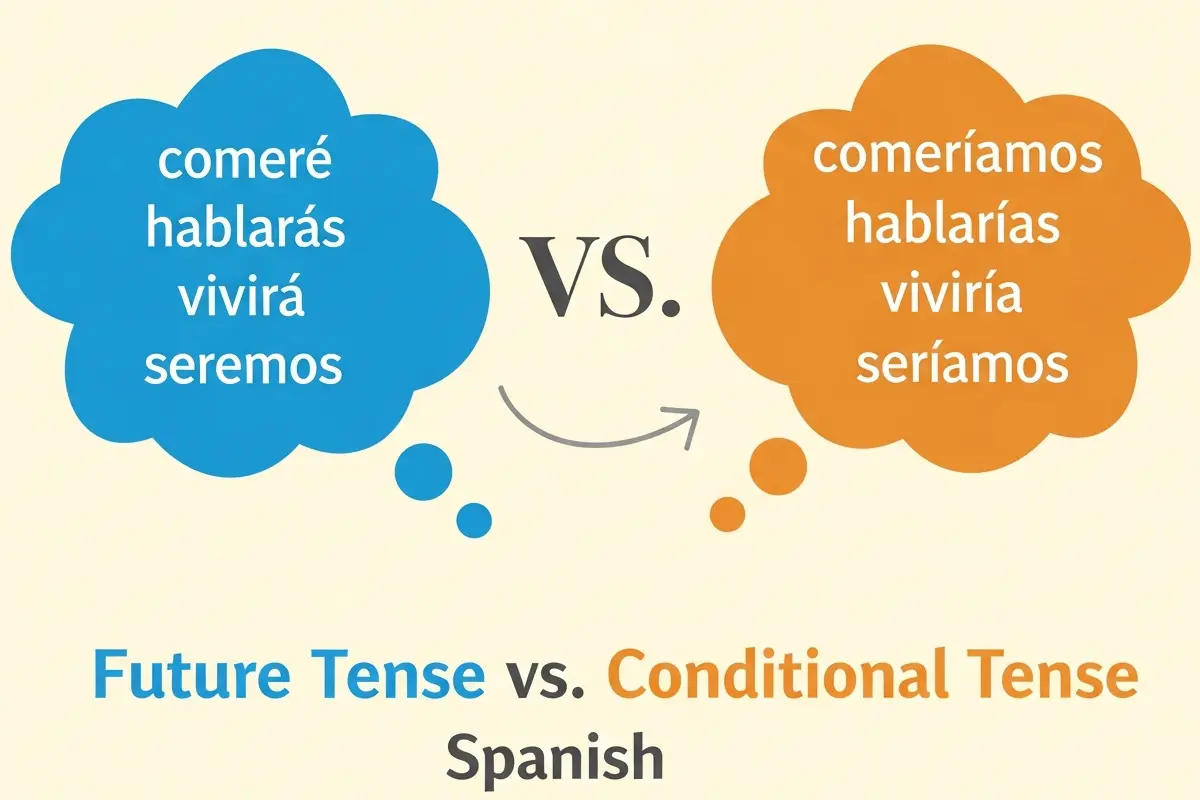
Future Tense vs Conditional Tense Spanish: Clear Guide
Future tense vs conditional tense Spanish explained clearly—learn the rules, differences, conjugation patterns, and real examples.
Read Now →Real-World Examples of Future Tense Spanish
Travel
- Llegaré mañana.
- Habrá un vuelo a las seis.
Related Resource:
Future Tense Spanish for Travel and Daily Life
Future tense Spanish for travel and daily life explained with real examples, practical phrases, and clear rules for everyday use.
Read Now →Beginners
- Estudiaré español.
- Viviré en Madrid.
Related Resource:

Spanish Future Tense Example Sentences for Beginners
Spanish future tense example sentences for beginners, with clear explanations, pronunciation tips, and real-life usage to help you speak confidently.
Read Now →Common Mistakes Learners Make
❌ Overusing the simple future
- ❌ Mañana iré a comer (sounds stiff)
- ✅ Mañana voy a comer
❌ Translating “will” directly
- ❌ Querré ir ahora
- ✅ Quiero ir ahora
→ Full list:
Common Mistakes When Using the Spanish Future Tense
Common mistakes when using the Spanish future tense—why they happen, what they change in meaning, and how to fix them with clear examples.
Read Now →Most errors come from English interference, not grammar gaps.
Practice: Choose the Right Future Construction
Try this mentally:
-
You’re 100% sure
→ Simple future -
It’s planned
→ Ir + a -
It’s scheduled
→ Present tense -
You’re guessing
→ Future tense (probability) -
It’s polite or hypothetical
→ Conditional
Practice insight: Choosing the meaning first fixes most mistakes.
How Kids Learn the Future Tense (Why This Matters)
Children acquire the future using present tense and ir + a long before formal future conjugation.
→ See:
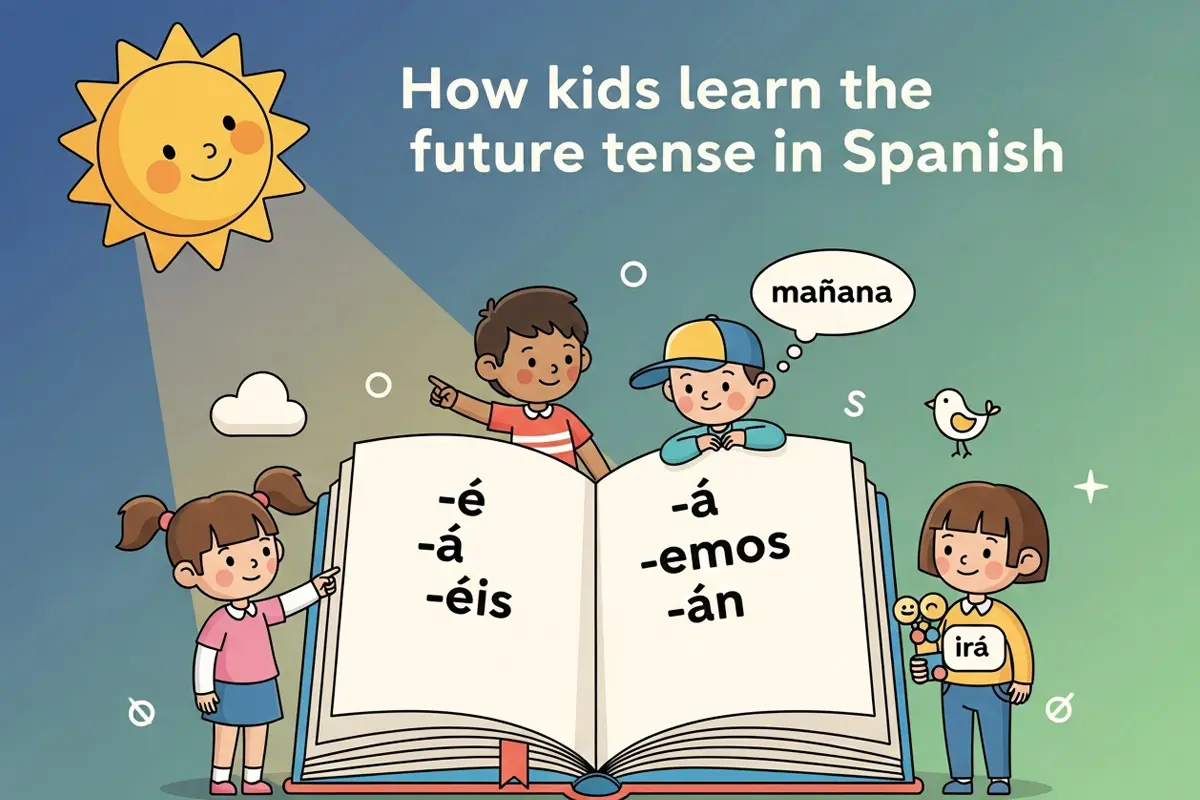
How Kids Learn the Future Tense in Spanish
How kids learn the future tense in Spanish explained with child-friendly stages, examples, and teaching strategies that mirror natural language development.
Read Now →Learning insight: Natural acquisition mirrors native usage.
Final Takeaway
Future tense Spanish is not one tense—it’s a system built on intention, certainty, and context.
Mastery comes from understanding when and why Spanish speakers choose each construction, not from memorizing endings alone.