TL;DR
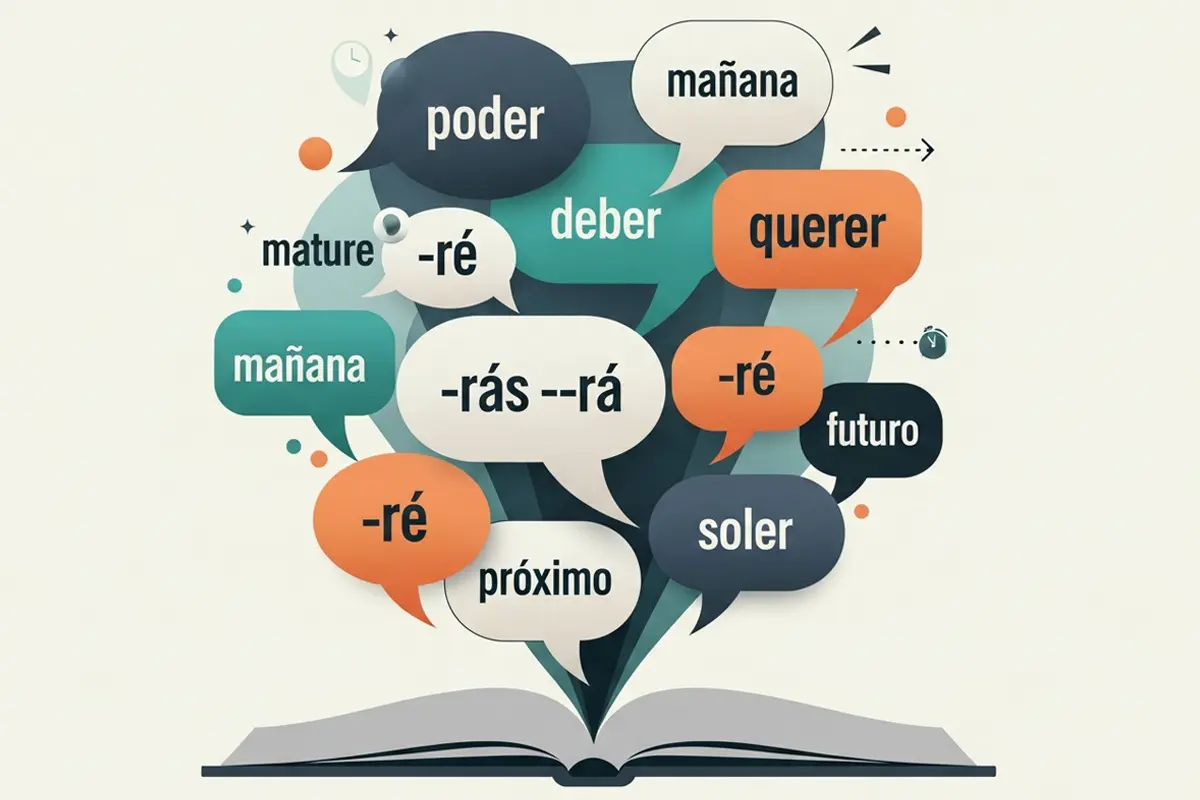
- Spanish modal verbs and future meaning work together to express intention, obligation, ability, and probability.
- Modal verbs like poder, deber, querer, tener que, and haber often replace English “will.”
- Spanish uses verb tense more than helper words to show future meaning.
- Choosing the right form of the verb changes tone, certainty, and politeness.
Table of Contents
Open Table of Contents
- Spanish Modal Verbs and Future Meaning — Quick Answer
- What Are Modal Verbs in Spanish?
- Why doesn’t Spanish always use “will” for the future?
- How does poder express the future?
- Does deber always mean “must”?
- When should learners use tener que?
- Does querer express future actions?
- Why is haber important for future meaning?
- Future Meaning Without the Future Tense
- When should you use the simple future instead of a modal verb?
- Why does the conditional feel like “future meaning”?
- How do modal verbs connect to “future as probability”?
- Do you need time words when using modals?
- Common Learner Mistake: Translating “Will” Directly
- Practical Tip: Build Modal “Future Meaning” in 3 Steps
- FAQ
- Final Takeaway
Spanish Modal Verbs and Future Meaning — Quick Answer
Spanish modal verbs express future meaning by combining intention, obligation, ability, or probability with a main verb—often without using the simple future tense.
Instead of translating English “will” directly, Spanish relies on modal verbs, verb endings, and context to communicate what is planned, required, possible, or likely.
What Are Modal Verbs in Spanish?
Modal verbs are verbs that modify another verb to express ability, obligation, desire, permission, or probability.
They’re followed by a verb in the infinitive form, and their meaning changes depending on the verb tense you choose.
Common Spanish modal verbs include:
- poder (can, could, might)
- deber (must, should, probably)
- querer (want)
- tener que (have to)
- saber (know how to)
- haber que (one must – impersonal)
👉 Key takeaway: Modal verbs shape meaning more than time.
Why doesn’t Spanish always use “will” for the future?
Because Spanish encodes “future” inside verb forms and modal choices—not with one helper word like English.
Compare:
- English: I will do the task.
- Spanish: Haré la tarea. (future ending)
- Spanish: Tengo que hacer la tarea. (obligation → future intent)
In everyday speech, Spanish also uses the present tense for future plans, so modal verbs often carry the “future meaning” by themselves. If you want the bigger tense-choice picture (present vs ir + a vs future), see Future tense vs present tense in Spanish.
👉 Takeaway: Spanish future meaning is built from tense + intention.
How does poder express the future?
Poder expresses ability or possibility, and the tense tells you how certain it is.
Examples:
- Podré viajar mañana. → I will be able to travel tomorrow. (ability in the future)
- Podría llegar tarde. → I might arrive late. (uncertain / conditional)
- Puede llover esta tarde. → It might rain this afternoon. (possibility)
If you’re learning “future meaning,” this is one of the fastest wins: poder + infinitive covers “can / could / might / will be able to.”
👉 Key takeaway: Poder + tense = your certainty dial.
Does deber always mean “must”?
No—deber can mean obligation or probability depending on structure.
-
deber + infinitive → obligation
- Debes estudiar. → You must study.
- Deberás llamar mañana. → You’ll have to call tomorrow.
-
deber de + infinitive → probability (common in many learning materials)
- Debe de estar en casa. → He’s probably at home.
👉 Key takeaway: One modal verb, two meanings—watch the structure.
When should learners use tener que?
Use tener que for clear, practical obligations—especially in daily life.
Examples:
- Tengo que trabajar mañana.
- Tendremos que salir temprano.
- Tienes que pagar hoy.
This is usually the most “neutral” way to say you have to do something (no drama, no guesswork—just reality).
👉 Takeaway: Tener que is the default “real-world” obligation.
Does querer express future actions?
Yes—wanting something often implies a future plan, even without future endings.
Examples:
- Quiero ir mañana. → I want to go tomorrow. (intention)
- Quiero hablar con usted más tarde. → I want to speak with you later. (planned action)
The future form (querré) can sound more deliberate, formal, or emotionally distant depending on context:
- Querré hablar contigo después. → I’ll want / I’ll talk later (more deliberate)
👉 Key takeaway: Desire often functions like a future plan in Spanish.
Why is haber important for future meaning?
Haber is Spanish’s key auxiliary verb for “completed-by-a-future-time” meaning (future perfect).
Future forms:
- habré, habrás, habrá, habremos, habréis, habrán
Used in the future perfect tense:
- Para mañana, habré terminado.
- A esa hora, ya habrá salido.
If you want a clean comparison between simple future vs future perfect, see Spanish simple future vs future perfect tense explained.
👉 Key takeaway: Haber + participle = future completion, not just future time.
Future Meaning Without the Future Tense
Spanish often communicates the future without future endings.
Examples:
- Mañana voy al trabajo. (present tense future)
- Tengo que salir temprano. (obligation → future action)
- Puede llover esta tarde. (possibility)
This is also why many learners “feel confused”: Spanish future meaning is spread across verb tenses + modal verbs + context.
👉 Key insight: Spanish prioritizes meaning over one “future form.”
When should you use the simple future instead of a modal verb?
Use the simple future when you want a promise, strong certainty, or a deliberate tone.
Quick comparison:
| Structure | Example | Meaning |
|---|---|---|
| Simple future | Viajaré mañana. | promise / certainty |
| Poder | Podría viajar mañana. | possibility |
| Deber de | Debe de llover. | assumption |
| Tener que | Tengo que salir. | obligation |
| Haber (future) | Habrá llegado. | completed by a future time |
If you’re mixing up “future vs conditional” (very common), this guide helps: Future tense vs conditional tense Spanish.
👉 Takeaway: Future endings = stronger commitment than most modal phrases.
Why does the conditional feel like “future meaning”?
Because it expresses a future action as uncertain, polite, or hypothetical.
Examples:
- Podría ayudarte mañana. → I could help you tomorrow. (polite / not guaranteed)
- Deberías descansar. → You should rest. (recommendation)
- Querría hablar contigo. → I’d like to talk with you. (polite request)
👉 Key takeaway: Conditional = “future, but softened.”
How do modal verbs connect to “future as probability”?
Spanish often talks about probability using tense and modal meaning—even when the time is “now.”
Examples:
- Puede estar ocupado. → He may be busy. (present guess)
- Debe de estar en el hotel. → He’s probably at the hotel. (assumption)
- ¿Dónde estará? → Where could he be? (future tense used for probability)
If you want to master that “future = guess” pattern, read When to use the future tense in Spanish for probability.
👉 Key takeaway: In Spanish, “future meaning” can be about certainty, not time.
Do you need time words when using modals?
Not always—but time expressions remove ambiguity fast.
Common time expressions:
- mañana, hoy, esta tarde, esta noche
- más tarde, dentro de un rato
- la próxima semana, el mes que viene
- en dos horas, en un momento
Examples:
- Podré hacerlo mañana.
- Tengo que salir en diez minutos.
- Debe de llegar esta noche.
If you want a focused list of time phrases that pair naturally with the future, see Time expressions used with the Spanish future tense.
👉 Takeaway: Time expressions turn “future meaning” into “future clarity.”
Common Learner Mistake: Translating “Will” Directly
Many learners default to “future endings = English will.”
That creates two problems:
- You overuse the simple future when Spanish would use present or ir + a.
- You miss “future meaning” patterns like probability and politeness.
If you want a checklist of the biggest traps (and how to fix them), use Common mistakes when using the Spanish future tense.
👉 Key takeaway: The error is usually tense choice, not conjugation.
Practical Tip: Build Modal “Future Meaning” in 3 Steps
- Choose your meaning first: ability, obligation, desire, probability.
- Choose your tense next: present (neutral), future (firm), conditional (soft).
- Add a time expression if timing matters.
Mini examples (same situation, different meaning):
- Puedo ir mañana. → I can go tomorrow. (possible)
- Tengo que ir mañana. → I have to go tomorrow. (obligation)
- Quiero ir mañana. → I want to go tomorrow. (intention)
- Iré mañana. → I’ll go tomorrow. (commitment)
👉 Takeaway: Fluency comes from intention, not memorized rules.
FAQ
❓ Do Spanish modal verbs always imply the future?
No.
They express attitude first (ability, obligation, probability), and time comes from context and verb tense.
❓ Can modal verbs replace the future tense?
Yes, very often.
In daily Spanish, modal verbs plus present tense can express future plans naturally.
❓ Is the future tense still important?
Yes.
It adds certainty, promises, and formal tone, and it also expresses probability in many contexts.
❓ Which modal verb should beginners learn first?
Start with:
- poder
- tener que
- deber
- haber (as an auxiliary)
They cover most real-life situations.
❓ Is haber a modal verb?
Not exactly.
It’s an auxiliary verb that helps build compound tenses like the future perfect.
❓ Do exams test modal verbs and future meaning?
Yes.
DELE, AP Spanish, and university exams test meaning + tense choice, not just conjugation.
Final Takeaway
Spanish modal verbs and future meaning work together to express intention, obligation, ability, and probability more naturally than direct future tense translations.
Once you stop translating “will” and start choosing verbs based on meaning, certainty, and context, your Spanish becomes clearer, more flexible, and far more natural.